SSansFiction
The libraryCollectionsJournalStatsFor authors
Sign inJoin now
Sansfiction,

A digital library for books. Made by readers, for readers.

v 2.0 · 2026
The library
  • Discover
  • Collections
  • Book tracker
  • Journal
  • Stats
For authors
  • SF Links
  • Analytics
  • How it works
  • FAQ
Elsewhere
  • X / @sansfiction
  • Privacy
  • Terms
  • Contact
© 2026 SansFiction · Digital · GlobalA quiet room for your reading life.
The libraryCollectionsJournalStatsFor authors
Sign inJoin now →
Navigation
Library
Bookshelf
Journal
Discover
Collections
Tierlists
Stats
Profile
Author Page
Link Builder
Account
Sign in
S
G
BooksclassicsThe Haunting of Hill House
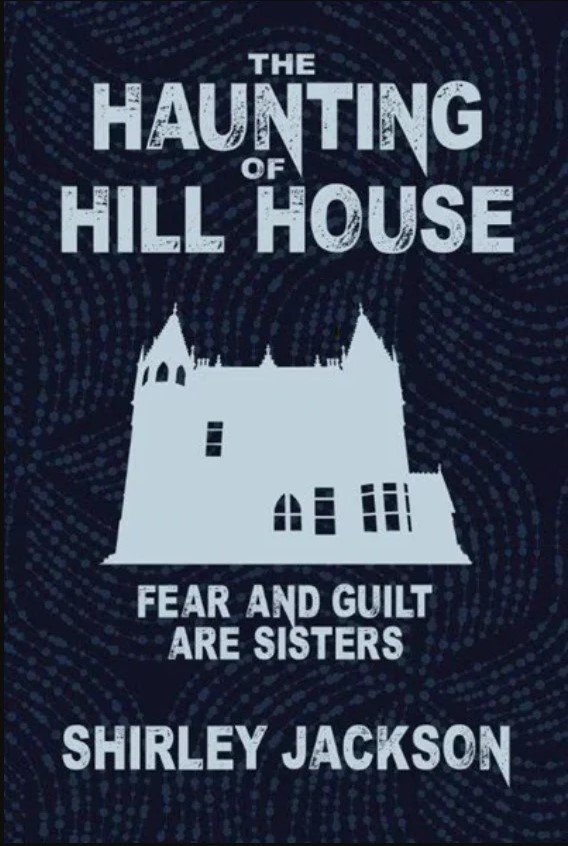
Cover of The Haunting of Hill House by Shirley Jackson

The Haunting of Hill House,

by Shirley Jackson

Ask AI
Rating3.7/ 5
Ratings800
Pages288
Reading Hours6h
Published2018
LanguageEnglish

§Synopsis

01

Hill House is an 80 year-old mansion built by long-deceased Hugh Crain. The story concerns four main characters: Dr. John Montague, an investigator of the supernatural; Eleanor Vance, a shy young woman who resents having lived as a recluse caring for her demanding invalid mother; Theodora, a flamboyant, bohemian, possibly lesbian artist; and Luke Sanderson, the young heir to Hill House, who is also the host to the others. Dr. Montague hopes to find scientific evidence of the existence of the supernatural. He rents Hill House for a summer and invites as his guests several people whom he has chosen because of their past experience with paranormal events. Of these, only Eleanor and Theodora accept. All four of the inhabitants begin to experience strange events while in the house, including unseen noises and ghosts roaming the halls at night, strange writing on the walls and other unexplained events. Eleanor tends to experience phenomena to which the others are oblivious. At the same time, Eleanor may be losing touch with reality... A finalist for the National Book Award, The Haunting of Hill House is considered as one of the best literary ghost stories published during the 20th century, even by stalwarts like Stephen King. It has been made into two feature films, a TV series and a play. Jackson's novel relies on terror rather than horror to elicit emotion in the reader, utilizing complex relationships between the mysterious events in the house and the characters' psyches. A must read!

§Our take

The Haunting of Hill House is less interested in proving that ghosts exist than in showing how completely loneliness can counterfeit a welcome. Eleanor Vance has spent years caring for her invalid mother, and Hill House gives her isolation a shape she can mistake for belonging. Jackson keeps the evidence slippery: the others miss what Eleanor perceives, while her unstable viewpoint makes every reading uncertain.

The clinical investigation is part of the trap. A psychic researcher sets out to test the supernatural and ends up studying his own inconclusive subjects. Dry dialogue and understated scares keep the book from feeling like a solemn séance. Readers coming from Netflix's 2018 series should also remember that the book has no Crain siblings, makes no jumps in time and ends far more bleakly than the adaptation. Its refusal to explain the house is the point, not a gap.

§Themes

Belonging is the bait
Eleanor's hunger for connection makes Hill House's welcome feel less like suspicion and more like the thing she has always wanted.
A house that won't explain itself
A supernatural presence, Eleanor's unstable mind and a latent power all remain possible; Jackson refuses to settle the question.
The investigators under observation
The clinical research setup gradually becomes a study of the investigators, with the evidence turning uncertain along with their minds.
Quiet dread, comic relief
Banter and the planchette scenes puncture the tension while Jackson builds fear through confusion rather than gore.
Queer subtext, not a label
Theodora's hints invite a queer reading, though biographers report that Jackson resisted such interpretations of her work.

§How it was received

Contemporary reception was strong, with Kirkus praising Jackson's atmosphere and psychological depth as the book turned from a lively tour of the supernatural into unease centered on Eleanor. Edmund Fuller's 1959 New York Times review praised the story's cryptic craft and stressed that its confusion was deliberate. The novel was a finalist for the 1960 National Book Award, not its winner, and Stephen King later called it among the finest horror novels of the late twentieth century.

§Read it if

  • You like ghost stories that trust the reader with an unresolved question rather than deliver a final diagnosis
  • You want horror as a character study, driven by loneliness, guilt and an increasingly unreliable viewpoint
  • You enjoy quiet dread, dry dialogue and a compact novel unfolding over one summer

§Skip it if

  • You need jump scares or graphic horror; this book works through restraint and confusion
  • You want a stable narrator and tidy answers. Mental deterioration, guilt and suicide themes make its bleakness hard to sit with

§Before you start

Reading experience
The story moves linearly through one summer at a measured, dialogue-heavy pace, though Eleanor's shifting perspective can make the middle harder to follow.
Content notes
Suicide and suicidal thoughts, including a hanging in the house's history; Mental deterioration and paranoia are central to the story; Guilt over a mother's death, which happens before the novel begins; Some alcohol use.

§Common questions

Does Hill House really have a ghost?
The novel never gives a clean answer. A supernatural presence, Eleanor's unstable mind and a latent power all remain possible.
Is the Netflix series faithful to the novel?
No. The 2018 series is a separate, loosely inspired work: it replaces Dr. Montague's group with the Crain family, jumps between timelines and ends more hopefully.
Is Theodora a lesbian character?
Her queerness is suggested through small hints. Biographers report that Jackson resisted that interpretation, so her identity remains open to debate.

§If you liked this

  • We Have Always Lived in the Castle by Shirley Jackson — Jackson's other late gothic novel is domestic, claustrophobic and psychologically driven; some readers find it even more frightening than Hill House.
  • A Haunting on the Hill by Elizabeth Hand — Elizabeth Hand's 2023 novel returns to Hill House for readers who want a modern continuation of the story.
  • Danse Macabre by Stephen King — Stephen King's 1981 nonfiction study of horror includes his praise for Hill House as one of the genre's finest.
Sources
  • Wikipedia
  • National Book Foundation
  • Kirkus Reviews
  • Den of Geek
  • Strange Horizons
  • York University trauma blog
  • Penguin (publisher)
  • Film Comment
  • Syfy Wire

Track this book

Add to your library to track progress and write reviews

§Genres
classics1fiction; occult & supernatural; supernatural; thrillers1general1haunted house1horror1literature1literature & fiction1
§Content Warnings
§Moods
adventurous1challenging1dark1emotional1inspiring1melancholy1mysterious1
§Tags
#car accident1#diverse characters1#loveable characters1#mental illness1

§About the Author

Shirley Jackson
Shirley Jackson

2 books in catalog

American gothic horror and psychological suspense were profoundly shaped by mid-twentieth-century short fiction and novels, most famously exemplified by The Haunting of Hill House and the chilling short story The Lottery. Shirley Jackson crafted six completed novels, two memoirs, and over 200 short stories during a writing career spanning more than two decades. Critical evaluations documented through 2025 highlight her ability to reveal the sinister undercurrents and psychological tension beneath ordinary suburban and small-town American life.

Career & Background

Born in San Francisco, California, in 1916, Jackson grew up in nearby Burlingame and attended the University of Rochester before transferring to Syracuse University. She graduated from Syracuse in 1940, where she served as fiction editor of the campus humor magazine and met her future husband, literary critic Stanley Edgar Hyman. The couple married in 1940, lived briefly in New York City, and settled in North Bennington, Vermont, in 1945. Balancing domestic responsibilities for four children with a prolific writing schedule, Jackson published her first novel alongside dozens of magazine stories in the late 1940s. Her national profile expanded rapidly after The New Yorker published The Lottery in 1948, generating widespread reader response and intense public debate.

Writing Style & Themes

A central theme across Jackson's fiction is the presence of evil, chaos, and social cruelty just beneath the surface of everyday life. Her stories frequently explore small-town conformity, isolation, persecution, and psychological disorientation. In sharp contrast to her gothic suspense fiction, her bestselling memoirs Life Among the Savages (1953) and Raising Demons (1957) maintain a light comic tone that chronicles the humorous realities of raising four children. This duality between lighthearted domestic humor and dark psychological terror demonstrates her stylistic versatility, combining sharp observation with unsettling ambiguity.

Major Works

  • The Lottery — First published in The New Yorker in 1948, The Lottery remains a classic American short story about a small town that conducts an annual stoning ritual, provoking public outrage and ongoing debate upon release.
  • Life Among the Savages — Published in 1953, Life Among the Savages is a witty fictionalized memoir detailing Jackson's domestic life and family experiences raising four children in Vermont.
  • Raising Demons — Released in 1957 as a companion memoir, Raising Demons continues Jackson's humorous reflections on parenting and everyday household routines.
  • The Haunting of Hill House — Published in 1959, The Haunting of Hill House is a landmark haunted-house novel examining dread, isolation, and psychological breakdown.
  • We Have Always Lived in the Castle — Published in 1962, We Have Always Lived in the Castle centers on the alienated Blackwood family, earning an Edgar Allan Poe Award recognition in 1961 and cementing her standing in psychological horror.
  • Let Me Tell You — Issued posthumously in 2015, Let Me Tell You compiles previously unpublished short stories, essays, and miscellany.
§Genres
classics1fiction; occult & supernatural; supernatural; thrillers1general1haunted house1horror1literature1literature & fiction1
§Content Warnings
§Moods
adventurous1challenging1dark1emotional1inspiring1melancholy1mysterious1
§Tags
#car accident1#diverse characters1#loveable characters1#mental illness1

Metadata

ISBN-139788835303510
ISBN-108835303516

Editions and availability

Find The Haunting of Hill House Shirley Jackson in PDF, EPUB, ebook, audiobook, print, or library editions.

Bookshop.orgGoogle Play BooksBarnes & NobleOpen Library

Featured In Lists

Book cover from this collectionBook cover from this collectionBook cover from this collectionBook cover from this collection
Book cover from this collection

Mother Horror's 101 Horror Books to Read Before You're Murdered

239 books
Book cover from this collectionBook cover from this collectionBook cover from this collectionBook cover from this collection
Book cover from this collection

Horror

168 books
Book cover from this collectionBook cover from this collectionBook cover from this collectionBook cover from this collection
Book cover from this collection

Short, Fast-Paced Thrillers

10 books•@sansfictionbot