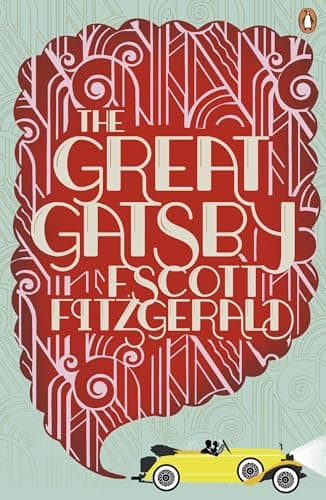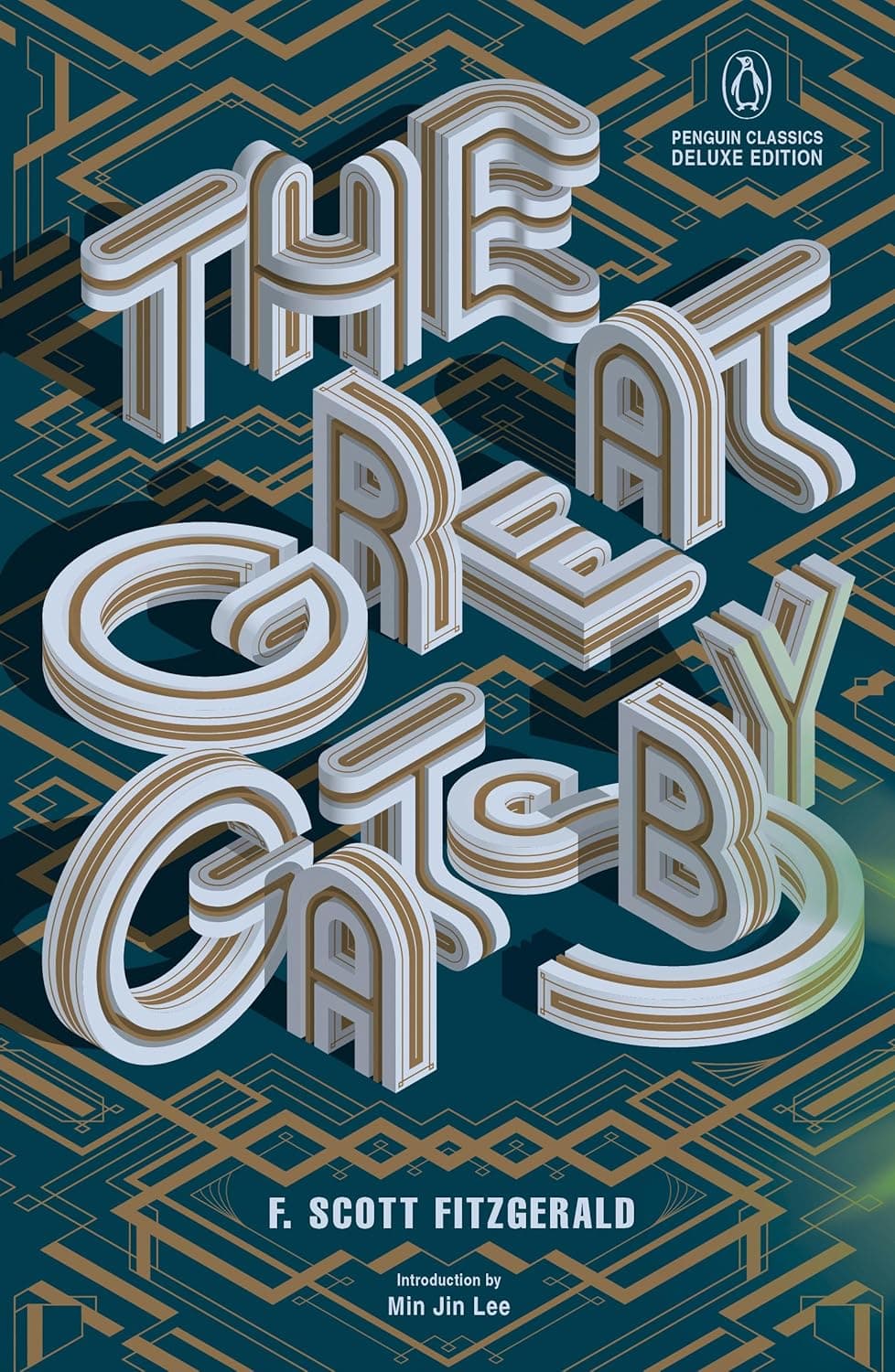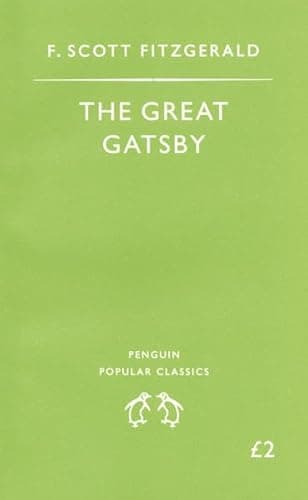
"Extravagant rumors abound of a man named Jay Gatsby who has newly arrived to the coastline of a section of Long Island known colloquially as West Egg. Long into the night, the mysterious Gatsby threw lavish parties at his sprawling estate, but when alone, Gatsby could be found staring longingly at a solitary green light across the dark water. For all Gatsby has attained in his life, that green light represents all that he lost.
The greatest story to encapsulate the roaring twenties, The Great Gatsby follows the eventful lives of the denizens from East and West Egg in this timeless classic of American literature."-- Provided by Amazon
Gatsby is a school staple now, and it was nearly forgotten. It sold slowly for most of Fitzgerald's life. The first printing of about 20,870 copies took until June 1926 to sell out, and unsold second-printing copies sat in Scribner's warehouse for roughly two decades. By 1940, the year he died, Fitzgerald had earned about thirteen dollars in royalties from it. In his last months he wrote to his editor hoping it would stay in print.
Then came 1945. A Carleton College professor credits the revival to the 155,000 pocket copies printed for U.S. troops by the Armed Services. By the 1960s it was standard school reading. If you met Gatsby as a homework assignment, you probably never heard how close it came to vanishing.
Reviews in 1925 were mixed. Lilian Ford praised it as art, while H. L. Mencken liked the prose but found the plot thin and improbable. T. S. Eliot, Willa Cather and Edith Wharton offered private praise. After Fitzgerald's death, Lionel Trilling read Gatsby as a figure for America, and by 1960 Arthur Mizener was calling it a classic of 20th-century American fiction.
Add to your library to track progress and write reviews
Find The Great Gatsby F. Scott Fitzgerald in PDF, EPUB, ebook, audiobook, print, or library editions.

2 books in catalog
Depicting the flamboyance, ambition, and tragic excesses of the 1920s, American fiction of the Jazz Age captured a generation caught between rapid social change and disillusioned idealism. Francis Scott Key Fitzgerald became one of the defining novelists and short story writers of this era, popularizing the term Jazz Age itself and earning recognition as a prominent voice among the Lost Generation of post-World War I creators. His third novel, The Great Gatsby, skewers the illusions of the American Dream through its portrayal of wealth, longing, and social class, remaining one of the most widely read works in twentieth-century literature.
Born Francis Scott Key Fitzgerald on September 24, 1896, in Saint Paul, Minnesota, the author rose to immediate fame at age twenty-three with his debut novel, This Side of Paradise, published in 1920. The book's chronicling of post-war youth culture established his literary reputation, which he expanded with his second novel, The Beautiful and Damned. Alongside his longer works, he earned a living publishing over 150 short stories in popular magazines, compiling collections such as Tales of the Jazz Age. Throughout the Twenties, Fitzgerald achieved transient financial success alongside his wife and muse, Zelda, before facing alcoholism, financial problems, and Zelda's mental health struggles. His ambitious 1934 novel, Tender Is the Night, met with mixed commercial response during the Great Depression. He moved to Hollywood in his later years to work as a screenwriter before dying on December 21, 1940.
Fitzgerald's prose is characterized by poetic lyricism, sharp social observation, and an acute attention to glittering surfaces that conceal underlying decay. As a key member of the Lost Generation, he routinely examined themes of youth and promise intertwined with despair, age, class divides, and the corrupting nature of unexamined wealth. His work anticipated how mass media and omnipresent imagery shaped personal identity, depicting characters drawn to glamorous lifestyles only to encounter bitter disappointment. Across four completed novels, four story collections, and his unfinished final novel, Fitzgerald balanced romantic idealism with a piercing critique of early twentieth-century American culture.