
§Author· 2 books
F. Scott Fitzgerald
Also known as Francis Scott Key Fitzgerald, Scott Fitzgerald
Depicting the flamboyance, ambition, and tragic excesses of the 1920s, American fiction of the Jazz Age captured a generation caught between rapid social change and disillusioned idealism. Francis Scott Key Fitzgerald became one of the defining novelists and short story writers of this era, popularizing the term Jazz Age itself and earning recognition as a prominent voice among the Lost Generation of post-World War I creators. His third novel, The Great Gatsby, skewers the illusions of the American Dream through its portrayal of wealth, longing, and social class, remaining one of the most widely read works in twentieth-century literature.
Career & Background
Born Francis Scott Key Fitzgerald on September 24, 1896, in Saint Paul, Minnesota, the author rose to immediate fame at age twenty-three with his debut novel, This Side of Paradise, published in 1920. The book's chronicling of post-war youth culture established his literary reputation, which he expanded with his second novel, The Beautiful and Damned. Alongside his longer works, he earned a living publishing over 150 short stories in popular magazines, compiling collections such as Tales of the Jazz Age. Throughout the Twenties, Fitzgerald achieved transient financial success alongside his wife and muse, Zelda, before facing alcoholism, financial problems, and Zelda's mental health struggles. His ambitious 1934 novel, Tender Is the Night, met with mixed commercial response during the Great Depression. He moved to Hollywood in his later years to work as a screenwriter before dying on December 21, 1940.
Writing Style & Themes
Fitzgerald's prose is characterized by poetic lyricism, sharp social observation, and an acute attention to glittering surfaces that conceal underlying decay. As a key member of the Lost Generation, he routinely examined themes of youth and promise intertwined with despair, age, class divides, and the corrupting nature of unexamined wealth. His work anticipated how mass media and omnipresent imagery shaped personal identity, depicting characters drawn to glamorous lifestyles only to encounter bitter disappointment. Across four completed novels, four story collections, and his unfinished final novel, Fitzgerald balanced romantic idealism with a piercing critique of early twentieth-century American culture.
Major Works
- This Side of Paradise — Published in 1920, Fitzgerald's debut novel explores the romantic and intellectual disillusionment of post-World War I youth, launching him to instant fame.
- The Beautiful and Damned — His second novel portrays the troubled marriage and moral dissipation of a wealthy young couple during the early 1920s.
- The Great Gatsby — Published in 1925, The Great Gatsby is a celebrated classic examining class, obsessed love, and the unraveling of the American Dream during the Jazz Age.
- Tender Is the Night — Published in 1934, Tender Is the Night tells the haunting story of a psychiatrist's personal and professional downfall while living among affluent American expatriates on the French Riviera.
- The Love of the Last Tycoon — An unfinished fifth novel published posthumously, offering a behind-the-scenes look at the power dynamics and studio system of golden-age Hollywood.
§All Books
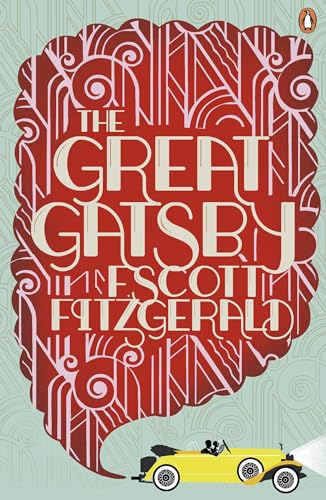
The Great Gatsby
F. Scott Fitzgerald, 1920
3,748 ratings

Tender is the Night
F. Scott Fitzgerald, 1933
105 ratings
§ About F. Scott Fitzgerald's books
- Books on SansFiction
- 2
- Published
- 1920–1933
- Average rating
- 3.7 / 5 across 3,853 ratings
- Genres
- Classics, Fiction, Literature, Biography
Start here: The Great Gatsby (1920)
"Extravagant rumors abound of a man named Jay Gatsby who has newly arrived to the coastline of a section of Long Island known colloquially as West Egg. Long into the night, the mysterious Gatsby threw lavish parties at his sprawling estate, but when alone, Gatsby could be found staring longingly at a solitary green light across the dark water.
Common questions about F. Scott Fitzgerald
- Who is F. Scott Fitzgerald?
- Born Francis Scott Key Fitzgerald on September 24, 1896, in Saint Paul, Minnesota, the author rose to immediate fame at age twenty-three with his debut novel, This Side of Paradise, published in 1920. The book's chronicling of post-war youth culture established his literary reputation, which he expanded with his second novel, The Beautiful and Damned.
- What is F. Scott Fitzgerald best known for?
- F. Scott Fitzgerald is best known for The Great Gatsby, published in 1920 with 3,748 ratings and a 3.7 average. It is the most-rated of F. Scott Fitzgerald's books on SansFiction.
- How many books has F. Scott Fitzgerald written?
- SansFiction lists 2 books by F. Scott Fitzgerald, published between 1920 and 1933. The most popular are The Great Gatsby and Tender is the Night.
- Which F. Scott Fitzgerald book should I read first?
- The Great Gatsby is the usual place to start: it is F. Scott Fitzgerald's most-rated book here, with a 3.7 average.
- What genres does F. Scott Fitzgerald write?
- F. Scott Fitzgerald's books on SansFiction are tagged Classics, Fiction, Literature and Biography.
Explore: Classics · Fiction · Literature · Biography