§Synopsis
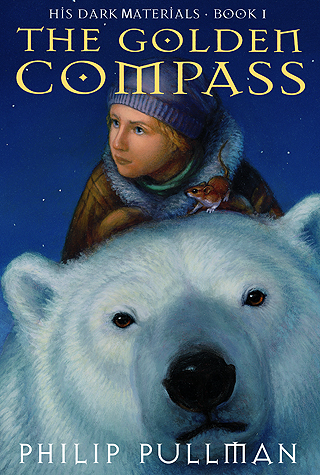
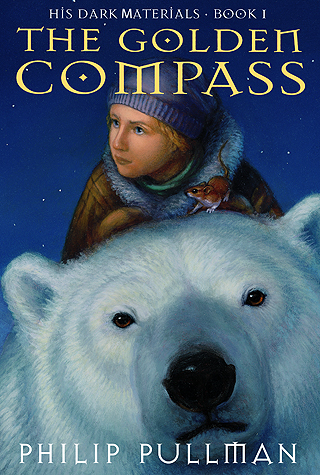
01Lyra is rushing to the cold, far North, where witch clans and armored bears rule. North, where the Gobblers take the children they steal—including her friend Roger. North, where her fearsome uncle Asriel is trying to build a bridge to a parallel world.
Can one small girl make a difference in such great and terrible endeavors? This is Lyra: a savage, a schemer, a liar, and as fierce and true a champion as Roger or Asriel could want.
But what Lyra doesn't know is that to help one of them will be to betray the other...
A masterwork of storytelling and suspense, Philip Pullman's award-winning The Golden Compass is the first in the His Dark Materials series, which continues with The Subtle Knife and The Amber Spyglass.
§Our take
The real surprise is how much moral nerve Pullman packs into a children’s adventure. Lyra is clever, brave and an appallingly convincing liar; her flaws make her more useful than a spotless heroine would be. Pullman frames the story less as lost innocence than the painful work of growing up, while the alternate-Victorian world of airships, armored bears and visible souls makes that idea feel lived rather than preached.
The trouble is the book’s appetite for setup. Some readers find the early roads slow, the dialogue dense and too many ideas left hanging; for others, the cliffhanger is a promise rather than a failure. The religious dispute is just as real: Rowan Williams argued that Pullman targets dogmatism rather than faith, while other readers took the book as anti-clerical polemic. The violence is genuinely graphic, and the volume is most rewarding for readers willing to live with unresolved questions.
§Themes
- The soul made visible
- Each person carries a dæmon, an animal companion that embodies the soul, making the violation of identity horrifying.
- Authority in dogmatism
- The church-like Magisterium controls doctrine and interpretation, while its suppression of dissenting scholars turns belief into institutional power.
- Growing up by lying
- Lyra’s lies and scheming are central to her heroism, and Pullman frames the story as the work of growing up rather than the loss of innocence.
- Milton upside down
- Pullman built the trilogy as an inversion of Paradise Lost, centering the story on growing up rather than a fall from innocence.
- Wonder with sharp teeth
- Airships, armored bears, witches and dæmons make the world vivid, while graphic violence stops it from becoming cozy.
§How it was received
Kirkus gave the 1996 U.S. edition a starred review, praising its ambitious universe, convincing alternate-Victorian setting and thoroughly charming Lyra, while warning that her over-spirited streak and the violence may deter squeamish readers; it recommended 12 and up. Publishers Weekly praised Pullman’s imagination, mythic structure, sharp characters and tension, predicted readers of all ages would want the sequel and suggested 10+. Religious readers still disagree: Rowan Williams argued that the book attacks dogmatism rather than faith, while other religious critics objected to its portrayal of church power.
§Read it if
- You want a fully realized alternate world, with Oxford, airships, witches, armored bears and visible souls
- You like a clever, flawed heroine whose lies are part of the story, not a moral problem to correct
- You can handle graphic violence and want a children’s quest that treats church power and dogma as serious subjects
§Skip it if
- You need a gentle children's read. The book includes graphic gore, kidnapped children and disturbing experiments on them.
- You dislike dense setup or loose ends. Some readers find the opening dialogue-heavy and exposition-laden, and the volume ends on a cliffhanger.
§Before you start
- Reading experience
- The opening stretch is dialogue-heavy and can feel slow, but the northern quest gathers momentum; expect dense lore, unfamiliar concepts and graphic violence despite the children’s framing.
- Reading order
- Book 1 of His Dark Materials. The book appeared as Northern Lights in the UK in 1995 and The Golden Compass in the U.S. in 1996. Read The Subtle Knife (1997) and The Amber Spyglass (2000) next. The Book of Dust is a separate trilogy set around the original, starting with La Belle Sauvage (2017).
- Content notes
- Children are kidnapped and subjected to horrifying experiments; some die; Graphic violence includes a heart torn out, a jaw ripped off, a severed head and a shooting; Church-funded experiments sever children from their dæmons; Characters use mild profanity, drink alcohol, try smoking and share a passionate kiss; The book critically examines organized religion and includes a retelling of Adam and Eve.
§Common questions
- Why is it called The Golden Compass in America but Northern Lights in Britain?
- The U.S. publisher, Knopf, wanted a title linked to the alethiometer, the compass-like device in the story. The original working title for the whole series, The Golden Compasses, came from a Milton line about a drawing compass; Northern Lights became the British title of this first book.
- Is The Golden Compass suitable for children?
- Age guidance varies: Kirkus says 12+, Publishers Weekly 10+, and Common Sense Media 12+. The graphic violence, child abduction and disturbing experiments on children are good reasons to check the reader's age and sensitivity first.
- Is the book anti-Christian?
- It criticizes institutional religious power, but the target is disputed. Rowan Williams argued that it attacks dogmatism rather than faith, while some readers read it as anti-clerical or atheist polemic.
§If you liked this
- Paradise Lost by John Milton — The source Pullman deliberately inverts across the trilogy, and the place the series title comes from.
- The Chronicles of Narnia by C. S. Lewis — Often read as the book Pullman wrote against, which makes it the useful “Narnia for sceptics” comparison.
Track this book
Add to your library to track progress and write reviews