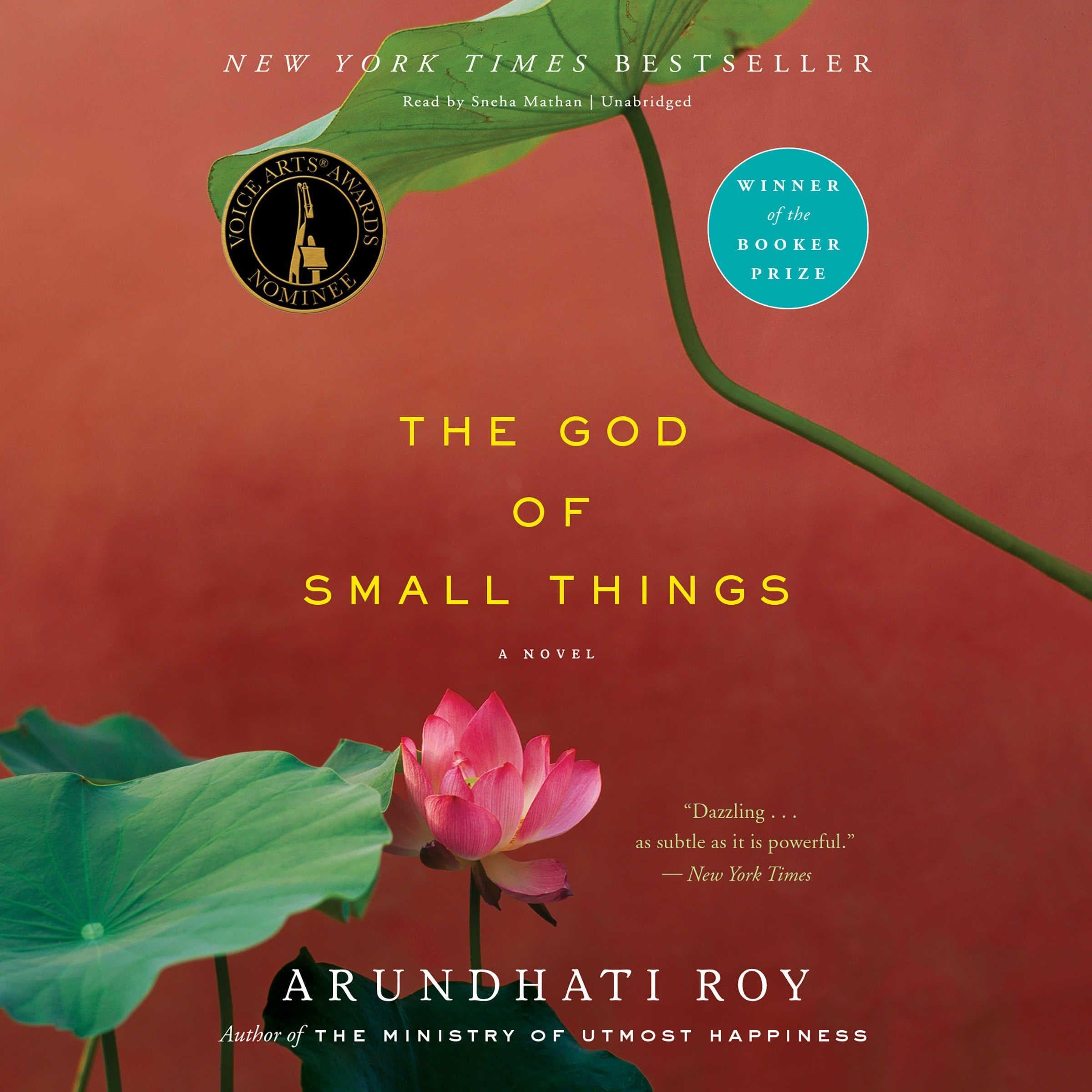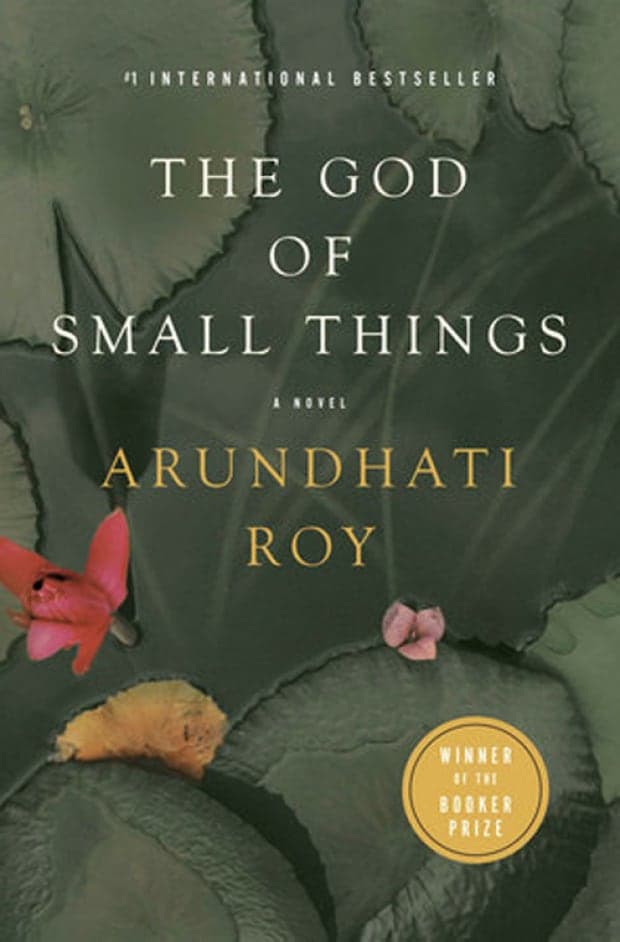
The year is 1969. In the state of Kerala, on the southernmost tip of India, a skyblue Plymouth with chrome tailfins is stranded on the highway amid a Marxist workers' demonstration. Inside the car sit two-egg twins Rahel and Esthappen, and so begins their tale. . . .
Armed only with the invincible innocence of children, they fashion a childhood for themselves in the shade of the wreck that is their family--their lonely, lovely mother, Ammu (who loves by night the man her children love by day), their blind grandmother, Mammachi (who plays Handel on her violin), their beloved uncle Chacko (Rhodes scholar, pickle baron, radical Marxist, bottom-pincher), their enemy, Baby Kochamma (ex-nun and incumbent grandaunt), and the ghost of an imperial entomologist's moth (with unusually dense dorsal tufts).
When their English cousin, Sophie Mol, and her mother, Margaret Kochamma, arrive on a Christmas visit, Esthappen and Rahel learn that Things Can Change in a Day. That lives can twist into new, ugly shapes, even cease forever, beside their river "graygreen." With fish in it. With the sky and trees in it. And at night, the broken yellow moon in it.
The brilliantly plotted story uncoils with an agonizing sense of foreboding and inevitability. Yet nothing prepares you for what lies at the heart of it.
The God of Small Things takes on the Big Themes--Love. Madness. Hope. Infinite Joy. Here is a writer who dares to break the rules. To dislocate received rhythms and create the language she requires, a language that is at once classical and unprecedented. Arundhati Roy has given us a book that is anchored to anguish, but fueled by wit and magic. --front flap
Add to your library to track progress and write reviews
Find The God of Small Things Arundhati Roy in PDF, EPUB, ebook, audiobook, print, or library editions.

1 books in catalog
Winner of the 1997 Booker Prize for Fiction, the landmark novel The God of Small Things established a distinctive voice in contemporary literature and became the highest-selling novel by a non-expatriate Indian author. Written by Arundhati Roy, the narrative examines political power, social hierarchy, and personal tragedy through the intricate lives of a family in Kerala, India.
Born Suzanna Arundhati Roy on November 24, 1961, in Shillong, India, she spent her youth in Kerala before studying architecture at the Delhi School of Architecture. Before publishing her fiction, Roy worked in film as a screenwriter and actress. Her debut novel, The God of Small Things, published in 1997, achieved immediate critical and commercial success worldwide, winning the Booker Prize. Following her fiction debut, Roy turned much of her focus toward political advocacy, human rights activism, and environmental writing, regularly publishing commentary on fascism, social injustice, and globalization.
Over her career, Roy has published multiple essay collections, including The Algebra of Infinite Justice, Field Notes on Democracy: Listening to Grasshoppers, Broken Republic, and Azadi, as well as My Seditious Heart, which collected her political writings over two decades. Her second novel, The Ministry of Utmost Happiness, was longlisted for the Booker Prize and translated into more than forty languages. Roy was awarded the European Essay Prize for lifetime achievement in 2023 and the PEN Pinter Prize in 2024.
Roy's writing blends poetic prose with political critique, connecting personal histories to large-scale socio-political movements. Her fiction and non-fiction explore how state authority, caste structures, and economic systems impact ordinary citizens. By focusing on marginalized lives, personal loss, and environmental degradation, Roy examines the intersection of intimate human relationships and political power structures.