SSansFiction
The libraryCollectionsJournalStatsFor authors
Sign inJoin now
Sansfiction,

A digital library for books. Made by readers, for readers.

v 2.0 · 2026
The library
  • Discover
  • Collections
  • Book tracker
  • Journal
  • Stats
For authors
  • SF Links
  • Analytics
  • How it works
  • FAQ
Elsewhere
  • X / @sansfiction
  • Privacy
  • Terms
  • Contact
© 2026 SansFiction · Digital · GlobalA quiet room for your reading life.
The libraryCollectionsJournalStatsFor authors
Sign inJoin now →
Navigation
Library
Bookshelf
Journal
Discover
Collections
Tierlists
Stats
Profile
Author Page
Link Builder
Account
Sign in
S
G
Booksartists' booksThe Giving Tree
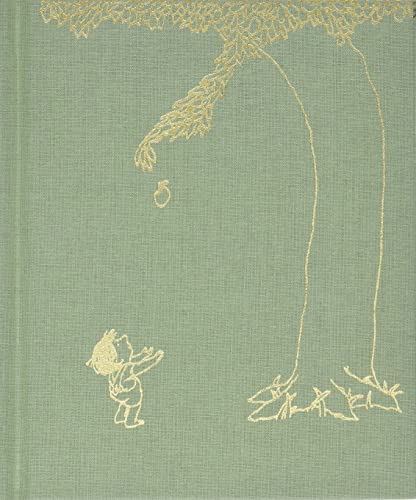
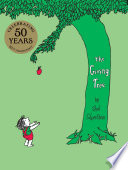
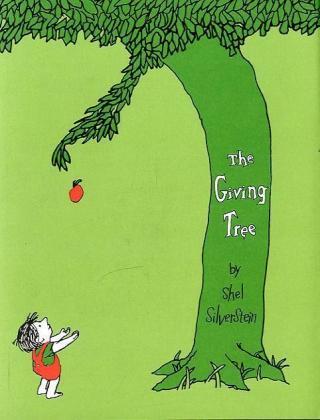
Cover of The Giving Tree by Shel Silverstein

The Giving Tree,

by Shel Silverstein

Ask AI
Rating4.2/ 5
Ratings676
Pages64
Reading Hours1h
Published1964
LanguageEnglish

§Synopsis

01

In this Shel Silverstein classic packaged with a gift card, a young boy grows to manhood and old age experiencing the love and generosity of a tree which gives to him without thought of return. Illustrations. Consumable.

§Our take

Readers tend to land on one of two sides: the tree as a model of unconditional love, or as a boundary-less giver enabling a taker. The text is spare, the line drawings simple, yet the emotional weight sticks. Some educators use it to teach ethics; others call it sad and overly simple. What makes the book endure is that the same pages mean different things at different ages—children often accept it at face value, while parents and philosophers keep finding new reasons to debate it. Its lasting power comes from how it changes with you: a child may feel comfort, a parent may feel guilt, and a reader who’s given too much may feel recognized. The tree’s quiet generosity, or depletion, becomes whatever the reader brings to it.

§Themes

Unconditional love vs. exploitation
Readers split sharply: some see a parable of giving, others see a taker taking without return.
Failed care and boundaries
The tree gives until it has nothing left, raising questions about mutual responsibility and self-sacrifice.
Environmental reading
The tree can represent nature, and the boy humanity, taking resources until little remains.
Changing with age
A child may read it as sweet; a parent may read it as a story about learned giving and gratitude.

§How it was received

Harper & Row published it in 1964, and word-of-mouth turned it into Silverstein’s best seller by 1975. Critics and readers remain deeply divided: some hail it as a moving portrait of love, while others call it sad, overly simple, or a model of unhealthy giving. The debate has persisted for decades, with new rewrites and symposiums appearing every few years.

§Read it if

  • You want a short picture book that sparks long conversations about ethics and relationships.
  • You don’t mind a simple story that reveals new meaning as you grow older.
  • You’re comfortable with ambiguous endings and open to interpretive reading.

§Skip it if

  • You prefer stories with clear moral resolutions and happy endings.
  • You’re looking for a book with strong plot and character development rather than open-ended symbolism.

§Before you start

Reading experience
It takes minutes to read aloud but invites long discussion.
Content notes
No violence, strong language, or scary content; Emotional sadness; tree is reduced to a stump.

§Common questions

Is The Giving Tree part of a series?
No, it’s a standalone picture book, though Silverstein’s The Missing Piece is often read in a similar spirit.
Is it appropriate for young children?
Common Sense Media recommends 4+, but many parents and educators find it most meaningful for older children and adults, depending on the reader’s experience.
Why do some people find the book controversial?
Readers disagree whether the tree represents unconditional love or an unhealthy, boundary-less relationship; the story’s meaning often shifts with the reader’s age and experience.

§If you liked this

  • The Missing Piece by Shel Silverstein — Another Silverstein parable about wanting and what completes a person, and a natural companion to The Giving Tree.
  • Love You Forever by Robert Munsch — A picture book about parent-child devotion that, like Silverstein’s, divides readers between tearful love and discomfort.
  • The Lorax by Dr. Seuss — A Dr. Seuss fable about taking from nature, often paired with The Giving Tree in environmental readings.
  • Where the Sidewalk Ends by Shel Silverstein — Silverstein’s best-known poetry collection, and a gentler entry point before tackling The Giving Tree.
Sources
  • Wikipedia
  • Wikipedia
  • Common Sense Media
  • Michigan Law Review
  • The Christian Science Monitor
  • Publishers Weekly

Track this book

Add to your library to track progress and write reviews

§Genres
artists' books1children's literature1classics1family1fantasy1fiction1generosity1
§Moods
emotional1inspiring1reflective1sad1
§Tags
#loveable characters1#not diverse characters1#toxic friendship1#unloveable characters1#weak character development1

§About the Author

Shel Silverstein
Shel Silverstein

3 books in catalog

Renowned for blending whimsical poetry, quirky line drawings, and poignant storytelling, classic children's literature was reshaped by illustrated collections like The Giving Tree and beloved verse anthologies that have been translated into more than 47 languages and sold over 20 million copies worldwide.

Sheldon Allan Silverstein, widely known as Shel Silverstein, created imaginative worlds filled with playful rhymes, absurd humor, and memorable characters that continue to engage young readers and adults alike.

Career & Background

Born and raised in Chicago, Illinois, Silverstein briefly attended college before being drafted into the United States Army in the 1950s, serving in Korea and Japan while working as a cartoonist for Stars & Stripes magazine. Following his military service, his illustrations were published in various newspapers and magazines, including Playboy. During this period, he also authored Uncle Shelby's ABZ Book, a satirical alphabet book for adults. Silverstein subsequently established himself as a versatile songwriter, writing the 1969 Johnny Cash hit track "A Boy Named Sue", which reached number two on the U.S. Billboard Hot 100, as well as songs recorded by Dr. Hook & the Medicine Show, Tompall Glaser, The Irish Rovers, and Marianne Faithfull. His music earned him two Grammy Awards alongside nominations for both a Golden Globe Award and an Academy Award.

Silverstein's transition into children's literature produced enduring classics such as The Giving Tree, Where the Sidewalk Ends, and A Light in the Attic, the latter of which was dedicated to his daughter who died at age 11. He continued to write and draw prolifically throughout his life until he died of a heart attack at his home in Key West, Florida, on May 10, 1999, at age 68.

Writing Style & Themes

Silverstein's writing style is characterized by light verse, clever wordplay, spoonerisms, and distinctively minimalist black-and-white line illustrations. His work balances goofy, absurd humor with poignant reflections on generosity, growing up, and human connection, encouraging readers to question rules and embrace curiosity without ever feeling overly didactic.

Major Works

  • The Giving Tree — First published in 1964, this poignant parable details the lifelong relationship between a boy and a selflessly giving tree, examining themes of love, generosity, and sacrifice.
  • Falling Up — This popular poetry collection features quirky illustrations and absurd rhymes about eccentric characters, surreal situations, and imaginative scenarios.
  • Every Thing on It — A posthumously published poetry collection containing previously unreleased poems and drawings that celebrate curiosity, humor, and everyday wonder.

§Editions

Showing 3 of 21 editions
Cover of The Giving Tree

The Giving Tree

engHardcoverFirst Edition
HarperCollins Publishers19649780060256654
Cover of The Giving Tree

The Giving Tree

engHardcover35th Anniversary Casebound Edition
HarperCollins Publishers19649780060284510
Cover of The Giving Tree

The Giving Tree

engebook
Harper Collins19649780061965104
§Genres
artists' books1children's literature1classics1family1fantasy1fiction1generosity1
§Moods
emotional1inspiring1reflective1sad1
§Tags
#loveable characters1#not diverse characters1#toxic friendship1#unloveable characters1#weak character development1

Metadata

ISBN-139780060256654
ISBN-100060256656

Editions and availability

Find The Giving Tree Shel Silverstein in PDF, EPUB, ebook, audiobook, print, or library editions.

Bookshop.orgGoogle Play BooksBarnes & NobleOpen Library

Featured In Lists

Book cover from this collectionBook cover from this collectionBook cover from this collectionBook cover from this collection
Book cover from this collection

MegaReadingList

91 books