From “a surpassingly gifted storyteller” (The New York Times), a visionary novel inspired by the life of film director G.W. Pabst, who fled to Hollywood to resist the Nazis only to return to his homeland to create propaganda films for the German Reich.
An artist’s life, a pact with the devil, and the dangerous illusions of the silver screen.
G.W. Pabst, one of cinema’s greatest directors of the 20th century, was filming in France when the Nazis seized power. To escape the horrors of the new and unrecognizable Germany, he fled to Hollywood. But now, under the blinding California sun, the world-famous director suddenly looks like a nobody. Not even Greta Garbo, the Hollywood actress whom he made famous, can help him.
When he receives word that his elderly mother is ill, he finds himself back in his homeland of Austria, which is now called Ostmark. Pabst, his wife, and his young son are suddenly confronted with the barbaric nature of the regime. So, when Joseph Goebbels—the minister of propaganda in Berlin—sees the potential for using the European film icon for his directorial genius and makes big promises to Pabst and his family, Pabst must consider Goebbels’s thinly veiled order. While Pabst still believes that he will be able to resist these advances, that he will not submit to any dictatorship other than art, he has already taken the first steps into a hopeless entanglement.
Kehlmann’s latest oeuvre explores the complicated relationships and distinctions between art and power, beauty and barbarism, cog and conspirator.
From “a surpassingly gifted storyteller” (The New York Times), a visionary novel inspired by the life of film director G.W. Pabst, who fled to Hollywood to resist the Nazis only to return to his homeland to create propaganda films for the German Reich.
An artist’s life, a pact with the devil, and the dangerous illusions of the silver screen.
G.W. Pabst, one of cinema’s greatest directors of the 20th century, was filming in France when the Nazis seized power. To escape the horrors of the new and unrecognizable Germany, he fled to Hollywood. But now, under the blinding California sun, the world-famous director suddenly looks like a nobody. Not even Greta Garbo, the Hollywood actress whom he made famous, can help him.
When he receives word that his elderly mother is ill, he finds himself back in his homeland of Austria, which is now called Ostmark. Pabst, his wife, and his young son are suddenly confronted with the barbaric nature of the regime. So, when Joseph Goebbels—the minister of propaganda in Berlin—sees the potential for using the European film icon for his directorial genius and makes big promises to Pabst and his family, Pabst must consider Goebbels’s thinly veiled order. While Pabst still believes that he will be able to resist these advances, that he will not submit to any dictatorship other than art, he has already taken the first steps into a hopeless entanglement.
Kehlmann’s latest oeuvre explores the complicated relationships and distinctions between art and power, beauty and barbarism, cog and conspirator.
Add to your library to track progress and write reviews
Find The Director Daniel Kehlmann in PDF, EPUB, ebook, audiobook, print, or library editions.

4 books in catalog
Historical fiction and metaphysical satire take central stage in international German-language literature through inventive reimaginings of historical icons, scientific ambition, and folklore. The novelist and playwright Daniel Kehlmann achieved widespread recognition with Measuring the World, an inventive historical novel depicting the contrasting lives and methods of mathematician Carl Friedrich Gauss and naturalist Alexander von Humboldt.
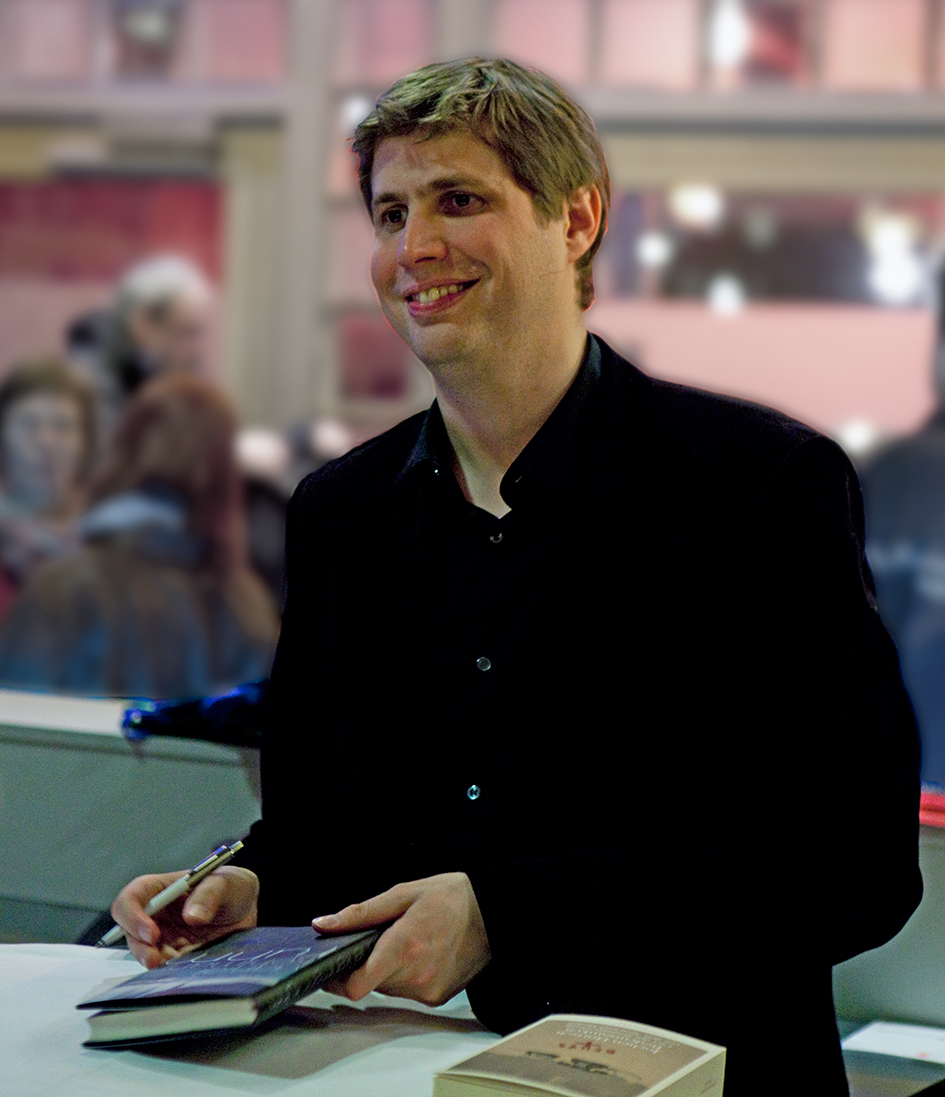
Born in Munich on January 13, 1975, Daniel Kehlmann is the son of television director Michael Kehlmann and actress Dagmar Mettler. He moved with his parents to Vienna at age six, growing up in the city's 23rd district and obtaining dual German and Austrian citizenship. Kehlmann published his early literary works while completing his studies, quickly building an international readership. His breakout novel, Measuring the World (2005), became one of the most commercially and critically successful post-war German novels and was translated into more than forty languages. He continued publishing acclaimed fiction including Me and Kaminski, Fame, F, and The Director. In 2017, he published Tyll, translated into English by Ross Benjamin, which reimagined the folklore trickster Tyll Ulenspiegel against the backdrop of the Thirty Years' War and was shortlisted for the 2020 International Booker Prize. Over his career, Kehlmann has been honored with major awards such as the Candide Prize, the Doderer Prize, the Kleist Prize, the WELT Literature Prize, the Literature Prize of the Konrad Adenauer Foundation, and the Thomas Mann Prize. He divides his time between Vienna, Berlin, and New York.
Kehlmann's prose is characterized by its blend of meticulous historical research, philosophical inquiries into truth, and dark, metafictional humor. His works frequently investigate the boundary between reality and fiction, the fallibility of memory, and the tragicomic limits of human reason. In works such as the 2016 psychological novella You Should Have Left, he utilizes elements of horror and spatial disorientation to trace a screenwriter's mental breakdown in an isolated mountain home. Across his historical novels and contemporary satires, his writing balances philosophical depth with accessible, swift narrative structure.

4 books in catalog
Historical fiction and metaphysical satire take central stage in international German-language literature through inventive reimaginings of historical icons, scientific ambition, and folklore. The novelist and playwright Daniel Kehlmann achieved widespread recognition with Measuring the World, an inventive historical novel depicting the contrasting lives and methods of mathematician Carl Friedrich Gauss and naturalist Alexander von Humboldt.
Born in Munich on January 13, 1975, Daniel Kehlmann is the son of television director Michael Kehlmann and actress Dagmar Mettler. He moved with his parents to Vienna at age six, growing up in the city's 23rd district and obtaining dual German and Austrian citizenship. Kehlmann published his early literary works while completing his studies, quickly building an international readership. His breakout novel, Measuring the World (2005), became one of the most commercially and critically successful post-war German novels and was translated into more than forty languages. He continued publishing acclaimed fiction including Me and Kaminski, Fame, F, and The Director. In 2017, he published Tyll, translated into English by Ross Benjamin, which reimagined the folklore trickster Tyll Ulenspiegel against the backdrop of the Thirty Years' War and was shortlisted for the 2020 International Booker Prize. Over his career, Kehlmann has been honored with major awards such as the Candide Prize, the Doderer Prize, the Kleist Prize, the WELT Literature Prize, the Literature Prize of the Konrad Adenauer Foundation, and the Thomas Mann Prize. He divides his time between Vienna, Berlin, and New York.
Kehlmann's prose is characterized by its blend of meticulous historical research, philosophical inquiries into truth, and dark, metafictional humor. His works frequently investigate the boundary between reality and fiction, the fallibility of memory, and the tragicomic limits of human reason. In works such as the 2016 psychological novella You Should Have Left, he utilizes elements of horror and spatial disorientation to trace a screenwriter's mental breakdown in an isolated mountain home. Across his historical novels and contemporary satires, his writing balances philosophical depth with accessible, swift narrative structure.