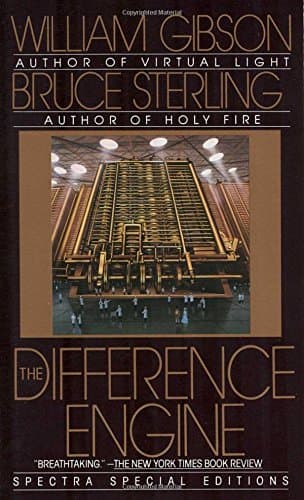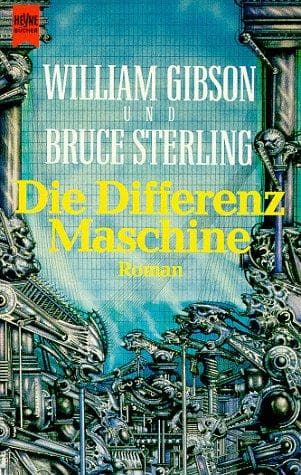
Part detective story, part historical thriller, The Difference Engine is the first collaborative novel by two of the most brilliant and controversial science fiction authors of our time. Provocative, compelling, intensely imagined, it is a startling extension of Gibson's and Sterling's unique visions - in a new and totally unexpected direction!<Blockquote> -<a href="http://www.goodreads.com/book/show/337116.The_Difference_Engine">Goodreads</a>
Add to your library to track progress and write reviews
Find Die Differenzmaschine Bruce Sterling in PDF, EPUB, ebook, audiobook, print, or library editions.

6 books in catalog
The emergence of cyberpunk transformed science fiction by blending high-tech futures with gritty, decentralized subcultures. Michael Bruce Sterling helped shape this movement as both a novelist and as the editor of the influential 1986 collection Mirrorshades: The Cyberpunk Anthology. His early novel Schismatrix explored posthuman evolution across space colonies, establishing key speculative ideas within late-twentieth-century science fiction.
Born on April 14, 1954, in Brownsville, Texas, Sterling grew up as the son of an engineer and a registered nurse. He attended the University of Texas at Austin from 1972 to 1976, where he engaged with science fiction fandom, wrote for fanzines, and participated in literary workshops. He sold his first science fiction short story, 'Man-Made Self', in 1976 for the Texan anthology Lone Star Universe. He followed his short fiction debut with the 1977 novel Involution Ocean, a story featuring dustwhalers on a cratered planet influenced by Herman Melville's Moby-Dick, and the 1980 novel The Artificial Kid.
Throughout the following decades, Sterling broadened his output to include non-fiction work, journalism, and essay writing. In 1992, he published The Hacker Crackdown: Law and Disorder on the Electronic Frontier, an investigative book detailing digital law enforcement and computer crime. Beyond his books, he has written for online outlets such as well.com and bruces.medium.com, appeared in documentaries such as Freedom Downtime, TechnoCalyps, and Traceroute, and had his work documented on reference sites such as Wikipedia.
Sterling's writing frequently focuses on near-future extrapolation, political structures, surveillance, and ecological dynamics. His stories analyze how rapidly changing technologies alter human social behavior and governance. In novels such as Islands in the Net and Holy Fire, he explores global data networks, corporate power, and biomedical life extension.
His broader literary work encompasses alternate history, hard science fiction, steampunk, and modern horror contributions. Sterling has also engaged with international speculative traditions, writing fiction designed to align with the Italian fantascienza subgenre. His narrative approach highlights broad worldbuilding, technological infrastructure, and human adaptability.