SSansFiction
The libraryCollectionsJournalStatsFor authors
Sign inJoin now
Sansfiction,

A digital library for books. Made by readers, for readers.

v 2.0 · 2026
The library
  • Discover
  • Collections
  • Book tracker
  • Journal
  • Stats
For authors
  • SF Links
  • Analytics
  • How it works
  • FAQ
Elsewhere
  • X / @sansfiction
  • Privacy
  • Terms
  • Contact
© 2026 SansFiction · Digital · GlobalA quiet room for your reading life.
The libraryCollectionsJournalStatsFor authors
Sign inJoin now →
Navigation
Library
Bookshelf
Journal
Discover
Collections
Tierlists
Stats
Profile
Author Page
Link Builder
Account
Sign in
S
G
BooksadventureThe Colour of Magic
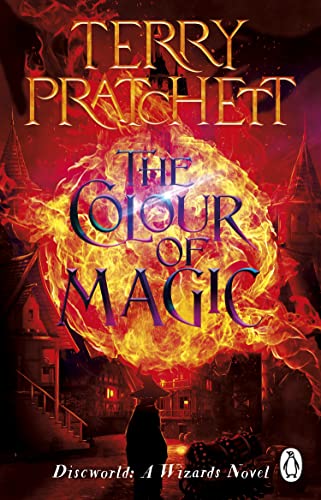
Cover of The Colour of Magic by Terry Pratchett
№ 1 · Discworld

The Colour of Magic,

by Terry Pratchett, Leo Nickolls

Ask AI
Rating3.8/ 5
Ratings1,500
Pages287
Reading Hours6h
Published2014
LanguageEnglish

§Synopsis

01

Somewhere on the frontier between thought and reality exists the Discworld, a parallel time and place which might sound and smell very much like our own, but which looks completely different. It plays by different rules. Certainly it refuses to succumb to the quaint notion that universes are ruled by pure logic and the harmony of numbers.

But just because the Disc is different doesn't mean that some things don't stay the same. Its very existence is about to be threatened by a strange new blight: the arrival of the first tourist, upon whose survival rests the peace and prosperity of the land. But if the person charged with maintaining that survival in the face of robbers, mercenaries and, well, Death is a spectacularly inept wizard, a little logic might turn out to be a very good idea.

§Our take

Here's the awkward truth: Pratchett found it embarrassing that new readers start with this book, and plenty of fan guides agree, steering people to Guards! Guards!, Wyrd Sisters or Mort instead. That doesn't make it bad. It makes it an origin story, and a funny one: a reread blog counts more laugh-out-loud jokes here than in the later books, with the Luggage as a favourite creation. The catch is structure. This is really four novellas linked by Rincewind and Twoflower rather than one novel, and readers who want a single arc find it disjointed. The parody also leans on knowing what's being spoofed, from Leiber's sword-and-sorcery duo to a dragon-riding section aimed squarely at Anne McCaffrey, though you can enjoy the jokes without the footnotes.

§Themes

Fantasy under friendly fire
Pratchett said the aim was doing for classic fantasy what a famous Western spoof did for Westerns, and the book gleefully pokes at grimoires, dragons and heroic duos.
A world that refuses logic
The Disc runs on its own rules, and the harmony of numbers has no jurisdiction there.
The useless hero
Rincewind is a spectacularly inept wizard, and some readers find him less likeable than the leads Pratchett wrote later.
Tourism as apocalypse
The land's peace and prosperity hang on the survival of one sightseer, which is the joke the whole plot hangs on.

§How it was received

Kirkus in 1983 called it lighthearted, inventive and entertaining, though less wildly absurd than Pratchett's earlier Strata. Word of mouth has been kinder: a White Dwarf review is remembered as mixed to favourable, and a comparison to Douglas Adams — Pratchett doing for fantasy what Adams did for science fiction — has stuck. The Guardian's Sam Jordison is said to have called it worth reading in itself, maybe not the best entry point.

§Read it if

  • You want to see where Discworld began, warts and all
  • You like joke-dense fantasy parody and don't mind a groan-worthy pun
  • You prefer episodic books you can read in sittings

§Skip it if

  • You want a single unified plot. Four novella-like parts with no strong arc is a fair complaint.
  • You're after the best possible first Discworld. Try Guards! Guards!, Wyrd Sisters or Mort first.

§Before you start

Reading experience
Four novella-like parts with two prologues, so it reads in sittings, and it stops partway through the story, running straight into The Light Fantastic.
Reading order
Discworld book 1 and the first Rincewind book, followed directly by The Light Fantastic. Penguin says the novels can be read in any order, but Pratchett's own advice and most fan guides point newcomers to Guards! Guards!, Wyrd Sisters or Mort first.

§Common questions

Should I start Discworld with The Colour of Magic?
Pratchett himself said no, and fan guides usually point to Guards! Guards!, Wyrd Sisters or Mort instead. But plenty of readers, including Book Riot's suggested path, start with the Rincewind books anyway.
Is it one novel or a collection of stories?
Closer to the second. It has two prologues and four long parts, each long enough to be called a novella, linked by Rincewind and Twoflower.
Does it have an ending?
Not really. It ends partway through the story and continues directly in The Light Fantastic; the 2008 TV adaptation merged the two books.

§If you liked this

  • The Light Fantastic by Terry Pratchett — The direct continuation, picking up the story this book leaves unfinished.
  • Guards! Guards! by Terry Pratchett — The first City Watch book and the entry point most fan guides recommend instead.
  • The Hitchhiker's Guide to the Galaxy by Douglas Adams — The comparison that stuck: Pratchett does for fantasy what Adams did for science fiction.
  • The Dragonriders of Pern (Dragonflight) by Anne McCaffrey — One of the book's four parts parodies it directly, dragon-riding and all.
  • Fafhrd and the Gray Mouser by Fritz Leiber — Fritz Leiber's sword-and-sorcery duo, echoed by two characters in the book.
Sources
  • Wikipedia
  • Kirkus Reviews
  • Penguin Random House UK (Corgi)
  • Wikipedia (series article)
  • L-Space Web wiki (fan wiki)
  • The Unauthorised (unrequested) Discworld Re-read (Substack, Daniel Williams)
  • Book Riot, Priya Sridhar, 11 Sep 2018

Track this book

Add to your library to track progress and write reviews

§Genres
adventure1biography1fantasy1fiction1history1humor1
§Content Warnings
§Moods
adventurous1funny1inspiring1lighthearted1mysterious1reflective1relaxing1
§Tags
#diverse characters1#irreverant1#loveable characters1#not diverse characters1#plot driven1

§About the Author

Terry Pratchett
Terry Pratchett

11 books in catalog

Comic fantasy gained one of its most expansive settings with the creation of the Discworld series, a flat world balanced on four elephants resting atop a giant cosmic turtle. English novelist Sir Terence David John Pratchett, OBE, widely known as Terry Pratchett, authored over forty novels set in this humorous universe, beginning with The Colour of Magic in 1983. Over his career, Pratchett produced an average of two books a year, blending satire, slapstick, and philosophical inquiry to construct a vast literary universe.

By the late 1990s, Pratchett was the UK's best-selling author of the decade, and as of December 2007 had sold more than 55 million books worldwide with translations into 36 languages. His literary achievements include winning the Carnegie Medal in 2001 for his young adult novel The Amazing Maurice and his Educated Rodents. At various points in his career, he was recorded as the second most-read writer in the UK and the seventh most-read non-US author in the United States.

Career & Background

Born Terence David John Pratchett on 28 April 1948 in Beaconsfield, Buckinghamshire, he published his first short story as a teenager before leaving school at age seventeen to work as a journalist for the Bucks Free Press. While working in journalism and later public relations, he casually mentioned a manuscript to publisher Peter Bander van Duren, leading to the publication of his debut novel, The Carpet People, in 1971. Pratchett followed his debut with two standalone science-fiction novels, The Dark Side of the Sun (1976) and Strata (1981), before pivoting permanently toward comic fantasy.

The launch of the Discworld series in 1983 redirected his writing career, leading him to resign from his public relations position to focus entirely on writing fiction full-time. Between 1983 and 2015, Pratchett published 41 Discworld novels alongside collaborative projects such as the 1990 apocalyptic comedy Good Omens: The Nice and Accurate Prophecies of Agnes Nutter, Witch, written with Neil Gaiman. His output remained prolific throughout his life, generating tens of millions of book sales and adapting his works into television shows, plays, and video games.

Writing Style & Themes

Pratchett's writing is distinguished by its satirical sharpness, parody of traditional fantasy tropes, and extensive use of inventive footnotes. His narrative settings serve as mirrors for real-world institutions, exploring complex subjects such as religious dogma, political bureaucracy, journalism, death, and human nature through a humorous lens. Rather than presenting pure escapism, his narrative arcs frequently feature deeply practical, fallible characters navigating social and ethical dilemmas on a world carried through space by Great A'Tuin.

Through sub-series featuring distinct casts—such as the inept wizard Rincewind, the Witches of Lancre, the City Watch, and the anthropomorphic personification of Death—Pratchett examined how myth and storytelling shape reality. His young adult fiction, including The Amazing Maurice and his Educated Rodents and the Tiffany Aching sequence starting with The Wee Free Men, brought these same thematic complexities to younger audiences while maintaining his signature wit.

Major Works

  • The Carpet People — Published in 1971, this debut novel introduced Pratchett's comic adventure storytelling before he created the Discworld setting.
  • The Colour of Magic — Published in 1983, this book launched the Discworld series, introducing the inept wizard Rincewind and the flat world riding through space on four elephants and a giant turtle.
  • The Light Fantastic — The direct sequel to The Colour of Magic, continuing Rincewind's comedic misadventures across Discworld.
  • Mort — A prominent early Discworld novel that focuses on the character Death taking on a young apprentice, expanding the series' philosophical comedic scope.
  • Sourcery — A Discworld novel centering on Rincewind and the magical chaos unleashed when a powerful wizard's eighth son is born.
  • Wyrd Sisters — A satirical Discworld novel that parodies Shakespearean drama through the exploits of Granny Weatherwax and the Lancre witches.
  • Good Omens: The Nice and Accurate Prophecies of Agnes Nutter, Witch — A 1990 apocalyptic comedy novel co-written with Neil Gaiman about an angel and a demon attempting to avert the end of the world.
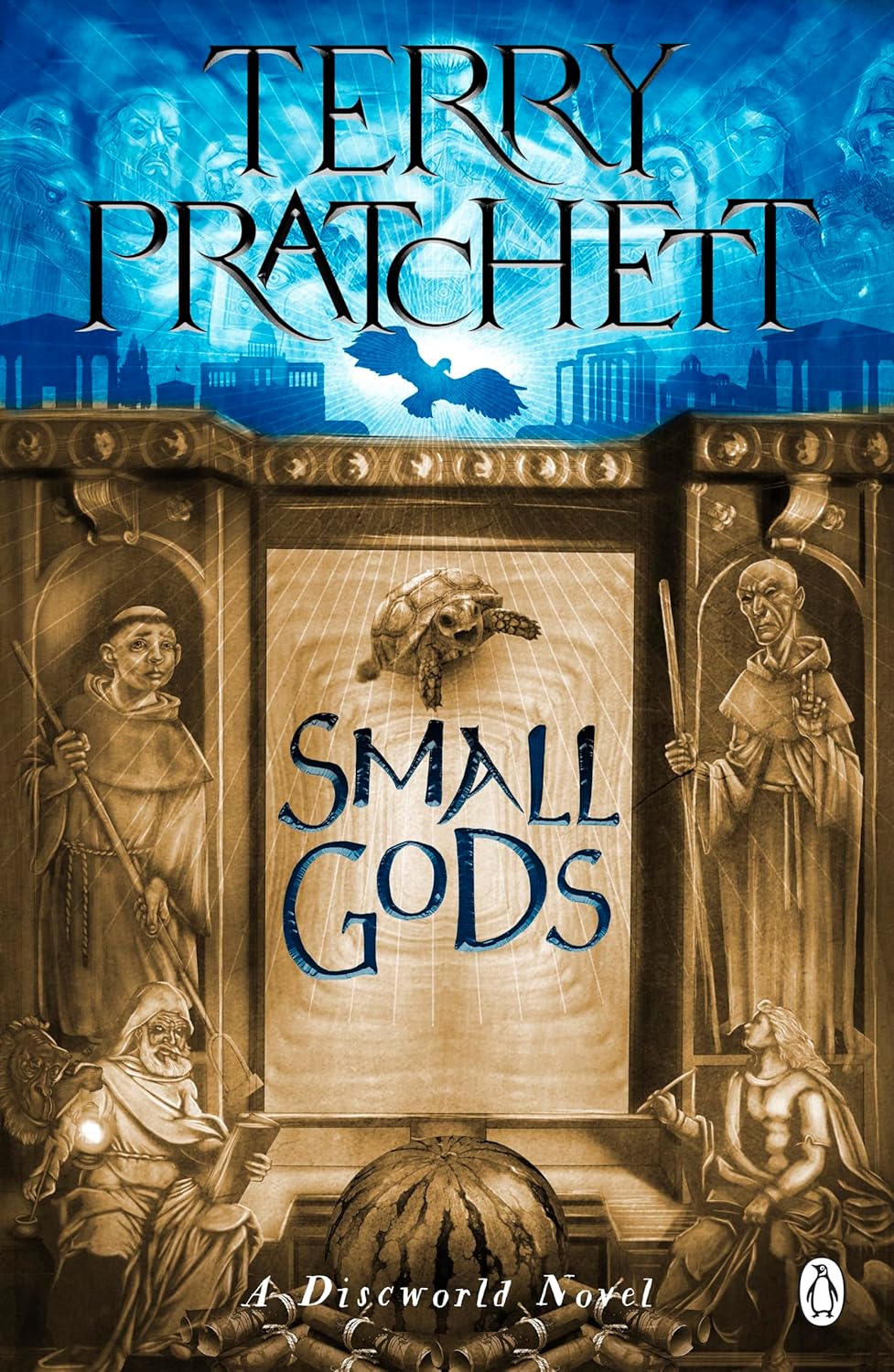
  • Small Gods — A critically acclaimed Discworld novel examining religion, belief, and institutional authority through the story of the god Om.
  • Hogfather — A festive Discworld satire exploring belief and holiday traditions when Death steps in to take the place of the Disc's midwinter gift-giver.
  • The Amazing Maurice and his Educated Rodents — A 2001 young adult novel set in Discworld that won the Carnegie Medal for its clever twist on the Pied Piper folk tale.
  • The Wee Free Men — The first novel in the Tiffany Aching sequence within Discworld, featuring the fierce, blue-skinned Nac Mac Feegle.
  • A Hat Full of Sky — A young adult Discworld novel continuing the story of apprentice witch Tiffany Aching as she learns her craft.
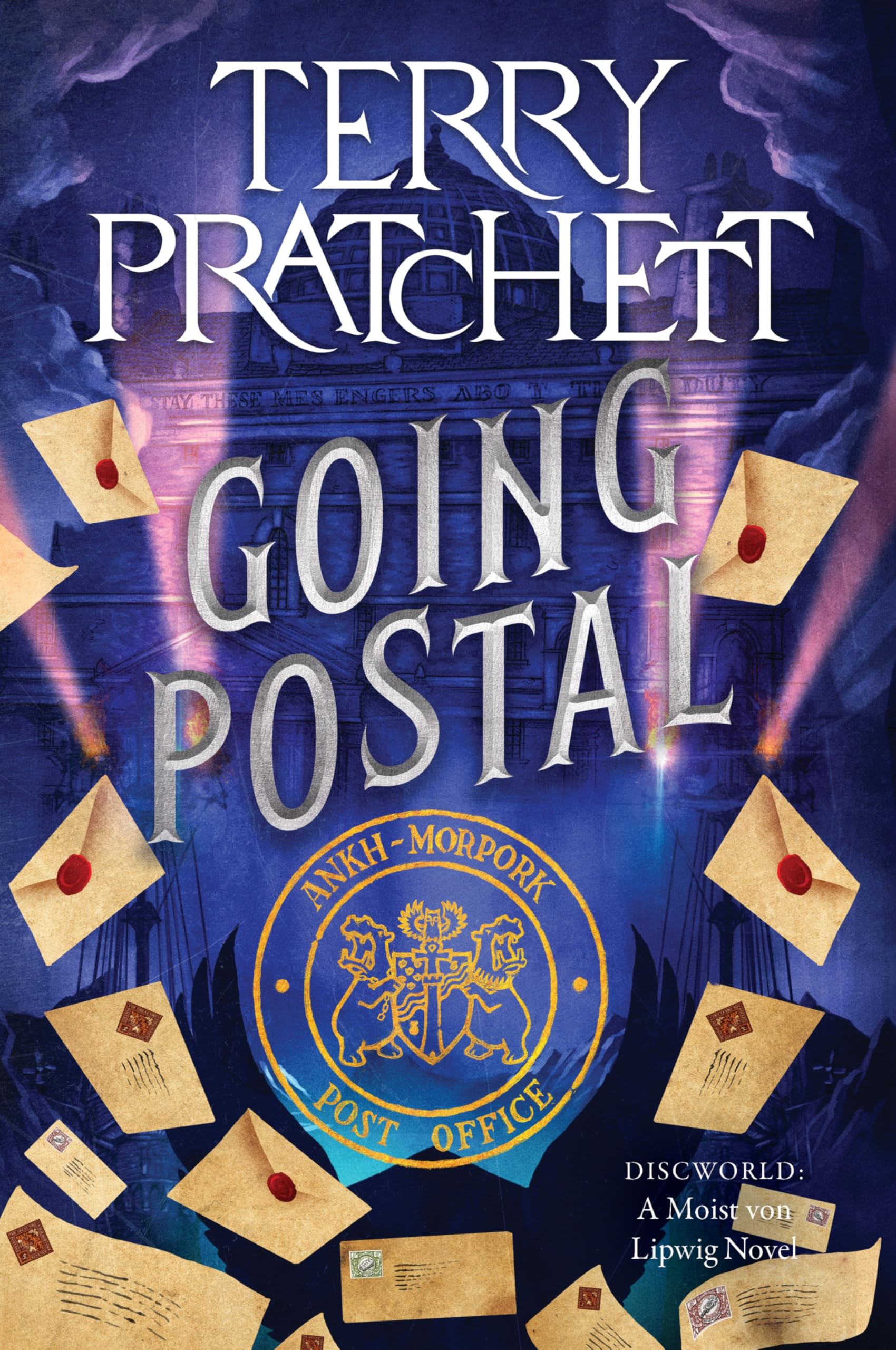
  • Going Postal — A popular late-era Discworld novel following con man Moist von Lipwig as he is forced to revitalize the Ankh-Morpork Post Office.

§Featured Series

Discworld

Cover of The Colour of Magic by Terry Pratchett

The Colour of Magic

Terry Pratchett, 1983
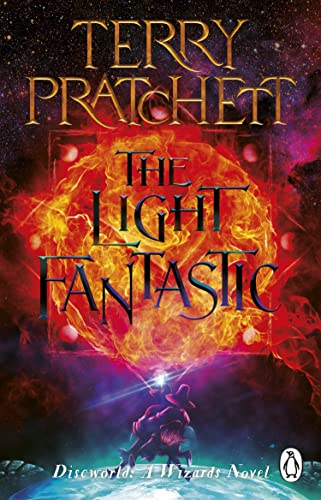
Cover of The Light Fantastic by Terry Pratchett

The Light Fantastic

Terry Pratchett, 1986
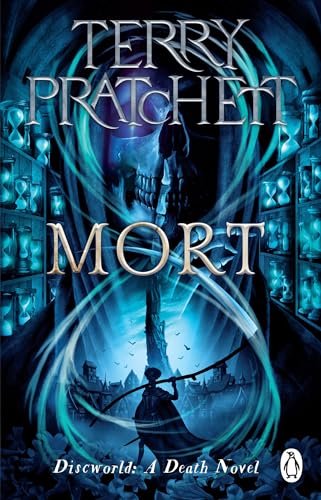
Cover of Mort by Terry Pratchett

Mort

Terry Pratchett, 1987
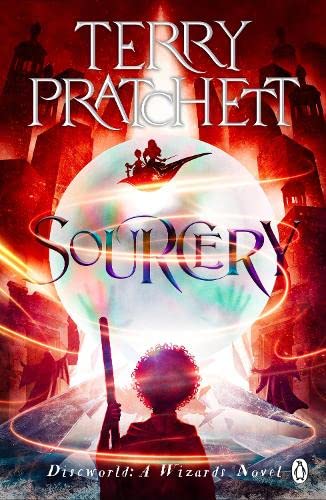
Cover of Sourcery by Terry Pratchett

Sourcery

Terry Pratchett, 1988
Cover of Wyrd Sisters by Terry Pratchett

Wyrd Sisters

Terry Pratchett, 1988
Cover of Small Gods by Terry Pratchett

Small Gods

Terry Pratchett, 1992
Cover of Hogfather by Terry Pratchett

Hogfather

Terry Pratchett, 1996
Cover of The Wee Free Men by Terry Pratchett

The Wee Free Men

Terry Pratchett, 2003
Cover of A Hat Full of Sky by Terry Pratchett

A Hat Full of Sky

Terry Pratchett, 2004
Cover of Going Postal by Terry Pratchett

Going Postal

Terry Pratchett, 2004

§Also part of

Discworld - Rincewind

§Other Editions

Showing 2 of 82 editions
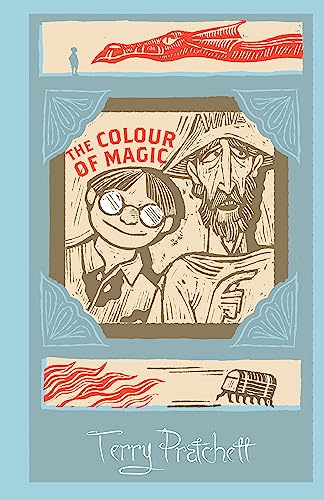
Cover of The Colour of Magic

The Colour of Magic

engPaperbackInternational Edition
Transworld Publishers20229781804990315
Amazon
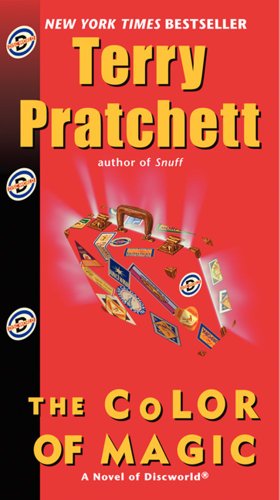
Cover of The Color of Magic

The Color of Magic

engPaperbackReissue
Harper20139780062225672
Amazon
§Genres
adventure1biography1fantasy1fiction1history1humor1
§Content Warnings
§Moods
adventurous1funny1inspiring1lighthearted1mysterious1reflective1relaxing1
§Tags
#diverse characters1#irreverant1#loveable characters1#not diverse characters1#plot driven1

Metadata

ISBN-139781473205321
ISBN-101473205328
ASIN1473205328

Editions and availability

Find The Colour of Magic Terry Pratchett in PDF, EPUB, ebook, audiobook, print, or library editions.

View on Amazon
Bookshop.orgGoogle Play BooksBarnes & NobleOpen Library