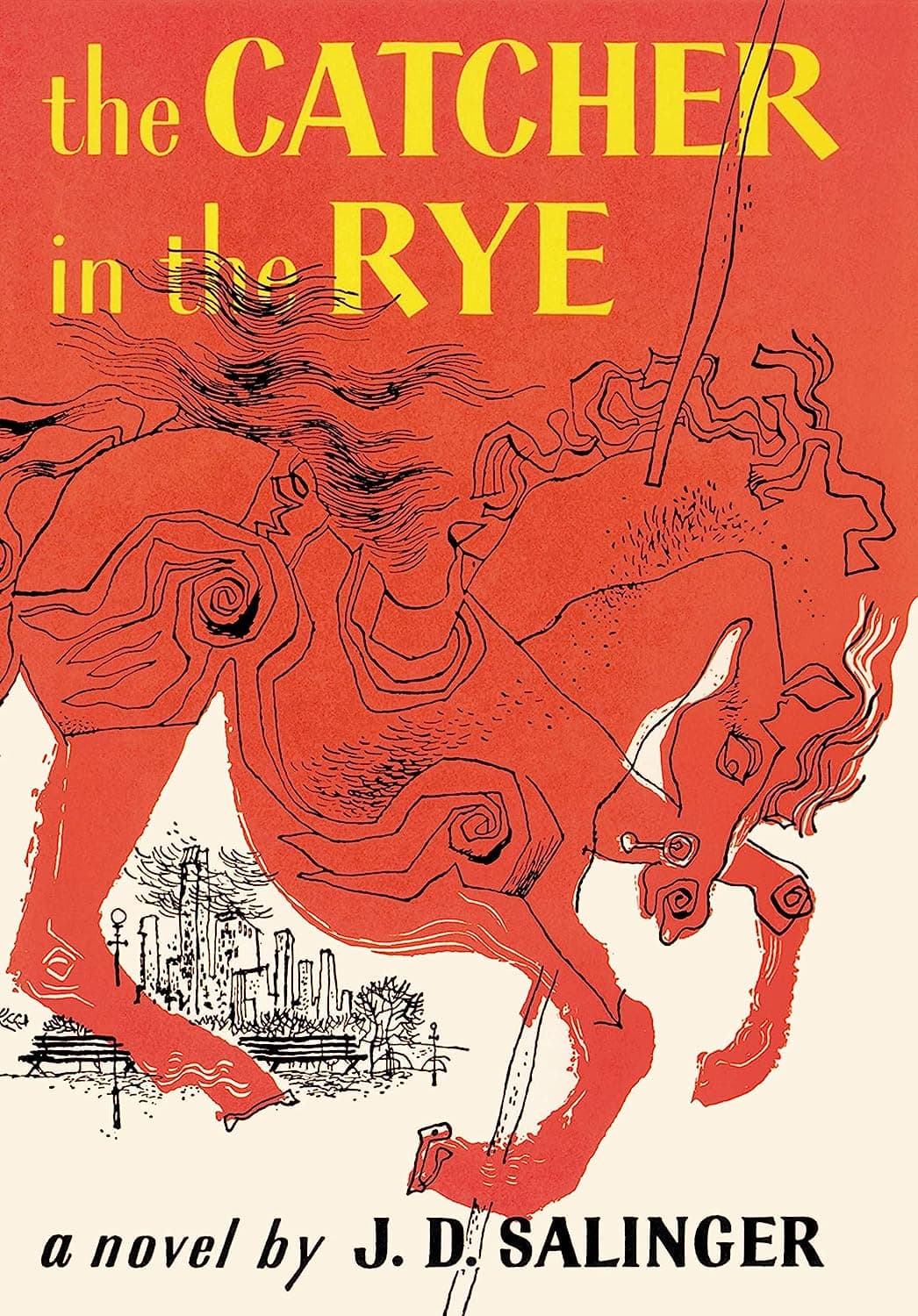
"The boy himself is at once too simple and too complex for us to make any final comment about him or his story. Perhaps the safest thing we can say about Holden is that he was born in the world not just strongly attracted to beauty but, almost, hopelessly impaled on it.
There are many voices in this novel: children's voices, adult voices, underground voices-but Holden's voice is the most eloquent of all. Transcending his own vernacular, yet remaining marvelously faithful to it, he issues a perfectly articulated cry of mixed pain and pleasure. However, like most lovers and clowns and poets of the higher orders, he keeps most of the pain to, and for, himself. The pleasure he gives away, or sets aside, with all his heart. It is there for the reader who can handle it to keep."-- Provided by Amazon
Holden condemns everyone else's pretense while lying freely himself, and critics read that contradiction in opposite ways. Encyclopedia.com's survey finds some treating him as a typical troubled adolescent, others as seriously ill, others as a near-saint whose view indicts a shallow society. The unreliable-narrator reading holds that his simple worldview distorts whatever he reports.
Readers on Goodreads describe their verdicts flipping on rereading at twenty, thirty or forty, some finding deliberate craft they'd missed as teenagers. GradeSaver traces the episodic drift to the Holden short stories Salinger repurposed, so few characters or settings last more than a couple of chapters. Momentum comes from Holden's perceptions, not events, and the conversational first-person voice is both what many readers praise and the commonest reason others bounce off.
The 1951 response was mixed: largely favorable early notices, though some reviewers found Holden's outlook morally unsettling. Later critical opinion has stayed divided, with both strong defenses of the novel and attacks on its prose and its place on school reading lists. It also appears on Time's 2005 list of the 100 best English-language novels since 1923.
Add to your library to track progress and write reviews
Find The Catcher in the Rye J. D. Salinger in PDF, EPUB, ebook, audiobook, print, or library editions.

2 books in catalog
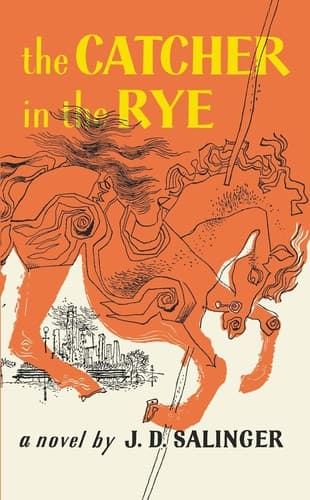
American post-World War II fiction gained one of its most enduring portrayals of adolescent alienation through the 1951 novel The Catcher in the Rye. Written by J. D. Salinger, the novel introduced readers to Holden Caulfield, whose distinctive voice, acute insecurities, and rejection of social hypocrisy resonated widely across generations of readers.
Following his initial publication successes in mid-century American periodicals, Salinger shifted toward increasingly introspective short fiction published primarily in The New Yorker, frequently focusing on the eccentricities and spiritual struggles of the fictional Glass family.
Jerome David Salinger was born on January 1, 1919, in New York City to Sol Salinger, a prosperous importer, and Miriam Salinger. Raised in Manhattan, he attended local private institutions, including the McBurney School, before publishing his first short story in Story magazine in 1940. Salinger served in the United States Army during World War II, an experience that significantly influenced his later writings. Following his military service, he established a key creative partnership with The New Yorker, which published his critically acclaimed 1948 story 'A Perfect Day for Bananafish'.
The release of The Catcher in the Rye in 1951 brought Salinger immediate international attention. Uncomfortable with sudden public prominence and the persistent intrusion of journalists and fans, he withdrew to Cornish, New Hampshire, maintaining a private lifestyle while continuing to publish novellas such as Franny and Zooey. Salinger died in Cornish on January 27, 2010. Shortly after his death, on 28 January, 2010:, The New Yorker highlighted his ongoing influence by making several of his classic short stories accessible online.
Salinger's narrative style is defined by idiomatic dialogue, psychological depth, and complex symbolism. His work examines adolescent insecurity, adult disillusionment, spiritual seeking, and the conflict between individual integrity and social expectation. By blending conversational immediacy with sharp emotional observation, Salinger created intimate character studies that capture the vulnerability and inner turmoil of his protagonists.