SSansFiction
The libraryCollectionsJournalStatsFor authors
Sign inJoin now
Sansfiction,

A digital library for books. Made by readers, for readers.

v 2.0 · 2026
The library
  • Discover
  • Collections
  • Book tracker
  • Journal
  • Stats
For authors
  • SF Links
  • Analytics
  • How it works
  • FAQ
Elsewhere
  • X / @sansfiction
  • Privacy
  • Terms
  • Contact
© 2026 SansFiction · Digital · GlobalA quiet room for your reading life.
The libraryCollectionsJournalStatsFor authors
Sign inJoin now →
Navigation
Library
Bookshelf
Journal
Discover
Collections
Tierlists
Stats
Profile
Author Page
Link Builder
Account
Sign in
S
G
BooksbrothersThe Brothers Karamazov
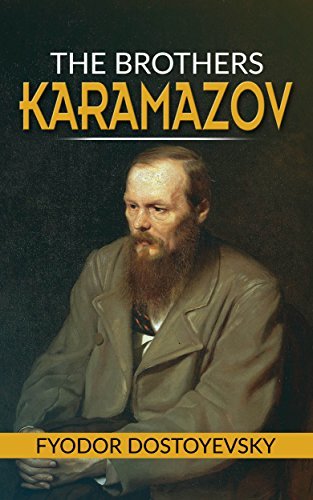
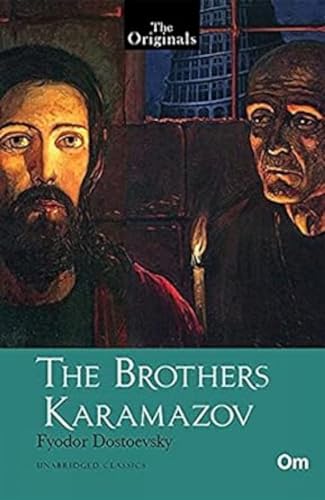
Cover of The Brothers Karamazov by Fyodor Dostoevsky

The Brothers Karamazov,

by Fyodor Dostoevsky, Richard Pevear, Larissa Volokhonsky

Ask AI
Rating4.4/ 5
Ratings540
Pages796
Reading Hours17h
Published2018
LanguageEnglish

§Synopsis

01

When brutal landowner Fyodor Karamazov is murdered, the lives of his sons are changed irrevocably: Mitya, the sensualist, whose bitter rivalry with his father immediately places him under suspicion for parricide; Ivan, the intellectual, whose mental tortures drive him to breakdown; the spiritual Alyosha, who tries to heal the family's rifts; and the shadowy figure of their bastard half-brother Smerdyakov. As the ensuing investigation and trial reveal the true identity of the murderer, Dostoyevsky's dark masterpiece evokes a world where the lines between innocence and corruption, good and evil, blur and everyone's faith in humanity is tested.

§Our take

This is a murder mystery with the philosophical depth of a theological summit, and the friction between those genres is the pleasure. Ivan's rebellion against a world that permits children to suffer, Alyosha's living faith and the Grand Inquisitor's argument about freedom and bread give the book a pulse beyond the whodunit. The book's many voices resist a tidy verdict, though critics disagree whether they finally converge on active love.

Then comes the practical snag: the translator. Pevear and Volokhonsky preserve the narrator's rough, repetitive voice; Avsey makes the prose plain and welcoming; Katz is newer and fluid, though it sometimes tidies the hedging. There is no single winner, only a different Karamazov with each edition. Read the famous opening line in your chosen version; one critic thinks Avsey's 'violent' gives too much away.

§Themes

Guilt in the open
A father's murder exposes how each son understands innocence, guilt and responsibility.
Reason against faith
Ivan's rebellion over human suffering stands against Alyosha's and Zosima's lived faith, and neither side gets an easy dismissal.
Freedom or bread
The Grand Inquisitor asks whether people would surrender freedom for bread, certainty and authority.
Many voices, no clean verdict
The brothers contradict themselves and one another, while critics dispute whether the book endorses any of them.
The narrator is in the room
A chatty, hedging provincial chronicler filters the story, making his awkwardness part of the meaning.

§How it was received

The prose has always provoked sharply different verdicts: some writers prized its feverish intensity, while others found the prose clumsily overdone. English reception then becomes a translation argument: Garnett is free but often criticized, while Pevear and Volokhonsky became the modern default. Avsey offers plain English, and Katz offers a newer, fluid voice.

§Read it if

  • You want a detective story that opens into arguments about God, free will and moral responsibility
  • You can stick with a slow opening and long monologues when the prose rewards patience
  • You want to choose a translation deliberately and care how its voice changes the book

§Skip it if

  • You need a fast plot and uncomplicated characters. The opening can be slow, digressive and crowded with names.
  • Long arguments about child suffering or dense monologues will send you looking for another book.

§Before you start

Reading experience
Expect a slow, digressive opening, a thicket of names and long monologues, then a later courtroom sequence that readers single out for tension.
Content notes
A father is murdered, and the resulting investigation and trial are central to the story; Child suffering and abuse are discussed in philosophical arguments; Drinking, debauchery, sexual rivalry and a suicide appear in the novel.

§Common questions

Which translation should I read?
Garnett is free, Pevear and Volokhonsky stay close to the Russian and add notes, Avsey is plain and approachable, McDuff is a careful literal option, and Katz is newer and fluid. No translation is the settled winner.
Is The Brothers Karamazov hard to get into?
Yes. The opening is slow and digressive, characters have several names, and the philosophical monologues can strain patience; the later courtroom sequence has stronger forward pull.
Is The Brothers Karamazov part of a series?
No. It stands alone. A sequel following Alyosha was reportedly planned but never written, and scholars dispute what it would have contained.

§If you liked this

  • Crime and Punishment by Fyodor Dostoevsky — The shorter, more plot-driven way into Dostoevsky, with the same habit of making a murder ask moral questions.
  • The Plague by Albert Camus — A strong follow-up to Ivan's rebellion over suffering, because Camus takes up the problem of evil through a different crisis.
  • The Sound and the Fury by William Faulkner — Faulkner reread Karamazov regularly, and its many-voiced family tragedy makes the comparison tempting.
  • Anna Karenina by Leo Tolstoy — The natural Russian-novel comparison, and a useful way to test Pevear and Volokhonsky because they translated both.
Sources
  • Wikipedia
  • London Review of Books (Daniel Soar, 6 March 2025)
  • First Things (Helen Andrews, 1 Jan 2013)
  • First Things (Peter J. Leithart, 23 Feb 2016)
  • Wikipedia
  • Goodreads
  • Miller's Book Review (John Stamps, 28 Oct 2023)
  • VoegelinView
  • Wikipedia
  • Waggish (David Auerbach, 16 Jan 2010)
  • Project Gutenberg

Track this book

Add to your library to track progress and write reviews

§Genres
brothers1business1classics1fiction1general1history1literature1
§Moods
adventurous1challenging1emotional1hopeful1inspiring1mysterious1reflective1
§Tags
#clasici1#diverse characters1#loveable characters1#not diverse characters1#strong character development1#unloveable characters1

§About the Author

Fyodor Dostoevsky
Fyodor Dostoevsky

7 books in catalog

Combining intense psychological examination with complex ethical inquiry, the 1866 novel Crime and Punishment established a landmark approach to character interiority and crime fiction. Its author, Fyodor Dostoevsky, created a major body of Russian literature comprising novels, novellas, short stories, essays, and journalism that probed the troubled political, social, and spiritual atmosphere of nineteenth-century Russia.

His fiction engages deeply with philosophical and theological debates, examining human suffering, moral responsibility, and existential conflict through tightly constructed narrative voices and dramatic encounters.

Career & Background

Born in Moscow in 1821 to a hospital doctor and his literate wife, Fyodor Mikhailovich Dostoevsky was exposed to literature and religious texts early in life. After attending boarding school, he entered the St. Petersburg Academy of Military Engineering, graduating in 1843. He quickly resigned his military post to pursue writing full time, publishing his first novel Poor Folk in 1846. His career encompassed short stories, novellas, journalistic essays, and editorial journals alongside his larger fictional works.

Dostoevsky's literary reputation expanded dramatically across the late nineteenth century as he published major novels, including Demons in 1872 and The Brothers Karamazov in 1880. Critical interest in his literary structures continued long after his death, notably highlighted when literary theorist Mikhail Mikhailovich Bakhtin published Problems of Dostoyevsky's Works in 1929, analyzing the writer's multi-voiced narrative techniques and dialogic form.

Writing Style & Themes

Dostoevsky's fiction combines religious mysticism with rigorous psychological insight, examining how individuals navigate extreme moral dilemmas, guilt, and spiritual isolation. Critics frequently identify his novella Notes from the Underground as an early foundational text of existentialist literature due to its unvarnished portrait of human irrationality and free will. Across his narrative output, characters represent contrasting philosophical viewpoints on God, atheism, social reform, and human freedom.

Through shorter fiction like White Nights as well as expansive multi-character novels, Dostoevsky built scenes around dramatic ideological confrontations. His works balance personal autobiography and acute observation of social upheaval, placing conflicted protagonists inside chaotic environments where spiritual redemption and psychological collapse remain constantly intertwined.

Major Works

  • Crime and Punishment — Published in 1866, this novel focuses on the psychological turmoil and moral consequences experienced by a young former student who commits murder in St. Petersburg.
  • The Idiot — Serialized starting in 1869, this novel examines the struggles of a deeply compassionate and innocent prince attempting to navigate corrupt high society.
  • Demons — Published in 1872, this politically charged novel explores radical ideologies, fanaticism, and social unrest in a provincial Russian town.
  • The Brothers Karamazov — Published in 1880, Dostoevsky's final novel presents a family drama that explores faith, doubt, free will, and morality through the distinct worldviews of three brothers.
  • Notes from the Underground — This influential novella presents the interior monologue of an isolated narrator, serving as an early milestone in existentialist literature.
  • White Nights — A short story depicting a lonely narrator's fleeting emotional connection with a young woman over four nights in St. Petersburg.

§Other Editions

Showing 2 of 439 editions
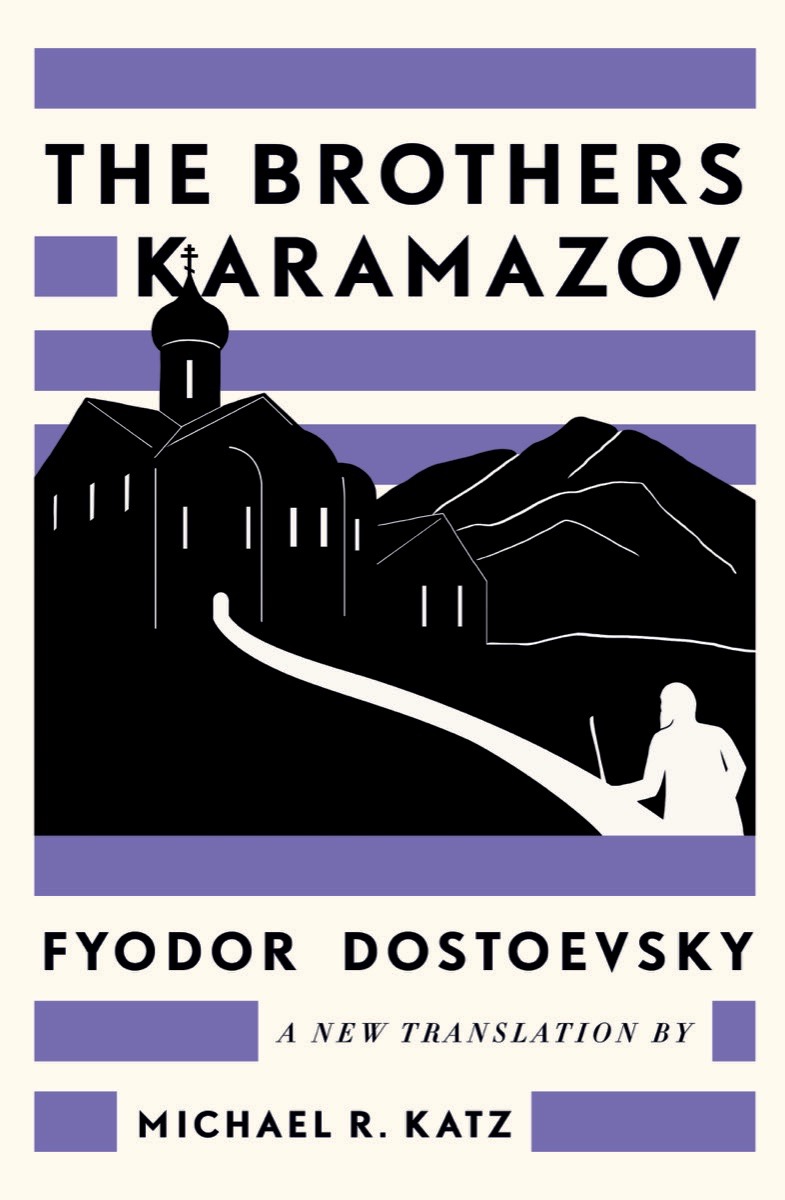
Cover of The Brothers Karamazov

The Brothers Karamazov

engEbook
Anna Ruggieri20179788826042107
Amazon
Cover of The Brothers Karamazov

The Brothers Karamazov

engHardcover
Liveright Publishing Corporation20239781631498190
§Genres
brothers1business1classics1fiction1general1history1literature1
§Moods
adventurous1challenging1emotional1hopeful1inspiring1mysterious1reflective1
§Tags
#clasici1#diverse characters1#loveable characters1#not diverse characters1#strong character development1#unloveable characters1

Metadata

ISBN-139789352763344
ISBN-109352763343
ASINB06XTQ8RF6

Editions and availability

Find The Brothers Karamazov Fyodor Dostoevsky in PDF, EPUB, ebook, audiobook, print, or library editions.

View on Amazon
Bookshop.orgGoogle Play BooksBarnes & NobleOpen Library

Featured In Lists

Book cover from this collectionBook cover from this collectionBook cover from this collectionBook cover from this collection
Book cover from this collection

100 Must Read Classics

99 books
Book cover from this collectionBook cover from this collectionBook cover from this collectionBook cover from this collection
Book cover from this collection

List 1001 Books Boxall

1000 books
Book cover from this collectionBook cover from this collectionBook cover from this collectionBook cover from this collection
Book cover from this collection

4lit

96 books
Book cover from this collectionBook cover from this collectionBook cover from this collectionBook cover from this collection
Book cover from this collection

200-ish Books to Read Before You Die

36 books