
§Author· 7 books
Fyodor Dostoevsky
Also known as Feodor Mikhailovich Dostoyevsky, Fyodor Mikhailovich Dostoevsky, Feodor Dostoevski
Combining intense psychological examination with complex ethical inquiry, the 1866 novel Crime and Punishment established a landmark approach to character interiority and crime fiction. Its author, Fyodor Dostoevsky, created a major body of Russian literature comprising novels, novellas, short stories, essays, and journalism that probed the troubled political, social, and spiritual atmosphere of nineteenth-century Russia.
His fiction engages deeply with philosophical and theological debates, examining human suffering, moral responsibility, and existential conflict through tightly constructed narrative voices and dramatic encounters.
Career & Background
Born in Moscow in 1821 to a hospital doctor and his literate wife, Fyodor Mikhailovich Dostoevsky was exposed to literature and religious texts early in life. After attending boarding school, he entered the St. Petersburg Academy of Military Engineering, graduating in 1843. He quickly resigned his military post to pursue writing full time, publishing his first novel Poor Folk in 1846. His career encompassed short stories, novellas, journalistic essays, and editorial journals alongside his larger fictional works.
Dostoevsky's literary reputation expanded dramatically across the late nineteenth century as he published major novels, including Demons in 1872 and The Brothers Karamazov in 1880. Critical interest in his literary structures continued long after his death, notably highlighted when literary theorist Mikhail Mikhailovich Bakhtin published Problems of Dostoyevsky's Works in 1929, analyzing the writer's multi-voiced narrative techniques and dialogic form.
Writing Style & Themes
Dostoevsky's fiction combines religious mysticism with rigorous psychological insight, examining how individuals navigate extreme moral dilemmas, guilt, and spiritual isolation. Critics frequently identify his novella Notes from the Underground as an early foundational text of existentialist literature due to its unvarnished portrait of human irrationality and free will. Across his narrative output, characters represent contrasting philosophical viewpoints on God, atheism, social reform, and human freedom.
Through shorter fiction like White Nights as well as expansive multi-character novels, Dostoevsky built scenes around dramatic ideological confrontations. His works balance personal autobiography and acute observation of social upheaval, placing conflicted protagonists inside chaotic environments where spiritual redemption and psychological collapse remain constantly intertwined.
Major Works
- Crime and Punishment — Published in 1866, this novel focuses on the psychological turmoil and moral consequences experienced by a young former student who commits murder in St. Petersburg.
- The Idiot — Serialized starting in 1869, this novel examines the struggles of a deeply compassionate and innocent prince attempting to navigate corrupt high society.
- Demons — Published in 1872, this politically charged novel explores radical ideologies, fanaticism, and social unrest in a provincial Russian town.
- The Brothers Karamazov — Published in 1880, Dostoevsky's final novel presents a family drama that explores faith, doubt, free will, and morality through the distinct worldviews of three brothers.
- Notes from the Underground — This influential novella presents the interior monologue of an isolated narrator, serving as an early milestone in existentialist literature.
- White Nights — A short story depicting a lonely narrator's fleeting emotional connection with a young woman over four nights in St. Petersburg.
§All Books
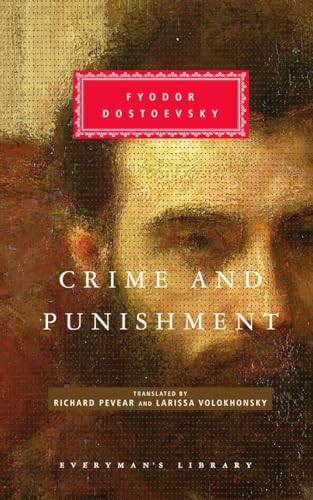
Crime and Punishment
Fyodor Dostoevsky, 1866
1,355 ratings
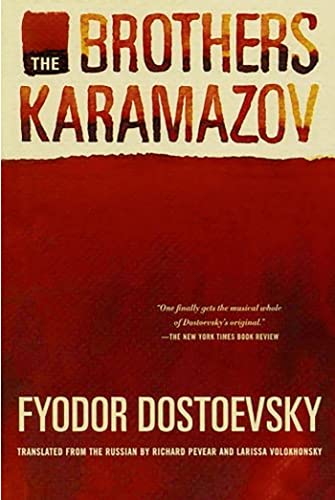
The Brothers Karamazov
Fyodor Dostoevsky, 1876
540 ratings

White Nights
Fyodor Dostoevsky, 1848
455 ratings

Notes from the Underground
Fyodor Dostoevsky, 1847
431 ratings
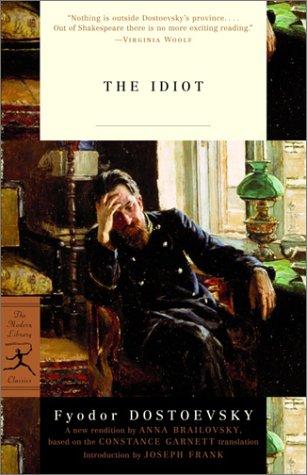
The Idiot
Fyodor Dostoevsky, 1867
281 ratings

Demons
Fyodor Dostoevsky, 1871
78 ratings

Notes from Underground, White Nights, The Dream of a Ridiculous Man, and Selections from The House of the Dead
Fyodor Dostoevsky, 1864
65 ratings
§ About Fyodor Dostoevsky's books
- Books on SansFiction
- 7
- Published
- 1847–1876
- Average rating
- 4.2 / 5 across 3,205 ratings
- Genres
- General, Classics, Literature, History
Start here: Crime and Punishment (1866)
Raskolnikov, a destitute and desperate former student, wanders through the slums of St Petersburg and commits a random murder without remorse or regret. He imagines himself to be a great man, a Napoleon: acting for a higher purpose beyond conventional moral law.
Common questions about Fyodor Dostoevsky
- Who is Fyodor Dostoevsky?
- Born in Moscow in 1821 to a hospital doctor and his literate wife, Fyodor Mikhailovich Dostoevsky was exposed to literature and religious texts early in life. After attending boarding school, he entered the St. Petersburg Academy of Military Engineering, graduating in 1843. He quickly resigned his military post to pursue writing full time, publishing his first novel Poor Folk in 1846.
- What is Fyodor Dostoevsky best known for?
- Fyodor Dostoevsky is best known for Crime and Punishment, published in 1866 with 1,355 ratings and a 4.2 average. It is the most-rated of Fyodor Dostoevsky's books on SansFiction.
- How many books has Fyodor Dostoevsky written?
- SansFiction lists 7 books by Fyodor Dostoevsky, published between 1847 and 1876. The most popular are Crime and Punishment, The Brothers Karamazov, White Nights, Notes from the Underground and The Idiot.
- Which Fyodor Dostoevsky book should I read first?
- Crime and Punishment is the usual place to start: it is Fyodor Dostoevsky's most-rated book here, with a 4.2 average.
- What genres does Fyodor Dostoevsky write?
- Fyodor Dostoevsky's books on SansFiction are tagged General, Classics, Literature and History.
Explore: General · Classics · Literature · History