§Synopsis
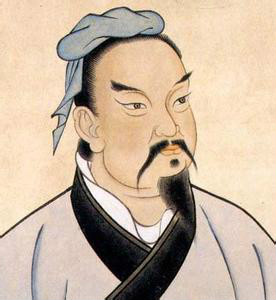
01The Art of War is an ancient Chinese military treatise dating from the Late Spring and Autumn Period. The work, which is attributed to the ancient Chinese military strategist Sun Tzu
§Our take
If you’ve been handed a business book that promises secret success formulas, you’ve already met Sun Tzu’s ghost. The Art of War survives because its core ideas—prepare, know your opponent, avoid costly fights—keep being recycled by executives, coaches and military educators. Yet scholars describe a text compiled from several sources and full of technical lists rather than a polished treatise, and that the famous indirect strategy framing many Western readers love may be a Western imposition rather than a Chinese original. The edition you choose changes the experience: Giles (1910) is free and annotated but dated, Nylan’s 2020 version is described as clear and direct, and Minford offers traditional commentary alongside the plain translation. Read it for the enduring questions it raises about preparation and deception, not as a step‑by‑step manual for modern markets.
§Themes
- Preparation over brute force
- The ideal is to win quickly and cheaply, ideally without fighting.
- Adaptability to terrain
- Tactics should change with circumstance, across terrain and the nine situations.
- Winning without being noticed
- The goal is a good outcome without the opponent realising how it happened.
- Intelligence and espionage
- The last chapter covers five kinds of spies and argues that espionage helps both win and prevent wars.
§How it was received
Modern scholarship treats the work as hugely influential but of uncertain authorship: doubts about Sun Tzu's existence go back centuries, and the 1972 Yinqueshan bamboo-slip find showed related texts that helped explain the confusion. Peter Lorge argues Western strategists have often used it to support their own ideas. Readers praise it as short, quotable and foundational for military and business thinking, while critics find the advice vague and short on evidence.
§Read it if
- You want a concise, quotable guide on preparation and deception that can be read in a single sitting.
- You are interested in a text that has shaped military and business thinking across centuries and cultures.
- You don’t mind aphoristic, repetitive style if you seek strategic ideas rather than narrative.
§Skip it if
- You prefer narrative‑driven nonfiction; the aphoristic style may feel thin.
- You seek a practical, step‑by‑step manual for modern business; the text’s vagueness may frustrate.
§Before you start
- Reading experience
- Thirteen brief chapters can be read in an afternoon, but editions with commentary stretch much longer.
- Content notes
- Discusses killing and deception in strategic terms; Covers spies, burning camps and fire attacks, with no graphic scenes.
§Common questions
- Is The Art of War a novel?
- No, it is an ancient Chinese military treatise.
- Which translation should I choose?
- Giles (1910) is free and annotated but dated; Nylan’s 2020 version is described as clear and direct; Minford offers commentary alongside the translation.
- Does it teach how to defeat enemies?
- Scholars stress planning and preparation, not a how‑to‑crush‑opponents manual.
§If you liked this
- The 48 Laws of Power by Robert Greene — Robert Greene's modern pop-strategy bestseller is one of the many popular books that borrow Sun Tzu's ideas.
- Playing to Win by A. G. Lafley and Roger L. Martin — A. G. Lafley and Roger Martin's evidence-based business strategy book, for readers who find Sun Tzu too vague to apply.
- Sun Tzu in the West by Peter Lorge — Peter Lorge's scholarly companion explains how the text has been read, and misread, outside China.
Sources
- Wikipedia
- Project Gutenberg
- Cambridge University Press (Peter Lorge, Sun Tzu in the West)
- Hoover Institution (interview with translator Michael Nylan)
- Book and Sword (blog by a scholar)
- Leiden University repository (Paul van Els review in Journal of Chinese Studies, 2022)
- W. W. Norton (UK)
- Penguin Books UK
Track this book
Add to your library to track progress and write reviews