§Synopsis
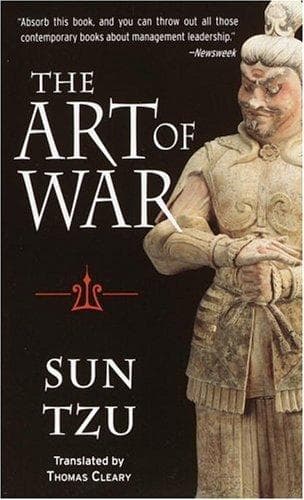
01The Art of War is an ancient Chinese military treatise dating from the Late Spring and Autumn Period. The work, which is attributed to the ancient Chinese military strategist Sun Tzu
The Art of War is an ancient Chinese military treatise dating from the Late Spring and Autumn Period. The work, which is attributed to the ancient Chinese military strategist Sun Tzu
Add to your library to track progress and write reviews
Find The Art of War Sun Tzu in PDF, EPUB, ebook, audiobook, print, or library editions.
3 books in catalog
Ancient treatise writing on military strategy and statecraft transformed tactical philosophy through concise, systematic analysis of conflict. The core text known as The Art of War offers practical insights into planning, deception, espionage, and competitive intelligence that remain widely studied across military institutes and strategic disciplines.
Traditionally attributed to Sun Tzu—an ancient Chinese military strategist, general, and philosopher—the work provides foundational principles for evaluating competitive dynamics without unnecessary expenditure or conflict. In modern translations and Spanish editions such as El arte de la guerra, the text continues to serve as an essential reference for leadership and strategic management.
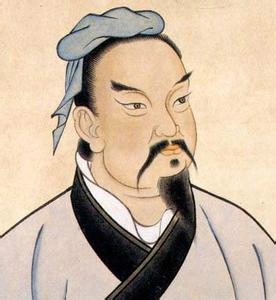
Historical records concerning the author's life originate primarily from later chroniclers, notably the Han dynasty historian Sima Qian writing in the second century BC. According to these traditional accounts, Sun Tzu, whose given name was Sun Wu, served as a general and military advisor to King Helü of the state of Wu during the Eastern Zhou period around the sixth century BC. His strategic guidance reportedly helped elevate Wu from a regional territory into a prominent power during the Spring and Autumn period.
Modern scholarly consensus notes that while tradition places him in the sixth century BC, the written text of the strategy treatise likely developed between the fifth and third centuries BC during the Warring States period. Associated historically with the School of the Military—one of the intellectual streams within China's Hundred Schools of Thought—the treatise synthesized military principles designed to promote preparedness, social order, and political stability.
The compositional style of the treatise relies on structured, aphoristic statements divided into thirteen distinct chapters. Rather than detailing specific battle narratives, the text emphasizes general analytical frameworks covering terrain assessment, operational logistics, intelligence gathering, and psychological warfare. It frames warfare as a grave matter of state survival that demands calculated judgment rather than emotional impulsiveness.
Central themes in the work include deception, flexibility, and winning through intelligence rather than sheer force. The strategy advocates achieving objectives with minimal destruction, emphasizing that supreme skill consists of subduing enemy resistance without fighting. By analyzing information, espionage, and environmental variables, the treatise established an early realist perspective on international relations and conflict management that continues to be translated into works like El arte de la guerra.