SSansFiction
The libraryCollectionsJournalStatsFor authors
Sign inJoin now
Sansfiction,

A digital library for books. Made by readers, for readers.

v 2.0 · 2026
The library
  • Discover
  • Collections
  • Book tracker
  • Journal
  • Stats
For authors
  • SF Links
  • Analytics
  • How it works
  • FAQ
Elsewhere
  • X / @sansfiction
  • Privacy
  • Terms
  • Contact
© 2026 SansFiction · Digital · GlobalA quiet room for your reading life.
The libraryCollectionsJournalStatsFor authors
Sign inJoin now →
Navigation
Library
Bookshelf
Journal
Discover
Collections
Tierlists
Stats
Profile
Author Page
Link Builder
Account
Sign in
S
G
BooksadventureThe Adventures of Tom Sawyer
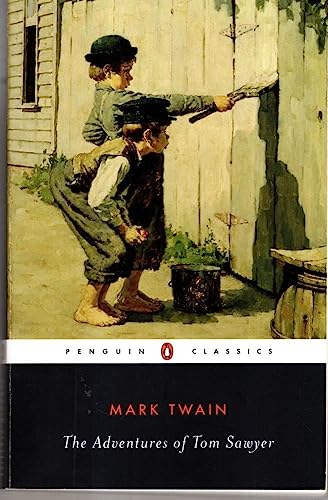
Cover of The Adventures of Tom Sawyer by Mark Twain
№ 1 · Adventures of Tom and Huck

The Adventures of Tom Sawyer,

by Mark Twain, Guy Cardwell, John Seelye, Mark Hallaq, Amanda Lee

Ask AI
Rating3.7/ 5
Ratings857
Pages231
Reading Hours5h
Published1876
LanguageEnglish

§Synopsis

01

The book that introduced the world to the iconic American characters of Tom Sawyer and Huckleberry Finn, this 1876 novel by Mark Twain follows the mischievous exploits of the two young boys, who find themselves in situations both humorous and dangerous. Never short of ways to stir up trouble in his hometown on the Mississippi River, Tom uses his wits to get both in and out of tight spots, often with Huck at his side. Featuring moments of significant social commentary, these interconnected tales essentially served as a dry run for Twain's notably weightier sequel, Adventures of Huckleberry Finn.

§Our take

Tom Sawyer is a funny romp with a nasty underside, and its best pages refuse to make those parts easy to reconcile. Twain keeps the viewpoint near the boys while letting the narrator needle Sunday school, church, and other pillars of respectability. The set pieces are excellent—the fence, the funeral, the cave trouble—though the gaps between them can sag, and Tom can feel like a clever nuisance rather than a boy readers can entirely trust.

The deeper snag is how the book treats race. It contains racist language, casually invokes slavery, and makes Injun Joe a vicious racial caricature; scholars disagree about Twain's intent, but the depiction remains troubling. Some readers use the period language to examine the world; others skip passages. The 2011 NewSouth edition by Alan Gribben combined the two novels and removed the slur, provoking charges of censorship. For many readers, Huck Finn is the richer novel, but Tom supplies the sharper boyhood comedy.

§Themes

Mischief with teeth
Tom's pranks puncture the hypocrisy of Sunday school, church, and respectable home life.
A boy's-eye world
The third-person narration stays close to childhood logic, even when romance and superstition enter.
Freedom and exclusion
The nostalgia for Mississippi boyhood sits beside Injun Joe's exclusion and the hierarchy of a slave society.
Race beneath the jokes
Racist language, slavery, and the caricature of Injun Joe keep the book's social criticism entangled with prejudice.

§How it was received

William Dean Howells praised its realistic, unsentimental portrait of boyhood and the Mississippi river town, calling it the best fictional portrait of the region so far. It sold slowly at first—fewer than 24,000 copies in its first year—but later became an American classic and Twain's best seller in his lifetime. Common Sense Media calls it funny, suspenseful, and enduring, while flagging racist language and troubling portrayals of Native Americans.

§Read it if

  • You like classic adventure fiction built from vivid set pieces rather than a tightly plotted novel
  • You want a boy's-eye view of small-town life and a narrator who punctures respectability
  • You're prepared to reckon with racist language, slavery, and the troubling depiction of Injun Joe

§Skip it if

  • You need a tight plot and a consistently charming hero. Tom can feel self-centered, and the episodic stretches can drag.
  • Racist language or a vicious racial caricature is a dealbreaker. The original text contains both.

§Before you start

Reading experience
The early episodes move at an anecdotal pace, with sermons and school recitations slowing things down, before the murder-and-treasure threads tighten; Missouri dialect and nineteenth-century vocabulary can trip up younger readers.
Reading order
First in the Tom and Huck books. Adventures of Huckleberry Finn follows (1884-85), then Tom Sawyer Abroad (1894) and Tom Sawyer, Detective (1896). Each stands alone, though Huckleberry Finn is the usual second read.
Content notes
Racist language appears, including a racial slur for Black people; Slavery is part of the setting; Native characters are portrayed through derogatory stereotypes; Injun Joe's villainy is tied to his race and ancestry; A knife murder and threats of violence may be frightening; Adults drink to unconsciousness; children smoke pipes; Profanity appears; Mild romance: Tom flirts with and kisses Becky Thatcher.

§Common questions

Is The Adventures of Tom Sawyer a children's book?
It was marketed to adults, though Howells called it a boys' book, and readers still split over its audience. Common Sense Media recommends ages 12 and up.
Does Tom Sawyer contain racist language?
Yes. The original text includes a racial slur for Black people and derogatory depictions of Native Americans. Alan Gribben's 2011 NewSouth edition combined the two novels and omitted the slur, drawing heavy criticism as censorship.
Do I need to read Huckleberry Finn first?
No. Tom Sawyer comes first; Adventures of Huckleberry Finn follows. Each stands alone, though Huck Finn is the usual second read.

§If you liked this

  • Adventures of Huckleberry Finn by Mark Twain — The direct sequel is darker and more searching about race and slavery, with first-person narration where Tom Sawyer keeps its narrator at a child's shoulder.
  • The Story of a Bad Boy by Thomas Bailey Aldrich — Thomas Bailey Aldrich's earlier boyhood novel, whose hero Howells set beside Tom among fiction's notable boys.
  • Tom Brown's School Days by Thomas Hughes — An earlier, more moralizing school story that Howells placed beside Twain's scamp.
  • Life on the Mississippi by Mark Twain — Twain's memoir of the river life that fed Tom Sawyer's setting and helped shape its vision of youthful freedom.
Sources
  • Wikipedia
  • Common Sense Media
  • Mark Twain in His Times (University of Virginia)
  • Mark Twain in His Times (University of Virginia)
  • Mark Twain in His Times (University of Virginia), Howells's Atlantic Monthly review
  • Mark Twain in His Times (University of Virginia)
  • Goodreads (reader reviews)
  • Prestwick House (educational publisher)
  • Publishers Weekly

Track this book

Add to your library to track progress and write reviews

§Genres
adventure1children1classics1comics1fantasy1fiction1general1
§Content Warnings
§Moods
adventurous1funny1heartfelt1hopeful1lighthearted1reflective1relaxing1
§Tags
#action & adventure1#diverse characters1#fire/fire injury1#loveable characters1#not diverse characters1#on shelf1

§About the Author

Mark Twain
Mark Twain

5 books in catalog

Nineteenth-century American fiction and satire were fundamentally reshaped by stories centered on Mississippi River navigation, regional dialects, and sharp social critique. Mark Twain, the pen name of Samuel Langhorne Clemens, established lasting literary traditions through classic works such as The Adventures of Tom Sawyer (1876) and its celebrated companion volume The Adventures of Huckleberry Finn (1884).

Career & Background

Born Samuel Langhorne Clemens in Florida, Missouri, in 1835, he moved at four years old to the Mississippi River port town of Hannibal, Missouri, which inspired his most enduring fictional settings. Following his father's death when Clemens was eleven, he went to work as a printer's apprentice and later worked as a licensed riverboat pilot, frontier journalist, travel writer, lecturer, and entrepreneur. Over his career, Twain became an extensively quoted public figure and maintained personal friendships with presidents, artists, industrialists, and European royalty.

Writing Style & Themes

Twain's writing is recognized for its use of vernacular speech, sharp humor, moral inquiry, and realistic portrayal of American life. By capturing authentic regional dialects and questioning social conventions, his work explored themes of racial injustice, human folly, and the tension between individual morality and societal pressure. His travelogues and satirical novels frequently contrasted democratic American perspectives against old-world European customs.

Major Works

  • The Adventures of Tom Sawyer — Published in 1876, this novel draws on Twain's boyhood experiences in Hannibal, Missouri, recounting the adventures, escapades, and mischief of young Tom Sawyer along the Mississippi River.
  • The Adventures of Huckleberry Finn — Published in 1884, this landmark novel traces Huck Finn's journey down the Mississippi River alongside Jim, an escaped enslaved man, delivering a trenchant commentary on racism and social hypocrisy often referred to as "the Great American Novel."
  • The Innocents Abroad — Published in 1869, this widely read travel book recounts Twain's excursion through Europe and the Holy Land, blending humor with cultural critique.
  • A Connecticut Yankee in King Arthur's Court — Published in 1889, this satirical time-travel novel transports a nineteenth-century American engineer to Arthurian England, examining technology, feudalism, and monarchical power.
  • The Celebrated Jumping Frog of Calaveras County — Published in 1865, this humoristic short story brought Twain early national recognition through its skillful frame narrative and frontier storytelling.

§Featured Series

Adventures of Tom and Huck

Cover of The Adventures of Tom Sawyer by Mark Twain, Amanda Lee

The Adventures of Tom Sawyer

Mark Twain, 1876
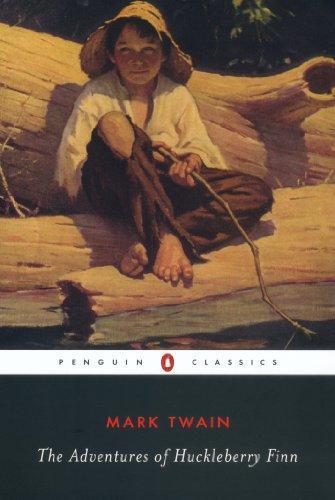
Cover of The Adventures of Huckleberry Finn by Mark Twain

The Adventures of Huckleberry Finn

Mark Twain, 1876

§Editions

Showing 3 of 714 editions
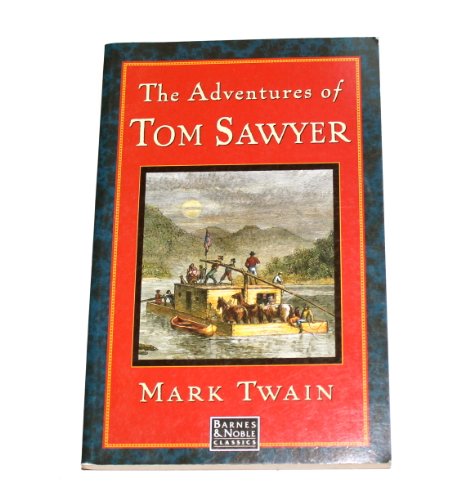
Cover of The Adventures of Tom Sawyer

The Adventures of Tom Sawyer

engPaperback
Barnes & Noble Books (US)20029780760711880
Amazon
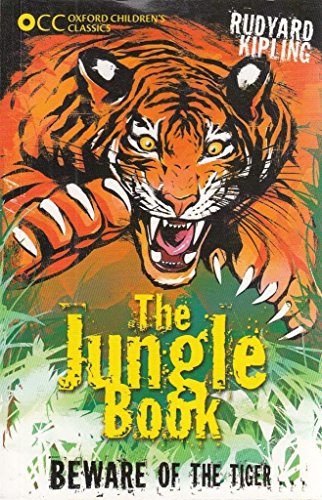
Cover of Oxford Children's Classics Collection

Oxford Children's Classics Collection

engPaperbackOxford Children's Classics, 10 Book Box Set
Oxford University Press20149780192739421
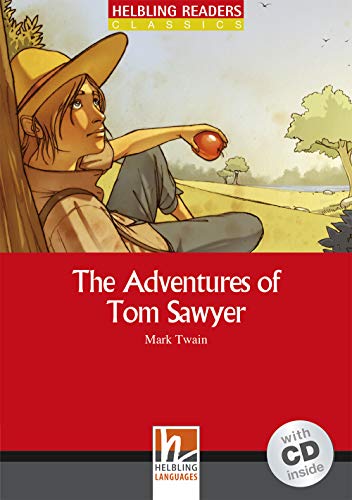
Cover of The Adventures of Tom Sawyer - Book and Audio CD Pack - Level 3

The Adventures of Tom Sawyer - Book and Audio CD Pack - Level 3

engPaperback
Helbling Languages20099783852721545
§Genres
adventure1children1classics1comics1fantasy1fiction1general1
§Content Warnings
§Moods
adventurous1funny1heartfelt1hopeful1lighthearted1reflective1relaxing1
§Tags
#action & adventure1#diverse characters1#fire/fire injury1#loveable characters1#not diverse characters1#on shelf1

Metadata

ISBN-139780760711880
ISBN-100760711887
ASIN0760711887

Editions and availability

Find The Adventures of Tom Sawyer Mark Twain in PDF, EPUB, ebook, audiobook, print, or library editions.

View on Amazon
Bookshop.orgGoogle Play BooksBarnes & NobleOpen Library

Featured In Lists

Book cover from this collectionBook cover from this collectionBook cover from this collectionBook cover from this collection
Book cover from this collection

Gilmore Girls Reading List 🍂

407 books
Book cover from this collectionBook cover from this collectionBook cover from this collectionBook cover from this collection
Book cover from this collection

CLUB DE CULTO

52 books
Book cover from this collectionBook cover from this collectionBook cover from this collectionBook cover from this collection
Book cover from this collection

200-ish Books to Read Before You Die

36 books