§Synopsis
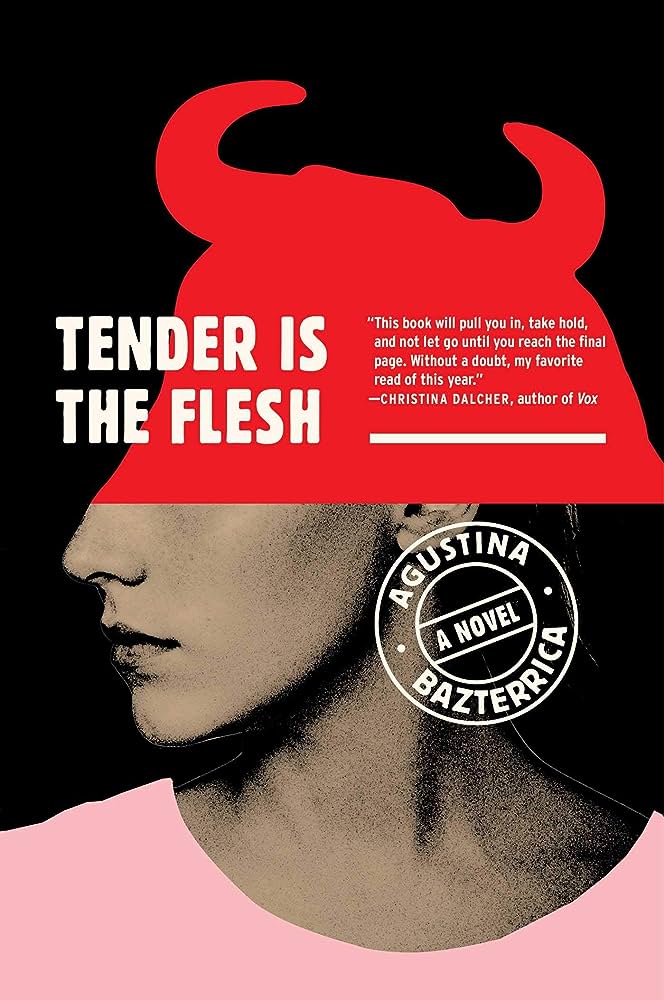
01"His wife has left him, his father is sinking into dementia, and Marcos tries not to think too hard about how he makes a living. After all, it happened so quickly. First, it was reported that an infectious virus has made all animal meat poisonous to humans. Then governments initiated the “Transition.” Now, eating human meat—“special meat”—is legal. Marcos tries to stick to numbers, consignments, processing.
Then one day he’s given a gift: a live specimen of the finest quality. Though he’s aware that any form of personal contact is forbidden on pain of death, little by little he starts to treat her like a human being. And soon, he becomes tortured by what has been lost—and what might still be saved."-- Provided by Amazon
§Our take
The real subject isn’t cannibalism; it’s the language that makes it administrable. Bazterrica’s plain, declarative sentences land harder because the state calls people bred for slaughter “heads” and their flesh “special meat,” while inspectors, curfews and processing rules turn atrocity into routine. The result feels less like shock fiction than a bureaucracy that has become disturbingly competent.
The encounter between Marcos and Jasmine, a captive woman given to him as a gift, is the sharpest test of the book. Locus treats the narrative’s refusal to grant him remorse as the point; other readers see the scene as badly handled. That argument matters, but the novel includes sexual assault, forced pregnancy and childbirth, graphic butchering and grief over a dead child. Bazterrica has rejected the vegan-manifesto label: the moral force comes from routine, not a sermon.
§Themes
- Euphemism as camouflage
- The state calls people bred for slaughter “heads” and their product “special meat,” making distance from the body part of ordinary speech.
- The bureaucracy of horror
- Inspectors, curfews, consignments and processing rules give atrocity an administrative shape.
- Complicity as routine
- Marcos dislikes his work and grieves, yet keeps doing it; passivity, in Bazterrica’s view, remains a choice.
- Bodies as inventory
- Breeding, numbers and butchery reduce human beings to stock handled by a supply chain.
- Absurdity inside horror
- Umbrellas against infected birds and legal human hunting of indebted celebrities make the world strange without draining its dread.
§How it was received
The English-language press was broadly favorable, with positive reviews in The New York Times Book Review, The Guardian and The Times. Kirkus said the premise could have been crude shock-value writing but praised Bazterrica’s skill and called the novel a page-turner; Publishers Weekly judged the debut uneven but powerful, praising its clinical passages while finding one sex scene overwrought. Ian Mond in Locus admired the world’s internal logic and translation, but read the book as a study in how even someone with a conscience normalizes terrible acts.
§Read it if
- You want horror built from bureaucracy, euphemisms and social pressure rather than monsters
- You can handle graphic butchering, sexual assault, forced pregnancy and childbirth, and grief without expecting any of it to be softened
- You like short, blunt novels that press one disturbing idea until the stomach turns
§Skip it if
- Graphic butchering, rape and reproductive violence are hard limits for you
- You need a morally lucid protagonist, a fully explained virus or a hero who resists the system rather than accommodates it
§Before you start
- Reading experience
- At about 224 pages in the US paperback, brisk declarative prose keeps it moving, though clinical detail and bleak repetition can make the middle feel like a slog.
- Reading order
- Standalone novel. The Unworthy, Nineteen Claws and a Black Bird are separate books by Bazterrica, not sequels.
- Content notes
- Cannibalism: human beings are bred, slaughtered, butchered, sold and eaten in clinical, detailed scenes; Rape and reproductive violence: a captive woman cannot meaningfully consent; forced pregnancy and childbirth are depicted; Graphic gore, body horror and dismemberment, including a woman being processed for meat and violence against pregnant characters; Torture and imprisonment; Death of an infant son, a parent’s dementia and decline, and marital estrangement; Animal cruelty, reported by readers.
§Common questions
- Is Tender Is the Flesh part of a series?
- No. It’s a standalone novel; Bazterrica’s later English-language books are separate works, not sequels.
- Is it very graphic?
- Yes. Expect clinical descriptions of killing, butchering and dismemberment, plus rape, forced pregnancy and childbirth, graphic violence against pregnant characters, and torture.
- Is it a vegan manifesto?
- Not by the author’s design. Bazterrica says she wanted to write the strongest novel she could, not convert readers, though she stopped eating meat while researching it.
§If you liked this
- Fever Dream by Samanta Schweblin — The Guardian pairs it with Bazterrica as another Argentinian shocker, though Schweblin makes unease eerie and sparse while this novel stays blunt and procedural.
- Under the Skin by Michel Faber — The Guardian sees a shared critique of carnivorousness, but Faber uses alien estrangement where Bazterrica uses the unsettling familiarity of factory farming.
- Things We Lost in the Fire by Mariana Enriquez — Mariana Enriquez's stories belong to the same wave of Latin American women's horror, with dread rooted in everyday social violence.
Sources
- Wikipedia
- Wikipedia
- The Guardian (Justine Jordan, 21 Feb 2020)
- Locus (Ian Mond, Sept 2020 issue)
- Kirkus Reviews
- Publishers Weekly
- Book Marks (Lit Hub)
- Pushkin Press
- Latin American Literature Today (2024, in Spanish)
- La Razon (Mexico, in Spanish)
- Brumal (Universitat Autonoma de Barcelona), M. J. Llarena Ascanio, 2020
- Trigger Warning Database
- Book Riot
- File 770
Track this book
Add to your library to track progress and write reviews