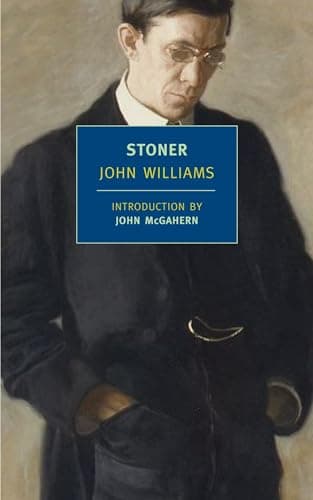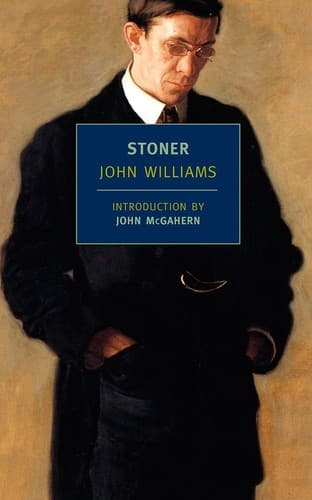
William Stoner is born at the end of the nineteenth century into a dirt-poor Missouri farming family. Sent to the state university to study agronomy, he instead falls in love with English literature and embraces a scholar’s life, so different from the hardscrabble existence he has known. And yet as the years pass, Stoner encounters a succession of disappointments: marriage into a “proper” family estranges him from his parents; his career is stymied; his wife and daughter turn coldly away from him; a transforming experience of new love ends under threat of scandal. Driven ever deeper within himself, Stoner rediscovers the stoic silence of his forebears and confronts an essential solitude.
John Williams's luminous and deeply moving novel is a work of quiet perfection. William Stoner emerges from it not only as an archetypal American, but as an unlikely existential hero, standing, like a figure in a painting by Edward Hopper, in stark relief against an unforgiving world.
Add to your library to track progress and write reviews
Find Stoner John Williams in PDF, EPUB, ebook, audiobook, print, or library editions.

1 books in catalog
The quiet intensity of academic life and the unsparing realities of historic frontiers form the backbone of mid-century American realist fiction, nowhere more vividly captured than in the campus novel Stoner. Writer and academic John Edward Williams crafted understated narratives that examine individual integrity, intellectual passion, and personal perseverance against unyielding institutional and wilderness environments.
Born in Clarksville, Texas, in 1922, John Edward Williams grew up in Wichita Falls before serving in academia as a novelist, editor, and professor. He joined the faculty at the University of Denver, where he founded the literary journal Denver Quarterly and helped build the university's creative writing program. Over his career, Williams balanced university teaching with the research and composition of fiction, culminating in national recognition when his 1972 novel Augustus co-won the National Book Award in 1973.
Williams's fiction is distinguished by emotional restraint, meticulous historical detail, and a focus on character interiority. Rather than employing heightened melodrama, his work explores themes of duty, personal sacrifice, stoicism, and the complex relationship between individuals and their institutional or social surroundings. In Butcher's Crossing, he stripped away romanticized myths of the American frontier to detail a brutal buffalo hunting expedition in Colorado Territory, helping pave the way for revisionist anti-Westerns. In Stoner, he presented an unvarnished study of an English professor navigating career struggles and personal isolation.