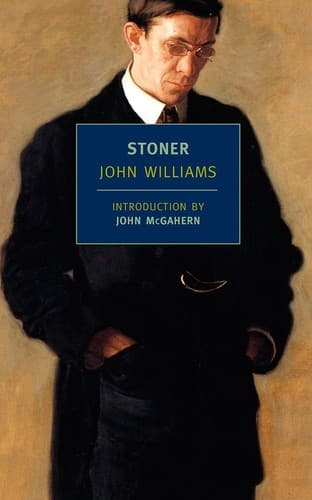
John Williams
Also known as John Edward Williams
The quiet intensity of academic life and the unsparing realities of historic frontiers form the backbone of mid-century American realist fiction, nowhere more vividly captured than in the campus novel Stoner. Writer and academic John Edward Williams crafted understated narratives that examine individual integrity, intellectual passion, and personal perseverance against unyielding institutional and wilderness environments.
Career & Background
Born in Clarksville, Texas, in 1922, John Edward Williams grew up in Wichita Falls before serving in academia as a novelist, editor, and professor. He joined the faculty at the University of Denver, where he founded the literary journal Denver Quarterly and helped build the university's creative writing program. Over his career, Williams balanced university teaching with the research and composition of fiction, culminating in national recognition when his 1972 novel Augustus co-won the National Book Award in 1973.
Writing Style & Themes
Williams's fiction is distinguished by emotional restraint, meticulous historical detail, and a focus on character interiority. Rather than employing heightened melodrama, his work explores themes of duty, personal sacrifice, stoicism, and the complex relationship between individuals and their institutional or social surroundings. In Butcher's Crossing, he stripped away romanticized myths of the American frontier to detail a brutal buffalo hunting expedition in Colorado Territory, helping pave the way for revisionist anti-Westerns. In Stoner, he presented an unvarnished study of an English professor navigating career struggles and personal isolation.
Major Works
- Stoner — Published in 1965, this novel follows the quiet life of William Stoner, an English professor at the University of Missouri, documenting his devotion to literature, academic rivalries, and quiet resilience.
- Butcher's Crossing — Published in 1960, this revisionist Western novel tells the story of a Harvard dropout who travels to the Colorado Territory to participate in a relentless buffalo hunt.
- Augustus — Published in 1972, this epistolary historical novel chronicles the rise and reign of Rome's first emperor, winning the U.S. National Book Award for Fiction in 1973.