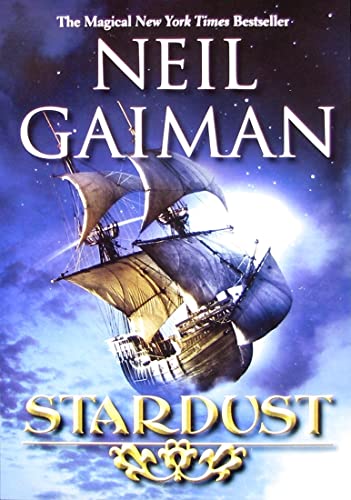
§Synopsis
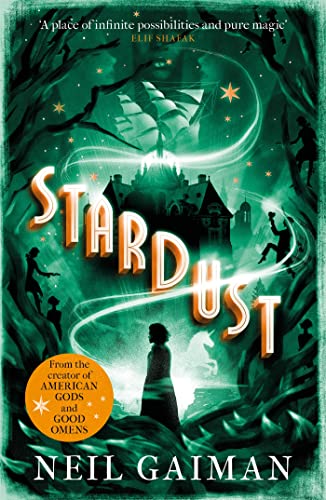
01In the sleepy English village of Wall, life is defined by a massive stone barrier that separates the mundane world from the impossible landscapes of Faerie. For Tristran Thorn, the wall is merely a backdrop to his unrequited love for the beautiful Victoria Forester. To win her heart, he makes a reckless vow to retrieve a fallen star that they witnessed streaking across the night sky and landing deep within the forbidden territory beyond the gap.
Tristran’s journey begins as a quest for a token of affection, but it quickly evolves into a collision of disparate ambitions. As he crosses the threshold, he discovers that a fallen star is far more than a celestial stone, and he is not the only inhabitant of Faerie pursuing it. While Tristran seeks the star to secure his future in Wall, ancient powers and ambitious heirs hunt the same prize for far more dangerous ends, setting the stage for a race across a land where logic is secondary to the laws of myth.
The Geography of the Liminal
The setting of the novel is split between the Victorian-era village of Wall and the sprawling, unpredictable realm of Faerie. In Wall, the world is governed by tradition, social hierarchy, and the physical boundary that keeps magic at bay, except for one day every nine years during the midsummer market. Once across the wall, however, the atmosphere shifts into a pre-industrial wilderness where geography is fluid and magic is transactional. The world-building emphasizes the "Otherness" of Faerie, where the flora and fauna operate under a distinct set of moral and physical rules that often catch the unprepared Tristran off-guard.
Main Characters
- Tristran Thorn: A naive young man of mixed heritage who enters Faerie with nothing but a silver chain and an idealistic hope to prove his devotion.
- The Fallen Star (Yvaine): A celestial being knocked from the sky by a heavy topaz ornament, now trapped on earth with a broken leg and a cynical view of mortals.
- The Witch-Queen: The eldest of the three Lilim, she seeks the star to consume its heart and restore her sisters' long-lost youth and magical potency.
- Septimus: The youngest and most ruthless of the surviving Lords of Stormhold, who tracks the star to retrieve the royal jewel she carries.
- Dunstan Thorn: Tristran’s father, whose own encounter with the Midsummer Market eighteen years prior serves as the silent catalyst for Tristran's existence.
The Evolution of the Quest
Tristran begins his journey with a simplistic, almost transactional view of love and heroism. His initial character arc focuses on the realization that his "prize"—the star—is a sentient being with her own agency and resentment. The early relationship between Tristran and the Star is one of mutual frustration; he views her as his ticket to a happy life with Victoria, while she views him as a kidnapper. This dynamic forces Tristran to move beyond his sheltered upbringing and begin the slow process of developing empathy and resilience in a world that does not care about his romantic aspirations.
Subverting the Fairytale Trope
While the story utilizes the structure of a traditional nineteenth-century fairytale, it consistently subverts expectations through a lens of realism and dark humor. The trope of the "Heroic Quest" is complicated by the fact that Tristran is largely incompetent at the start, relying on luck and magical artifacts rather than skill. Furthermore, the "Damsel in Distress" trope is challenged by the Star’s personality; she is not a passive object but a wounded, angry individual who actively resists Tristran’s attempts to "rescue" her. The narrative also introduces a secondary plot involving the Lords of Stormhold, which functions more like a political thriller, adding a layer of lethal, Machiavellian stakes to what would otherwise be a whimsical journey.
§Our take
Stardust is Gaiman at his lightest and most confident: a wry, story-shaped romp that takes a romantic errand seriously enough to complicate it. The Victorian cadence mixes with modern plain speech, including swearing, while Charles Vess's paintings belong to the book's conception rather than its decoration. The text-only edition still works, but it makes the reader supply some of the strangeness.
The reviews were mostly charmed. Kirkus called it delightful for all ages; The Christian Science Monitor praised its lyrical prose and the way its fairy-tale actions have consequences, while Common Sense Media liked the magic but found the characters thin. That is the bargain: readers who want an eerier, quieter Faerie than the film may adore it; readers expecting a large adventure novel may find the cast and climax wanting.
§Themes
- Love with strings attached
- Tristran begins with a vow made for Victoria, but the quest soon asks more of him than winning her approval.
- The prize has agency
- The fallen star is not a passive object, and Tristran must reckon with a being who can resist his plans.
- Luck is not heroism
- Tristran starts poorly equipped and relies more on luck, artifacts and nerve than on skill.
- Faerie runs on bargains
- Beyond the wall, magic has prices, rules and consequences, while ordinary logic becomes unreliable.
§How it was received
Kirkus called it a delightful book for all ages, while The Christian Science Monitor praised its tight, sometimes lyrical prose and the consequences of its fairy-tale logic, though it warned mature readers about some content. Common Sense Media enjoyed the vivid magic but found the characters too thin for easy emotional connection. Gaiman and Vess shared the 1999 Mythopoeic Fantasy Award for Adult Literature, and the book won a 2000 Alex Award for adult books with teen appeal.
§Read it if
- You want a quick, witty, eerie fairy tale rather than a sprawling modern epic
- You like Gaiman's antique cadence mixed with blunt modern speech
- You want the Charles Vess-illustrated version, where the paintings and story were conceived together
§Skip it if
- You need richly developed characters. Common Sense Media found the emotional connection thin.
- You expect a big, battle-heavy finale. Some readers find the witch confrontation anticlimactic.
§Before you start
- Reading experience
- The prose is quick and easy to read, but the pacing is uneven: the opening moves slowly and the final stretch rushes.
- Reading order
- Standalone. Gaiman has mentioned possible sequel ideas, but no sequel exists.
- Content notes
- Graphic sexual content early in the book, plus other sexual references; Gory violence, including a throat being cut, disemboweled animals, and a unicorn being stabbed and beheaded; Strong language, including the f-word; Characters drink to drunkenness and smoke a pipe.
§Common questions
- Is Stardust a YA novel?
- No. Common Sense Media rates it 13+, and the Alex Award recognizes adult books with teen appeal.
- Should I get the illustrated edition or the text-only novel?
- The Vess-illustrated book came first and is the original picture-and-story form. Choose it for the art, or the text-only edition for a conventional prose read.
- Is the book darker than the 2007 film?
- Readers disagree. Some find the novel eerier and quieter; others find it blander than the film's grander spectacle.
§If you liked this
- Lud-in-the-Mist by Hope Mirrlees — Hope Mirrlees's town-on-the-border-of-Fairyland novel belongs to the pre-Tolkien English fantasy tradition that Stardust deliberately follows.
- The King of Elfland's Daughter by Lord Dunsany — Dunsany is the author Gaiman names as a model for fairy tales for adults, so this title makes the clearest path into that influence.
- Neverwhere by Neil Gaiman — Gaiman's darker, urban novel makes a sharp counterpoint to Stardust's rural, pastoral Faerie.
- The Sandman by Neil Gaiman — A darker companion from the same author: The Sandman also turns personified concepts into story engines, while Rambles calls Stardust Gaiman's lighter, more upbeat side.
Track this book
Add to your library to track progress and write reviews