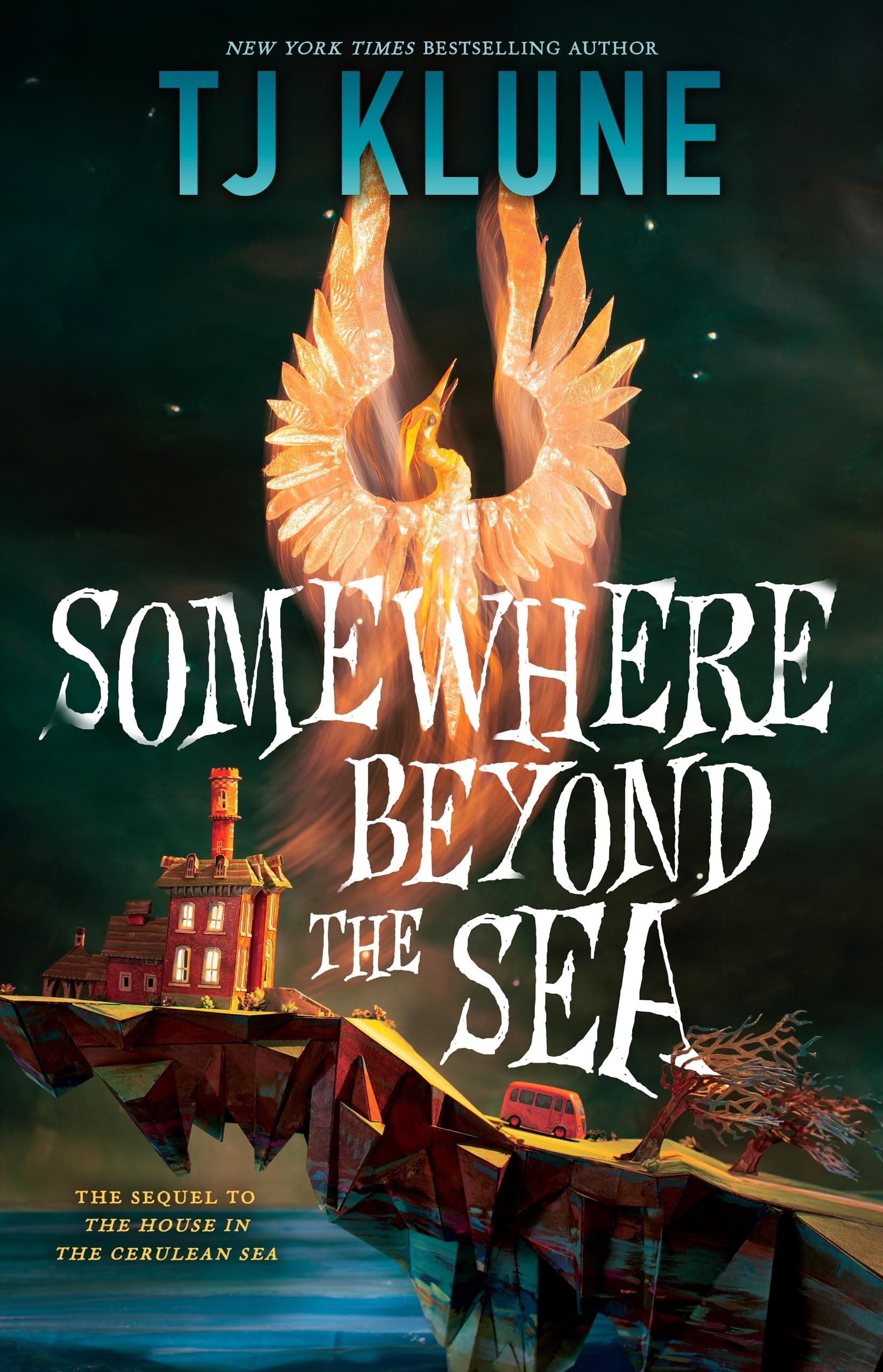
The summons arrives on a Tuesday, folded like a warrant and smelling of smoke.
Arthur Parnassus, who has spent every dawn since the last book convincing six fire-prone children they are not catastrophes waiting to happen, is asked—politely but publicly—to prove he isn’t one either.
Marsyas Island was once a penal colony for the “dangerously” magical. Now it’s a home stitched together from second chances: a phoenix boy who sets his nightmares alight, a wyvern girl who still believes in princesses, a gnome who gardens in the dark because photosynthesis feels like surveillance.
Klune lets the world stay small enough to walk across in a day, then shows how entire empires of fear can be built inside a single bureaucratic form. The Department in Charge of Magical Youth has rebranded—same font, new slogan—yet its ledgers still reduce souls to risk coefficients. The genius is that the reader feels the ledger’s weight without ever seeing it; we only watch Arthur’s shoulders sag when the mail arrives.
Linus Baker, reformed caseworker and current sweater-enthusiast, is no longer the protagonist, but the novel’s moral compass spins inside his chest all the same. Their relationship is not a victory lap; it’s maintenance. Klune writes intimacy as Tuesday-night arguments over whether letting a ten-year-old read the newspaper counts as child endangerment, and as quiet hand-holding when the sea outside snarls like a locked gate. Queer joy here is not a firework—it’s weatherproofing.
The newest arrival introduces himself with the M-word the orphans have spent years un-learning. He arrives bundled in bureaucratic red tape and a coat that smells of other people’s panic. His presence forces Arthur to confront the original sin of the island: every sanctuary is built on the bones of someone labeled un-savable. The boy’s power is memory—he can hand you your worst moment back in hi-definition—and the question becomes not will he use it, but should anyone have to remember alone?
Klune’s thesis sneaks up quietly: raising children the state has written off is not a domestic act; it’s civil disobedience.
Each bedtime story is a re-write of policy; every scraped knee bandaged without justification forms is a tiny revolution. When Arthur is ordered to testify, the hearing isn’t about him—it’s a referendum on whether love can be quantified in triplicate. The Department wants metrics; Arthur offers the smell of oatmeal at 7:05 a.m., the sound of wings unfurling for the first time, the particular silence that falls when a child who used to sleep with the lights on finally turns them off.
Flashbacks to Arthur’s own orphan years peel open like burns—slow, shiny, still capable of pain decades later. We learn the island once tried to swallow him whole; now he gardens the same soil. Trauma isn’t erased, it’s composted: turned over, watered, coaxed into something that can support weight. The narrative refuses the trope of “broken becomes whole”; instead it suggests broken becomes soil—messy, living, and full of worms that know the way out.
The final chapter is delivered in second person, a quiet dare:
If you have a roof someone wants to condemn, board it up from the inside with books and soup pots. If they ask who gave you permission, answer “the future,” then offer them tea.
Klune closes the book like a gate left unlatched: the war against dehumanization is wider than Marsyas, and everyone’s front yard is waterfront if you’re willing to defend it.
Add to your library to track progress and write reviews
Cerulean Chronicles


5 books in catalog
Speculative fantasy and contemporary fiction centered on queer warmth, empathy, and found family have gained widespread popularity through the works of bestselling author TJ Klune. Best known for his breakout novel The House in the Cerulean Sea, Klune crafts imaginative stories filled with humor, emotional resonance, and comforting atmospheres that celebrate queer identity and community.
His fantasy titles, including Under the Whispering Door and In the Lives of Puppets, blend whimsical storytelling with deep explorations of grief, acceptance, and human connection, earning accolades across adult and young adult fiction markets.
Born Travis John Klune on May 20, 1982, in Roseburg, Oregon, Klune grew up in a rural environment where reading and writing offered a crucial creative escape. Diagnosed later with ADHD, he realized he was queer at a young age and turned to storytelling to process his experiences. After moving to Tucson, Arizona, at age 16, Klune attended community college for one semester before relocating to Virginia in 2013. He worked as an insurance claims adjuster for Geico while writing in his spare time, publishing his debut contemporary novel, Bear, Otter, and the Kid, through an independent publisher in 2011.
Klune won the Lambda Literary Award for Gay Romance in 2014 for his novel Into This River I Drown. Following early releases such as Burn (2012), Murmuration (2016), and his werewolf-centered Green Creek series beginning with Wolfsong (2016), he transitioned to writing full-time in 2016. His mainstream breakout arrived with The House in the Cerulean Sea, which became a #1 New York Times and #1 USA Today bestseller while winning the 2021 Alex Award and the Mythopoeic Fantasy Award.
Klune's writing is characterized by its emphasis on positive queer representation, character-driven humor, and cozy speculative settings. Drawing from his own lived experience as a queer writer with ADHD, Klune prioritizes creating hopeful narratives that feature authentic LGBTQ+ characters seeking safety, belonging, and emotional healing. His work frequently explores themes of grief, second chances, neurodiversity, and the families people build for themselves when biological support systems fall short.
In both his adult fiction and young adult releases—such as The Extraordinaries series—Klune combines witty dialogue with gentle subversions of traditional fantasy tropes. Whether depicting a magical orphanage inspector, a ferryman guiding souls, or reimagined classic stories, his narratives emphasize kindness, moral integrity, and the transformative power of acceptance.