§Synopsis
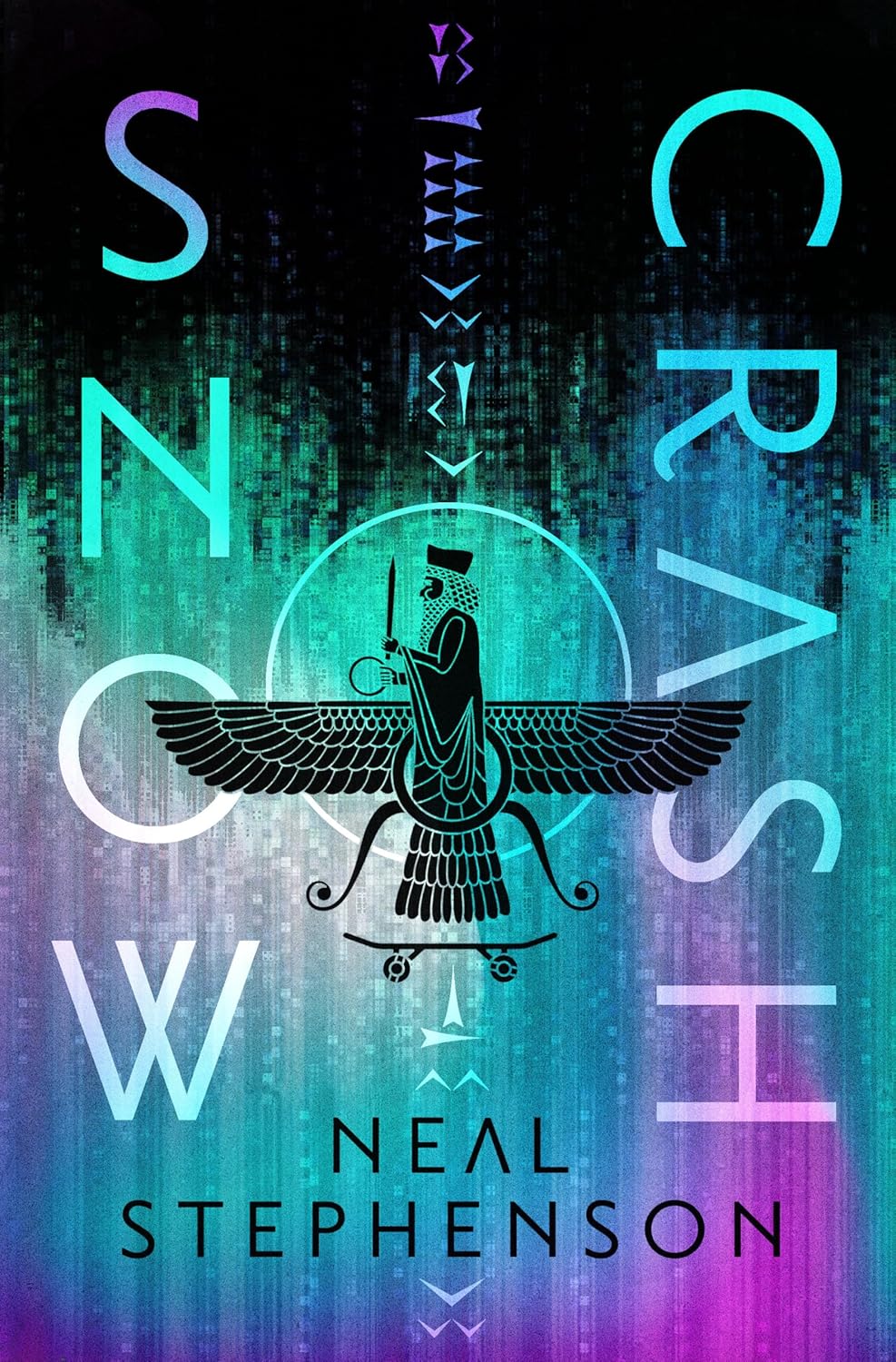
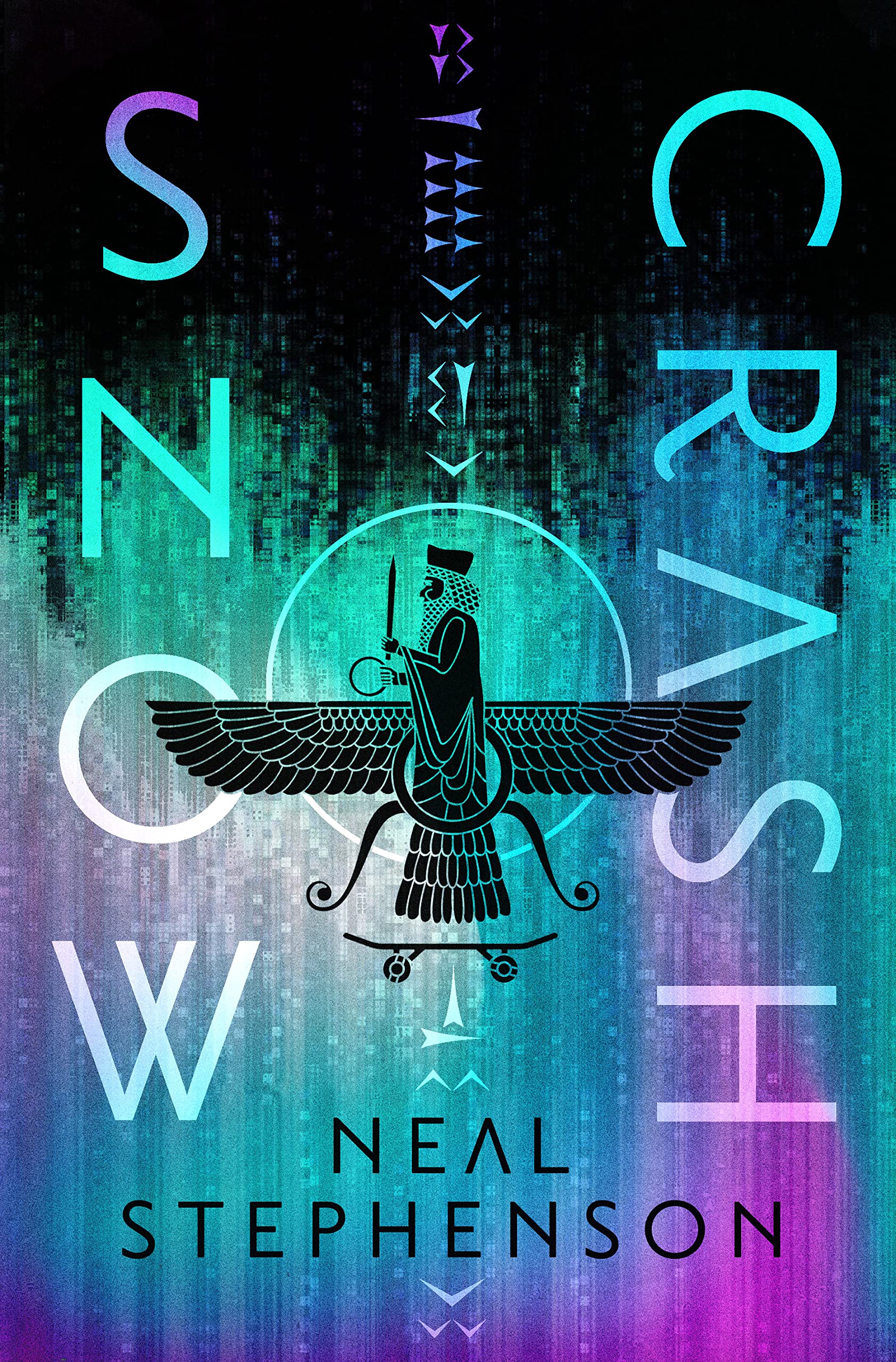
01In Snow Crash, Neal Stephenson rewires the cyberpunk genre, throwing you headfirst into a chaotic, corporatized future where governments have collapsed, the Metaverse reigns supreme, and everything—literally everything—is for sale. Hiro Protagonist, katana-wielding hacker and the world’s most overqualified pizza delivery guy, stumbles onto a digital virus that’s more than just code—it’s a weapon that targets minds, threatening the virtual and real worlds alike. With the help of a badass skateboarding courier named Y.T., Hiro races through a world of hyper-capitalist dystopia, ancient Sumerian mythology, and corporate warfare to stop an apocalypse no one else even sees coming. Wild, prophetic, and way too real, Snow Crash doesn’t just predict the future—it builds it.
§Our take
Call it cyberpunk's funeral oration. Kirkus in 1992 found the prose flashy and the characters thin, and academics like Paul Youngquist later argued the book dealt cyberpunk a killer blow by parodying it. Readers, meanwhile, mostly just have fun: they call it zany, comic-book-like, funnier than Neuromancer, and they love Y.T., Raven and Uncle Enzo. Both camps are right. The plot hangs on a neuro-linguistic virus tied to Sumerian myth and the Tower of Babel, which gives Stephenson room for long digressions on linguistics and ancient history — Walter Benn Michaels objected that treating languages as codes blurs hackers with computers, but plenty of readers find the tangents the best part. The real legacy is the Metaverse, a term Stephenson coined here; it went on to inspire Second Life, Xbox Live and even Meta's rebrand, though how much credit it deserves depends on who's telling the story. The joke is that the coinage sits in a very silly satire, not a prediction.
§Themes
- Language as a virus
- A neuro-linguistic weapon tied to a Sumerian ur-language and Babel, mixing linguistics, memetics and computing.
- Everything for sale
- A privatised America of franchise enclaves and burbclaves, with the federal government satirised as an arrogant corporation.
- The Metaverse
- A shared virtual world that grows from hacker space into commercial strip — and named the whole idea for the tech industry.
- Cyberpunk, parodied
- Academics read it as satire that ended the genre it was playing in; critics in 1992 just found the genre ties forced.
§How it was received
In '92 the critics shrugged; clever, they said, but flashy and thin. Later critics treated it as the parody that killed cyberpunk, and readers have been calling it a favourite ever since. The readers who stuck with it won that argument.
§Read it if
- You want cyberpunk that's funny rather than moody, even if it's less literary than Neuromancer
- Long digressions on linguistics and ancient Sumer sound like a feature, not a bug
- You're curious where the word metaverse came from
§Skip it if
- Thin characters and flashy prose bother you. Critics flagged both from day one, and the complaint hasn't aged out.
- A slow start before the world clicks tests your patience
§Before you start
- Reading experience
- Slow opening while the world is established, then faster in the second half, with information-heavy tangents on linguistics and Sumer interleaved throughout.
- Content notes
- Gory fights and property destruction; Macho posturing and sexualised physicality.
§Common questions
- Did Snow Crash invent the metaverse?
- The word, yes — Stephenson coined it here. The tech platforms it's credited with inspiring, like Second Life and Xbox Live, came later, though influence accounts differ.
- Is Snow Crash cyberpunk or a parody of cyberpunk?
- It's genuinely both, depending on who you ask. Critics found the genre ties forced; academics call it a satire that dealt cyberpunk a killer blow. Readers mostly just call it fun.
- Is there a Snow Crash movie or series?
- No, and attempts keep stalling — from a 1996 effort through Joe Cornish at Paramount, an Amazon series and HBO Max, which passed in 2021. Nothing is in production.
§If you liked this
- Neuromancer by William Gibson — The founding cyberpunk novel — darker, more literary, and a lot less funny.
- The Diamond Age by Neal Stephenson — Stephenson's next novel, not a sequel — and one reader who read both enjoyed Snow Crash more.
Track this book
Add to your library to track progress and write reviews