SSansFiction
The libraryCollectionsJournalStatsFor authors
Sign inJoin now
Sansfiction,

A digital library for books. Made by readers, for readers.

v 2.0 · 2026
The library
  • Discover
  • Collections
  • Book tracker
  • Journal
  • Stats
For authors
  • SF Links
  • Analytics
  • How it works
  • FAQ
Elsewhere
  • X / @sansfiction
  • Privacy
  • Terms
  • Contact
© 2026 SansFiction · Digital · GlobalA quiet room for your reading life.
The libraryCollectionsJournalStatsFor authors
Sign inJoin now →
Navigation
Library
Bookshelf
Journal
Discover
Collections
Tierlists
Stats
Profile
Author Page
Link Builder
Account
Sign in
S
G
BookscyberpunkSnow Crash
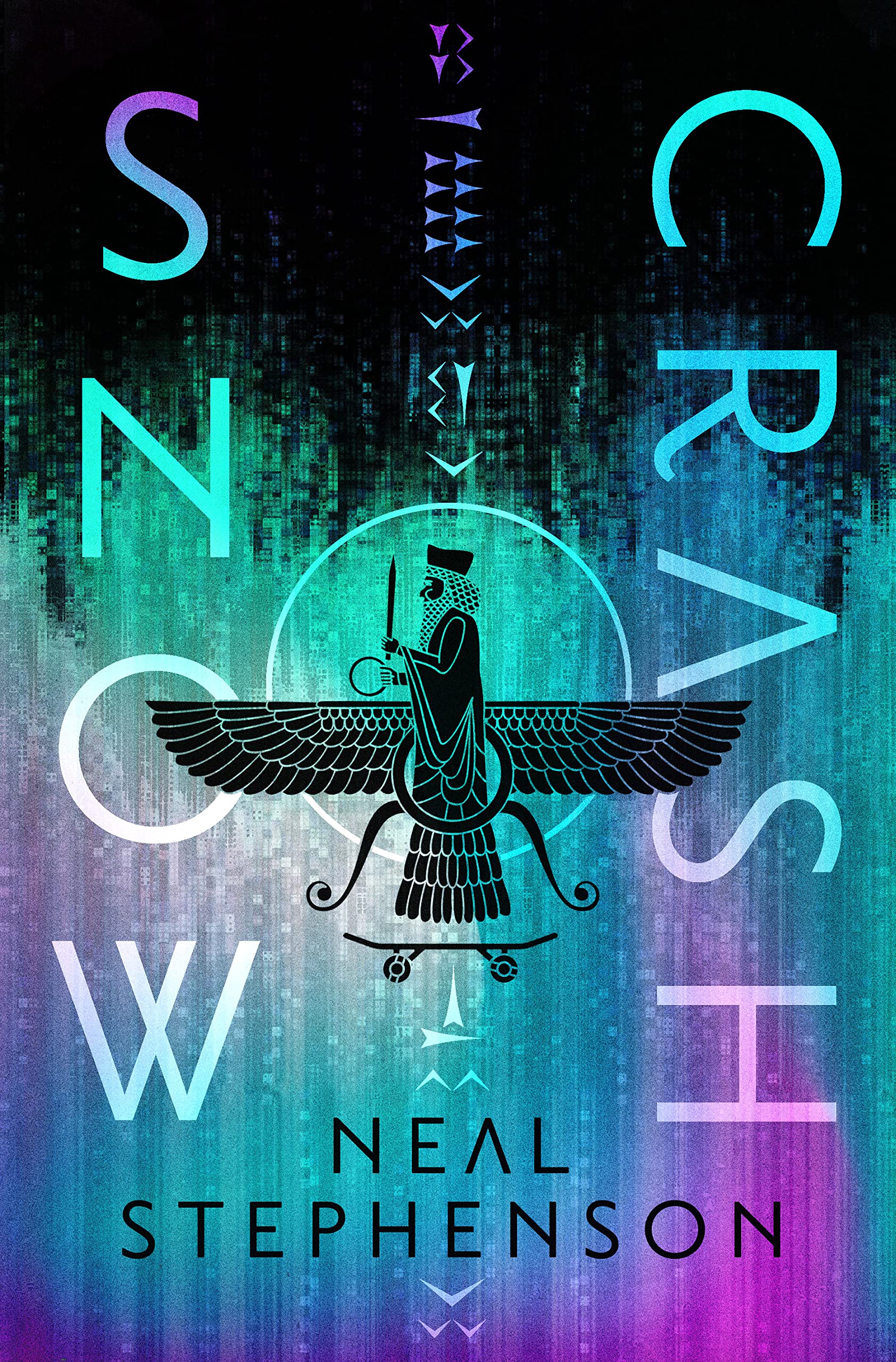
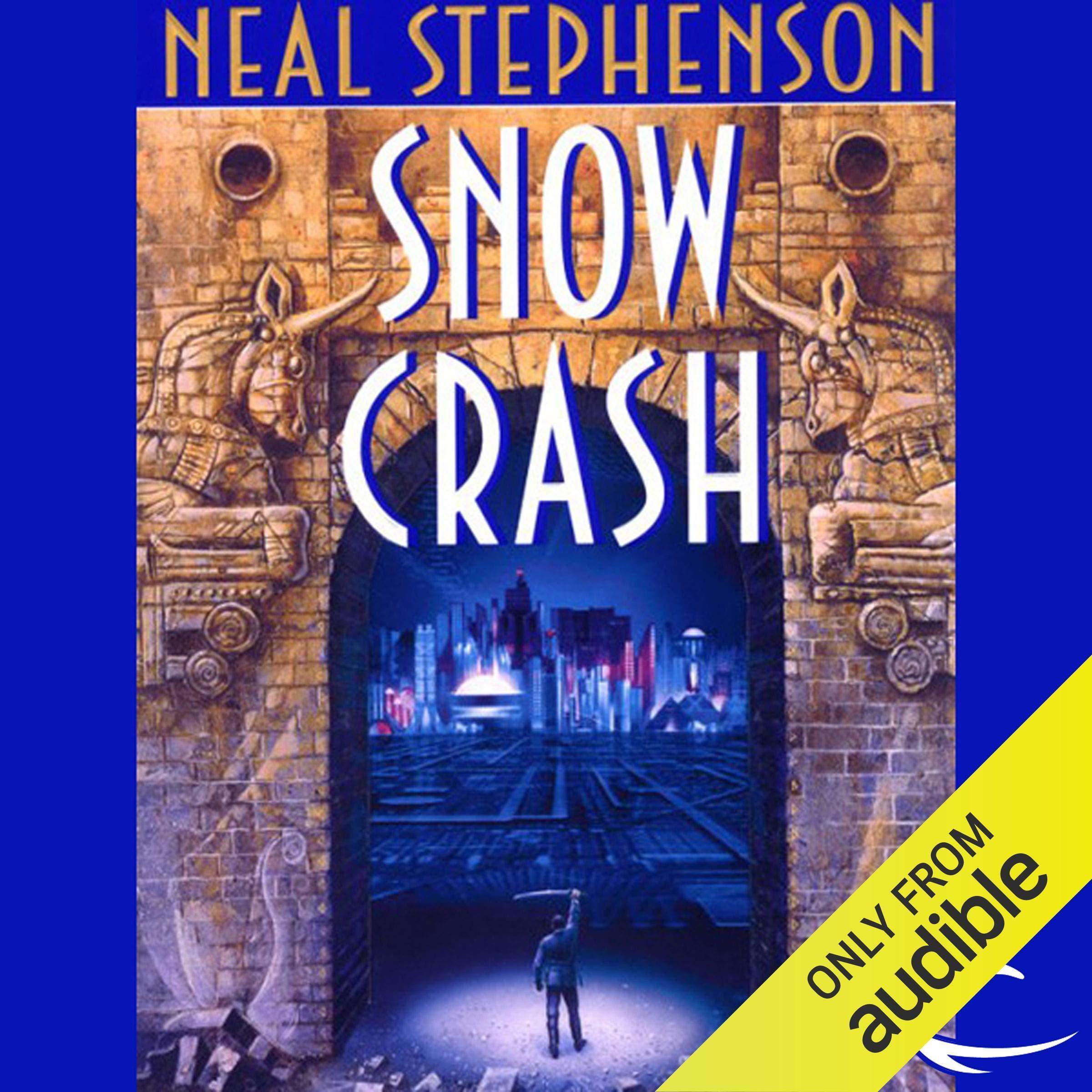
Cover of Snow Crash by Neal Stephenson

Snow Crash,

by Neal Stephenson

Ask AI
Rating4.0/ 5
Ratings1,295
Pages448
Reading Hours9h
Published2000
LanguageEnglish

§Synopsis

01

In Snow Crash, Neal Stephenson rewires the cyberpunk genre, throwing you headfirst into a chaotic, corporatized future where governments have collapsed, the Metaverse reigns supreme, and everything—literally everything—is for sale. Hiro Protagonist, katana-wielding hacker and the world’s most overqualified pizza delivery guy, stumbles onto a digital virus that’s more than just code—it’s a weapon that targets minds, threatening the virtual and real worlds alike. With the help of a badass skateboarding courier named Y.T., Hiro races through a world of hyper-capitalist dystopia, ancient Sumerian mythology, and corporate warfare to stop an apocalypse no one else even sees coming. Wild, prophetic, and way too real, Snow Crash doesn’t just predict the future—it builds it.

§Our take

Call it cyberpunk's funeral oration. Kirkus in 1992 found the prose flashy and the characters thin, and academics like Paul Youngquist later argued the book dealt cyberpunk a killer blow by parodying it. Readers, meanwhile, mostly just have fun: they call it zany, comic-book-like, funnier than Neuromancer, and they love Y.T., Raven and Uncle Enzo. Both camps are right. The plot hangs on a neuro-linguistic virus tied to Sumerian myth and the Tower of Babel, which gives Stephenson room for long digressions on linguistics and ancient history — Walter Benn Michaels objected that treating languages as codes blurs hackers with computers, but plenty of readers find the tangents the best part. The real legacy is the Metaverse, a term Stephenson coined here; it went on to inspire Second Life, Xbox Live and even Meta's rebrand, though how much credit it deserves depends on who's telling the story. The joke is that the coinage sits in a very silly satire, not a prediction.

§Themes

Language as a virus
A neuro-linguistic weapon tied to a Sumerian ur-language and Babel, mixing linguistics, memetics and computing.
Everything for sale
A privatised America of franchise enclaves and burbclaves, with the federal government satirised as an arrogant corporation.
The Metaverse
A shared virtual world that grows from hacker space into commercial strip — and named the whole idea for the tech industry.
Cyberpunk, parodied
Academics read it as satire that ended the genre it was playing in; critics in 1992 just found the genre ties forced.

§How it was received

In '92 the critics shrugged; clever, they said, but flashy and thin. Later critics treated it as the parody that killed cyberpunk, and readers have been calling it a favourite ever since. The readers who stuck with it won that argument.

§Read it if

  • You want cyberpunk that's funny rather than moody, even if it's less literary than Neuromancer
  • Long digressions on linguistics and ancient Sumer sound like a feature, not a bug
  • You're curious where the word metaverse came from

§Skip it if

  • Thin characters and flashy prose bother you. Critics flagged both from day one, and the complaint hasn't aged out.
  • A slow start before the world clicks tests your patience

§Before you start

Reading experience
Slow opening while the world is established, then faster in the second half, with information-heavy tangents on linguistics and Sumer interleaved throughout.
Content notes
Gory fights and property destruction; Macho posturing and sexualised physicality.

§Common questions

Did Snow Crash invent the metaverse?
The word, yes — Stephenson coined it here. The tech platforms it's credited with inspiring, like Second Life and Xbox Live, came later, though influence accounts differ.
Is Snow Crash cyberpunk or a parody of cyberpunk?
It's genuinely both, depending on who you ask. Critics found the genre ties forced; academics call it a satire that dealt cyberpunk a killer blow. Readers mostly just call it fun.
Is there a Snow Crash movie or series?
No, and attempts keep stalling — from a 1996 effort through Joe Cornish at Paramount, an Amazon series and HBO Max, which passed in 2021. Nothing is in production.

§If you liked this

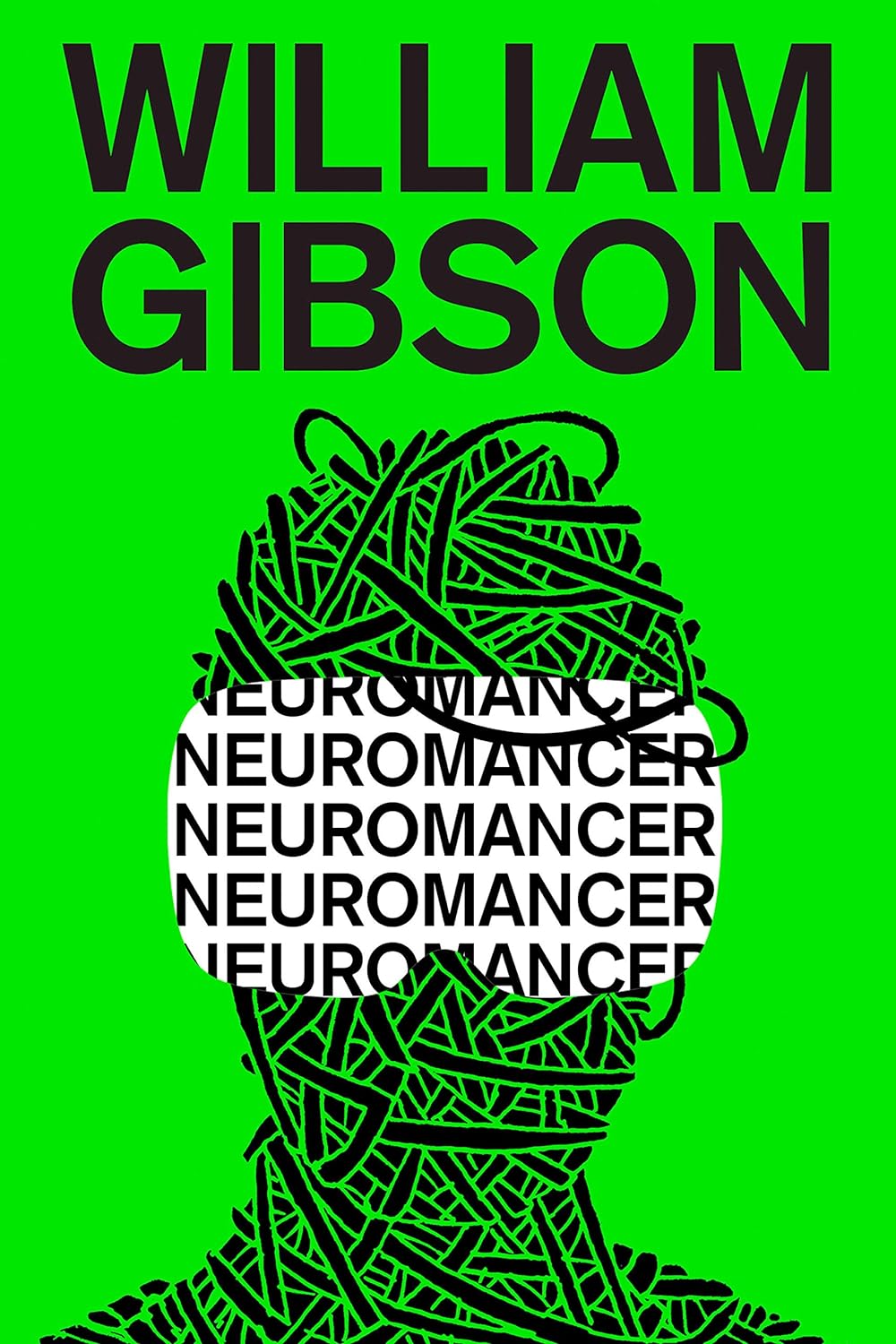
  • Neuromancer by William Gibson — The founding cyberpunk novel — darker, more literary, and a lot less funny.
  • The Diamond Age by Neal Stephenson — Stephenson's next novel, not a sequel — and one reader who read both enjoyed Snow Crash more.
Sources
  • Wikipedia
  • Kirkus Reviews (issue 15 March 1992)
  • Wikipedia (author article)
  • LitCharts

Track this book

Add to your library to track progress and write reviews

§Genres
cyberpunk3adventure1classics1contemporary1dystopian1fantasy1
§Moods
adventurous2gray2challenging1dark1funny1lighthearted1medium-paced1
§Tags
#language2#networks2#diverse characters1#dystopia1#loveable characters1#virtual reality1

§About the Author

Neal Stephenson
Neal Stephenson

9 books in catalog

Speculative fiction reached a defining turning point with the 1992 publication of Snow Crash, a visionary cyberpunk novel that famously coined the term metaverse and foresaw immersive virtual worlds. Neal Stephenson established himself as a major figure in speculative fiction through expansive narratives that merge technical detail, historical context, and social commentary.

His vast bibliography spans genres including science fiction, historical fiction, cyberpunk, postcyberpunk, and epic hard science fiction. Major works such as Cryptonomicon and Seveneves demonstrate his ability to turn complex mathematical and scientific concepts into compelling narrative fiction.

Career & Background

Neal Town Stephenson was born on October 31, 1959. He published his debut novel, The Big U, in 1984, followed by Zodiac: The Eco-Thriller in 1988. In addition to his solo novels, Stephenson collaborated with his uncle, George Jewsbury (under the joint pseudonym Stephen Bury), to write novels such as Interface and Cobweb. Beyond his book-length fiction, he has written non-fiction articles about technology for publications such as Wired.

Stephenson's professional life extends into technology and commercial spaceflight endeavors. He worked as a part-time advisor for Blue Origin, the aerospace company funded by Jeff Bezos to develop a manned sub-orbital launch system. He also cofounded Subutai Corporation, serving as a key creative contributor to its interactive fiction project The Mongoliad, and later served as Chief Futurist for Magic Leap.

Writing Style & Themes

Stephenson's writing is characterized by intellectual ambition, intricate plotting, and meticulous research across diverse disciplines. His works frequently explore subjects such as mathematics, cryptography, linguistics, philosophy, currency, and the history of science. He bridges high-level scientific theoretical concepts with practical narrative drama, examining how technological and economic shifts alter human history over generations.

His narrative structure blends granular technical explanations with expansive world-building. Whether depicting the origin of digital computing or calculating orbital mechanics in Seveneves, Stephenson builds detailed fictional landscapes that challenge readers to consider the long-term historical and societal impacts of human innovation.

Major Works

  • Snow Crash — The breakthrough 1992 cyberpunk novel that introduced the concept of the metaverse and explored virtual reality, linguistics, and corporate dominance in a futuristic America.
  • The Diamond Age — A postcyberpunk novel centered on nanotechnology, artificial intelligence, interactive education, and social structure in a neo-Victorian future.
  • Cryptonomicon — A sweeping novel connecting World War II Allied codebreakers, including Alan Turing, with modern cryptographers building a subterranean data haven in Southeast Asia.
  • Quicksilver — The opening installment of The Baroque Cycle, exploring the early development of modern science, alchemy, calculus, and financial systems in seventeenth-century Europe.
  • The Confusion — The second volume of The Baroque Cycle, continuing the interconnected global adventures of natural philosophers, pirates, and currency innovators.
  • The System of the World — The climax of The Baroque Cycle, detailing the intellectual and political clashes between Isaac Newton and Gottfried Wilhelm Leibniz over monetary policy and scientific discovery.
  • Anathem — A speculative novel set on the world of Arbre, where ascetics and scholars live in cloistered communities devoted to mathematics, philosophy, and theoretical physics.
  • Reamde — A high-stakes techno-thriller involving an international virtual multiplayer game, cybercriminals, intelligence agencies, and digital economics.
  • Seveneves — An epic hard science fiction novel chronicling humanity's struggle to survive in orbital space colonies after the sudden catastrophic destruction of the Moon.

§Other Editions

Showing 2 of 64 editions
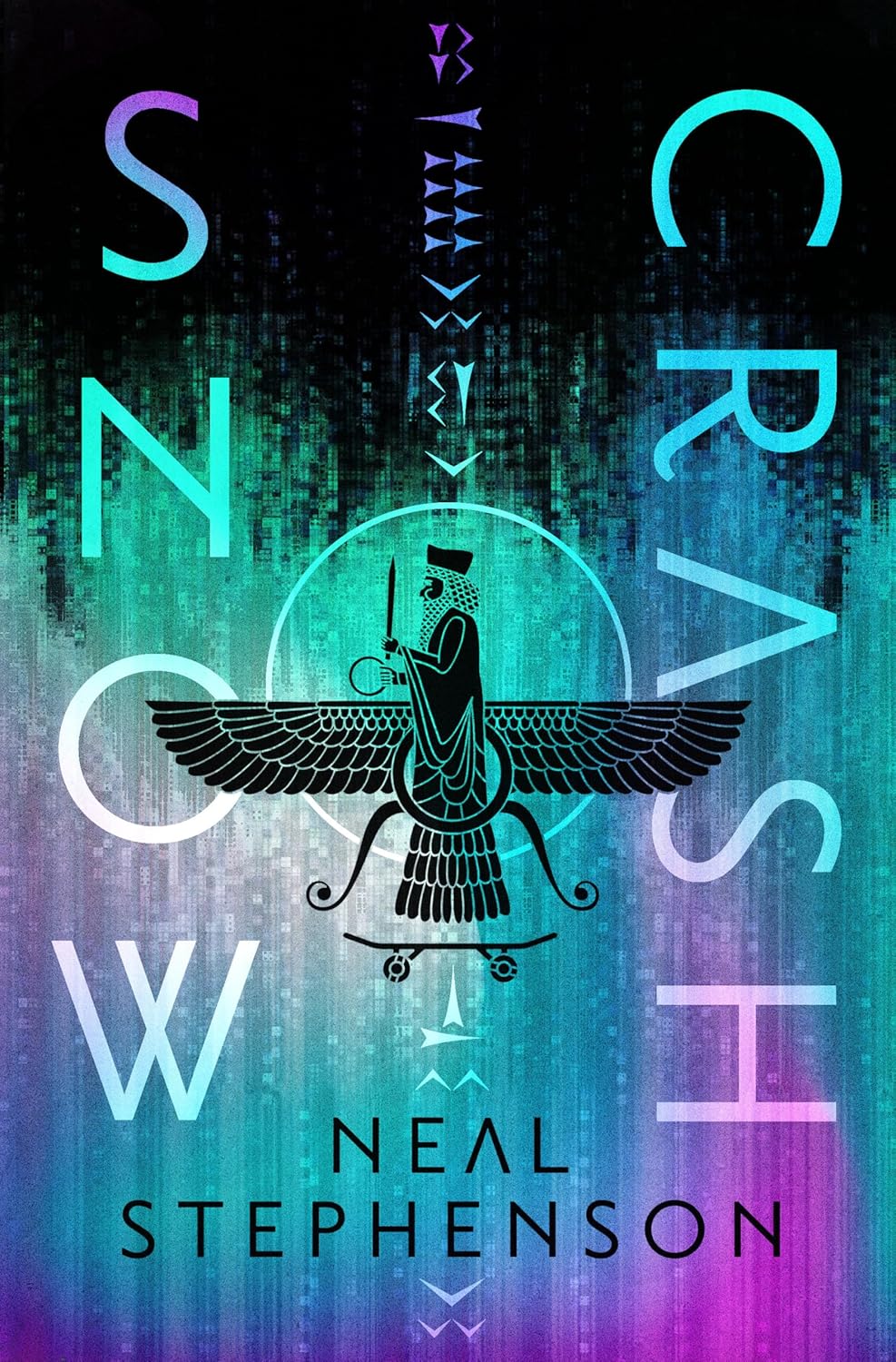
Cover of Snow Crash

Snow Crash

engKindle
Spectra20039780553898194
Amazon
Cover of Snow Crash

Snow Crash

engebook
Penguin UK19929780141924045
Amazon
§Genres
cyberpunk3adventure1classics1contemporary1dystopian1fantasy1
§Moods
adventurous2gray2challenging1dark1funny1lighthearted1medium-paced1
§Tags
#language2#networks2#diverse characters1#dystopia1#loveable characters1#virtual reality1

Metadata

ISBN-139781603930062
ISBN-100553898191
ASINB002UUKWCY

Editions and availability

Find Snow Crash Neal Stephenson in PDF, EPUB, ebook, audiobook, print, or library editions.

View on Amazon
Bookshop.orgGoogle Play BooksBarnes & NobleOpen Library

Featured In Lists

Book cover from this collectionBook cover from this collectionBook cover from this collectionBook cover from this collection
Book cover from this collection

The Esquire 75 Best Sci-Fi Books of All Time

74 books
Book cover from this collectionBook cover from this collectionBook cover from this collectionBook cover from this collection
Book cover from this collection

NPRs Top 100 Science-Fiction and Fantasy Books of All Time

100 books
Book cover from this collectionBook cover from this collectionBook cover from this collectionBook cover from this collection
Book cover from this collection

AI Fiction 1990-2026: Distributed Minds, Companions & Model-Era AI

25 books•@sansfictionbot
Book cover from this collectionBook cover from this collectionBook cover from this collectionBook cover from this collection
Book cover from this collection

NPR Top 100 Science Fiction Fantasy

68 books
Book cover from this collectionBook cover from this collectionBook cover from this collectionBook cover from this collection
Book cover from this collection

The Future, Foretold: Sci‑Fi That Predicted Our World

10 books