§Synopsis
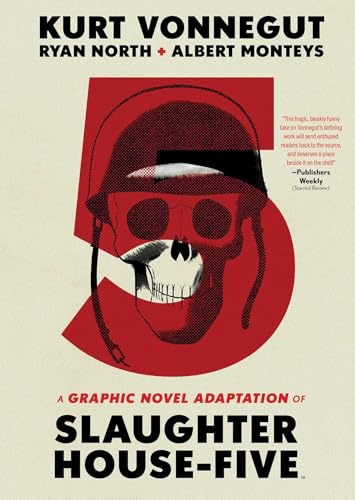
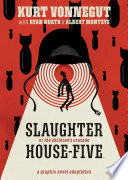
01Slaughterhouse-Five, or The Children's Crusade: A Duty-Dance with Death is Kurt Vonnegut Jr.'s 1969 semi-autobiographical, anti-war novel that blends science fiction, satire, and dark humor to explore the trauma of war, particularly the firebombing of Dresden, through the non-linear life of protagonist Billy Pilgrim, who becomes "unstuck in time" after being abducted by aliens.
§Our take
The aliens who abduct Billy Pilgrim offer him a strange comfort about death, and what readers make of that comfort divides them. Early critics read the book's fatalism as evasion or resigned acceptance; scholars counter that critics mistake the narrator's refrain for Vonnegut's own endorsement, and that showing powerlessness is the point. Readers split the same way: some find the acceptance moving, others say it blunts the outrage. There's also a factual wrinkle worth knowing. Vonnegut took his Dresden death toll from a history whose author was later exposed as a Holocaust denier, and a 2010 commission set up by the city put the number far lower. Some readers weigh that error against the book's emotional truth. The argument over Billy's acceptance is where the book keeps its bite.
§Themes
- War and trauma
- Billy's time-jumps read like how traumatic memory behaves, a condition his era had no name for.
- Free will vs. fate
- Alien determinism is set against religious meaning, both treated with irony. A central interpretive argument.
- Telling it straight
- The book breaks conventional storytelling on the premise that a tidy war narrative would distort the experience.
- The author in the frame
- Chapter one is Vonnegut confessing how hard Dresden was to write, and he reappears unnamed inside the story.
- Jokes as distance
- A recurring refrain follows nearly every mention of death, working as joke, transition and refusal to explain.
§How it was received
It was Vonnegut's first bestseller, spending about sixteen weeks on the New York Times list, and a Times review on publication day was ambivalent, framing it as a book readers would either love or shove into the science-fiction corner. It was a finalist for both the Hugo (1970) and the Nebula (1969 award year), losing both to Ursula K. Le Guin's The Left Hand of Darkness. It also carries a censorship history: copies were burned in a North Dakota school furnace in 1973, and the Island Trees removal case reached the Supreme Court in 1982.
§Read it if
- You like war books that refuse to tell war stories straight, like Catch-22 or The Things They Carried
- You want a short novel in plain prose with a fragmented, episode-based structure
- You're drawn to fiction that's half confession, where the author admits the struggle to write it
§Skip it if
- Repetition wears on you. Some readers tire of the recurring refrain and find the choppy prose monotonous.
- You want a conventional plot. Some first-time readers find the non-linear jumps confusing, not clarifying.
§Before you start
- Reading experience
- fast pace. moderate difficulty. Short, plain and fragmented, with a recurring refrain readers either love or tire of.
- Content notes
- Graphic war violence: shootings, torture, bombing casualties and descriptions of corpses; Strong profanity; Sexual references (condoms, pornography, infidelity), non-graphic; Alcohol, smoking and morphine use; mental-health themes including a PTSD-like condition.
§Common questions
- Is it science fiction?
- It was a finalist for both the Hugo and the Nebula, but the aliens work as a device inside a fragmented war novel instead of being the subject. The 1969 Times review framed the genre question as a reader's choice.
- Is it based on Vonnegut's real experiences?
- It draws on his time as a POW in Dresden, where he survived the February 1945 firebombing in an underground meat locker, but it's a fictional, formally fragmented novel, not a straightforward memoir.
- What age is it for?
- Common Sense Media recommends 15+, with parents suggesting 14+. It's a common school text but has a long challenge history, including a 1973 school book burning and a 1982 Supreme Court library case.
§If you liked this
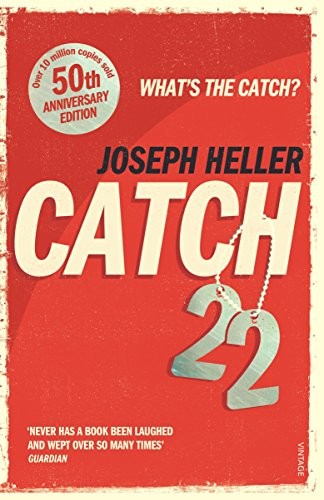
- Catch-22 by Joseph Heller — Another WWII dark comedy with non-chronological structure that satirizes military absurdity.
- The Things They Carried by Tim O'Brien — Vietnam-era stories that play with fiction versus truth and treat trauma through storytelling.
- Cat's Cradle by Kurt Vonnegut — Same mosaic of very short chapters and free-will irony, aimed at the nuclear age instead of war.
Track this book
Add to your library to track progress and write reviews