§Synopsis
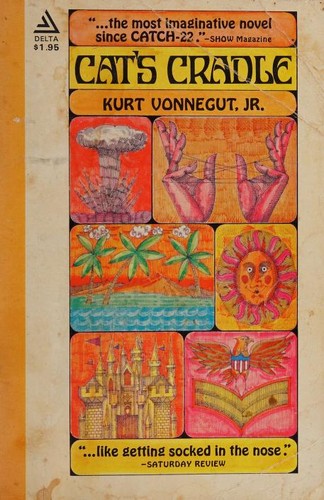
01One of Vonnegut's major works, a young writer decides to interview the children of a scientist primarily responsible for the creation of the atomic bomb. This is an apocalyptic tale of the planet's ultimate fate, featuring a cast of unlikely heroes.
§Our take
Cat's Cradle is Vonnegut at his funniest and most unsettling: a Cold War apocalypse conducted in quick, deadpan fragments. The jokes do not soften the stakes so much as show how casually people carry them. Hoenikker is worse than a conventional villain because he is a childlike genius who treats work as play and cannot grasp consequences.
The book's real argument sits inside Bokononism, a religion built from admitted lies. Critics split over whether that mocks faith or admits how badly people need comforting stories, which is the right sort of trouble. Some readers hear resignation, others despair. Read it for the shape of the thing, not just the punchlines: 127 short chapters, invented religion, nuclear science, and scattered pieces that click together by the end.
§Themes
- Science without conscience
- Hoenikker treats invention as play and leaves other people to carry its consequences.
- Useful untruths
- Bokononism admits that its stories are lies, but argues that harmless lies can make life bearable.
- Comic catastrophe
- Bomb shelters, civil-defense drills and the Cuban Missile Crisis sharpen the novel's apocalyptic background.
- Nihilism or acceptance
- The book swings between despair and resignation, asking whether acceptance can be a form of comfort.
- Life without a pattern
- The cat's cradle string figure becomes an image of a life whose scattered pieces may not form a whole.
§How it was received
Kirkus was lukewarm before publication, judging the book uneven while crediting its puzzle-like view of meaninglessness, science-fiction borrowings and political satire. Terry Southern was enthusiastic in The New York Times, and Theodore Sturgeon also praised it in Galaxy; it was not an instant success, though its audience grew in the mid-1960s, especially among younger readers during the anti-Vietnam War era. Later criticism remains divided between charges of flippancy or superficiality and praise for its wit and serious handling of grave themes; it was a 1964 Hugo Best Novel finalist, not the winner.
§Read it if
- You like bleak comedy, aphorisms and an apocalypse treated as a moral problem
- You don't mind learning foma, karass and granfalloon along the way
- You want a fast novel whose scattered pieces only click together at the end
§Skip it if
- You need warmth or reassurance. This is a bleaker book, even when it is laughing.
- Fragmented structure bothers you. The tiny chapters and invented words can feel disjointed or hard to follow.
§Before you start
- Reading experience
- The 127 very short chapters and plain, quick prose make it easy to finish in a sitting or two, though the invented Bokononist vocabulary can initially slow readers down.
- Reading order
- Standalone. No reading order is needed, though Vonnegut sometimes reuses names and ideas across his novels.
- Content notes
- Apocalyptic mass death; Suicide, depicted matter-of-factly; Strong language, including religious profanity and a racial slur against Japanese people used by a character; Sexual references, innuendo and briefly described nudity; Heavy drinking and smoking; Physical assault, a threat of impalement and torture of insects; A cat is killed; Christianity, God and religious ritual are repeatedly ridiculed.
§Common questions
- Is Cat's Cradle science fiction?
- It has science-fiction elements and was a 1964 Hugo Best Novel finalist, but critics often describe it as satire or a moral parable.
- What is Bokononism?
- A fictional outlaw religion on San Lorenzo, built on foma: harmless untruths meant to make life bearable.
- How hard is Cat's Cradle to read?
- The prose is simple and the chapters are short, but Bokonon's invented words can slow you down at first.
§If you liked this
- Slaughterhouse-Five by Kurt Vonnegut — The natural next Vonnegut: another fragmented, darkly comic novel, this one anchored in the author's Second World War experience.
- God Bless You, Mr. Rosewater by Kurt Vonnegut — A gentler place to start with Vonnegut: his son Mark reportedly recommended this book first, then Cat's Cradle, then Slaughterhouse-Five.
- The Sirens of Titan by Kurt Vonnegut — An earlier Vonnegut novel of cosmic science-fiction satire and meaninglessness, with a similarly bleak comic streak.
- Candide by Voltaire — A philosophical satire with the same appetite for shocks and moral provocation; critics have compared Cat's Cradle to Candide and the Book of Job.
Track this book
Add to your library to track progress and write reviews