SSansFiction
The libraryCollectionsJournalStatsFor authors
Sign inJoin now
Sansfiction,

A digital library for books. Made by readers, for readers.

v 2.0 · 2026
The library
  • Discover
  • Collections
  • Book tracker
  • Journal
  • Stats
For authors
  • SF Links
  • Analytics
  • How it works
  • FAQ
Elsewhere
  • X / @sansfiction
  • Privacy
  • Terms
  • Contact
© 2026 SansFiction · Digital · GlobalA quiet room for your reading life.
The libraryCollectionsJournalStatsFor authors
Sign inJoin now →
Navigation
Library
Bookshelf
Journal
Discover
Collections
Tierlists
Stats
Profile
Author Page
Link Builder
Account
Sign in
S
G
BooksadventureSkyward
Cover of Skyward by Brandon Sanderson
№ 1 · Skyward

Skyward,

by Brandon Sanderson

Ask AI
Rating4.4/ 5
Ratings864
Pages510
Reading Hours11h
Published2018
LanguageEnglish

§Synopsis

01

On the planet Detritus, humanity’s survival depends on a precarious balance between subterranean safety and the constant threat of orbital bombardment. For decades, the remnants of the human race have been besieged by the Krell, an enigmatic alien force that keeps them trapped behind a shield of falling space debris. In this high-stakes environment, the Defiant Defense Force (DDF) serves as both the military shield and the social peak of human achievement, where the merit of a pilot is the only currency that truly matters.

Spensa Nightshade exists on the absolute fringes of this society, carrying the radioactive legacy of a father who allegedly deserted his flight during a pivotal battle. Her struggle is not merely against the aliens in the sky, but against a rigid social hierarchy that views cowardice as a hereditary trait. To earn her place in the cockpit, she must navigate a system designed to ensure her failure, all while grappling with the unsettling possibility that the stories told by her government—and the history of her people—may be far more complex than the propaganda suggests.

The Siege of Detritus: A World of Iron and Atmosphere

The setting of Skyward is defined by its verticality and its confinement. Detritus is surrounded by several layers of ancient, automated orbital defense platforms and a "shell" of space junk that makes leaving the planet nearly impossible. Life is lived in "deep-caverns," where resources are strictly rationed and the military’s influence permeates every aspect of civilian life. This creates a claustrophobic atmosphere where the open sky represents both the ultimate freedom and a death sentence. Sanderson establishes a "hard" sci-fi edge to the aerial combat, focusing on the physics of light-lances—energy tethers used for high-speed maneuvering—and the physiological toll of high-G dogfights.

Main Characters

  • Spensa "Spin" Nightshade: A fierce, often overly aggressive protagonist who uses grandiloquent "warrior-talk" to mask her insecurities and the social isolation caused by her father’s reputation.
  • Jorgen "Jerkface" Weight: A talented, rule-following flight leader from a high-status family who serves as a bureaucratic and personal foil to Spensa’s rebellious nature.
  • Cobb: A grizzled, cynical flight instructor and veteran pilot who was once Spensa's father’s wingman, offering a bridge to a history the DDF prefers to bury.
  • M-Bot: A highly advanced, sentient starship discovered by Spensa in a hidden cavern, possessing a strange obsession with mushroom classification and a malfunctioning memory bank.
  • Roddie "Rig" Hale: Spensa’s childhood friend who possesses a brilliant technical mind but lacks the desire for combat, highlighting the different paths available in a militarized society.

The Burden of Legacy and Defiance

The central character arc in the first half of the novel focuses on the psychological weight of social stigma. Spensa is not just fighting to be a pilot; she is fighting the institutional belief that her "blood" is tainted by cowardice. This drives her to a state of hyper-competitiveness and isolation. Her development is marked by a transition from seeing the world in binary terms—heroes and cowards—to understanding the nuanced reality of fear and the political utility of shame. Her relationship with her flight team, the "Skyward Flight," forces her to reconcile her lone-wolf survival instincts with the collective requirements of a military unit.

Mechanical Archaeology and Subverting the "Academy" Trope

While Skyward utilizes the "Battle School" or "Flight Academy" trope, it subverts the typical progression by placing the protagonist in a position of constant disadvantage. Unlike her peers, Spensa is denied the standard equipment and housing, forced to live in a cave and scavenge for survival while attending classes. This introduces an element of "mechanical archaeology," where the discovery of M-Bot shifts the focus from standard military progression to a mystery regarding ancient technology and the true nature of the Krell. The narrative also plays with the "Girl and her Dragon" trope, replacing the biological creature with a sentient, snarky spacecraft, creating a dynamic that focuses on the ethics of AI and the bond between pilot and machine.

§Our take

Skyward is a flight-school adventure with a sharper question underneath the dogfights: what if fear is inherited as a verdict rather than a fact?

Spensa Nightshade is fierce, combative and deliberately loud, but her warrior-talk is armor against a society that treats her father's supposed desertion as evidence of hereditary cowardice. Sanderson makes the real subject less about whether she can fly than whether courage can survive shame. The answer unfolds through hard-SF training, vivid aerial combat and a flight crew that turns her lone-wolf habits into a collective responsibility. M-Bot, the sentient ship obsessed with classifying mushrooms, supplies sass and emotional ballast without making the stakes harmless. The book still has Sanderson's appetite for ancient tech, buried history and a suspicious official story, with revelations waiting in the wings. The first stretch can feel slow, and the late disclosures arrive faster than some readers like. Fans of his epic fantasy should expect a tighter YA/adult-borderline mood, closer to the Reckoners than to his larger fantasy work.

§Themes

Courage after shame
Spensa treats fear as shameful until flight training forces her to test what bravery actually means.
Reputation as punishment
Her father's alleged desertion follows Spensa into the cockpit as a verdict on her character.
Team over lone wolf
Skyward Flight makes Spensa reconcile her survival instincts with the need to function as one unit.
Speed has a price
Light-lances and high-G maneuvers make aerial combat exciting, precise and physically punishing.
A bond with a machine
M-Bot replaces the biological dragon with a snarky sentient ship, making trust between pilot and machine the real partnership.

§How it was received

Kirkus called Skyward a fast, high-flying series opener, though it found Spensa's bravado a little extreme. Publishers Weekly praised her resourcefulness, M-Bot and the supporting cast, while Common Sense Media found the dogfights exciting but said the book runs long and rushes late revelations. Kirkus's audiobook review was wholly positive, praising Suzy Jackson's forceful delivery and her handling of the neurotic ship AI.

§Read it if

  • You want a military-school story where the real exam is emotional as well as aerial
  • You enjoy quick banter, a large supporting cast and a ship AI with strong opinions
  • You like hard science fiction, buried history and a heroine forced to earn her place

§Skip it if

  • You need a quick opening. Some readers find the first stretch slow and the setting hard to settle into.
  • You prefer subtle themes and measured reveals. Reviewers call the moral argument heavy-handed and the late revelations rushed.

§Before you start

Reading experience
The opening can feel slow, then the flight-school sequences accelerate; the light-lance physics and rushed late revelations make the 528-page US edition demanding in different ways.
Reading order
Book 1 of the Skyward series. Continue with Starsight (2019), Cytonic (2021) and Defiant (2023). Defending Elysium is a prequel short story set hundreds of years earlier; Sunreach, ReDawn, Evershore and Hyperthief are the listed novellas.
Content notes
Moderate violence, including repeated spaceship battles and deaths of important characters, though the bloodshed is not graphic; Light profanity, including 'damn' and the invented expletive 'scud'; Themes of war, loss and a parent's disgrace; Minimal romance, limited to mild flirting between cadets.

§Common questions

Is Skyward YA or adult science fiction?
The US edition is published as young adult; the UK edition is published as adult science fiction.
Is Skyward part of the Cosmere?
Sanderson tried to place it in the Cosmere but said it did not fit; it does not appear in the Cosmere bibliography.
Is Skyward a trilogy?
No. The main series has four books—Skyward, Starsight, Cytonic and Defiant—with novellas and a prequel short story listed as extras.

§If you liked this

  • Ender's Game by Orson Scott Card — The clearest kinship: a military-school setting, a gifted young outsider and Sanderson's own acknowledged flight-school influence.
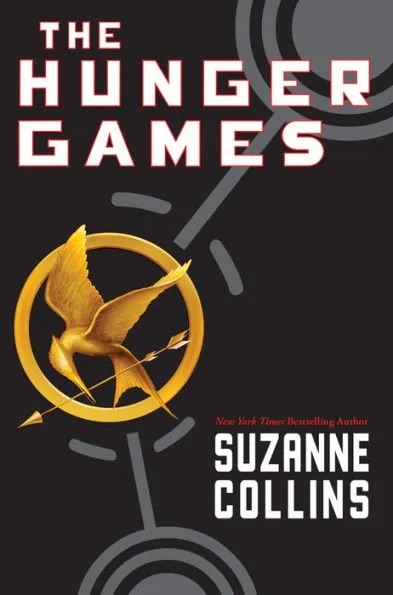
  • The Hunger Games by Suzanne Collins — Kirkus likens Spensa to Katniss Everdeen crossed with Conan the Barbarian, which catches her resourcefulness and swagger.
  • Steelheart (Reckoners) by Brandon Sanderson — The better gauge for tone: Sanderson places Skyward's YA/adult-borderline mood near the Reckoners rather than his epic fantasy.
Sources
  • Wikipedia
  • Kirkus Reviews
  • Publishers Weekly
  • Common Sense Media
  • Brandon Sanderson (author site)
  • Brandon Sanderson (author site)
  • Brandon Sanderson (author site)
  • Kirkus Reviews (audio)
  • Wikipedia
  • Goodreads
  • The Nerd Daily
  • Hidden in Pages
  • Bibliosanctum

Track this book

Add to your library to track progress and write reviews

§Genres
adventure1aliens1dystopian1fantasy1fiction1science fiction1space1
§Content Warnings
§Moods
adventurous1emotional1funny1hopeful1inspiring1lighthearted1mysterious1
§Tags
#diverse characters1#loveable characters1#not diverse characters1#plot driven1#strong character development1#unloveable characters1

§About the Author

Brandon Sanderson
Brandon Sanderson

37 books in catalog

The creation of the Cosmere, a vast interconnected universe where magic systems are governed by distinct physical laws, has redefined the scope of modern epic fantasy. Brandon Sanderson established this shared setting through a series of novels that began with the publication of Elantris and expanded into the multi-volume saga The Stormlight Archive.

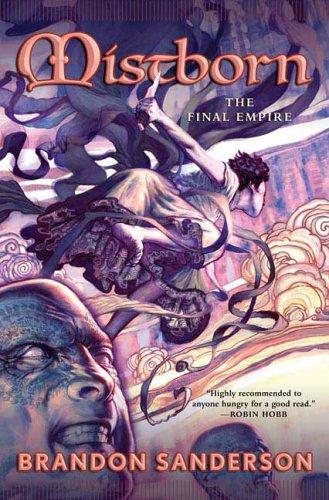
His work is characterized by intricate world-building and a commitment to "hard magic," where the limitations of supernatural abilities are as important as the powers themselves. This approach has made his books, such as Mistborn: The Final Empire and The Way of Kings, central to contemporary discussions of genre construction and narrative consistency.

Career & Background

Born on December 19, 1975, in Lincoln, Nebraska, Brandon Winn Sanderson was the eldest of four children born to Barbara and Winn Sanderson. Although he was a reluctant reader in his early youth, his perspective changed in the eighth grade when his teacher, Mrs. Reeder, gave him a copy of Dragonsbane by Barbara Hambly. This encounter led him to explore the works of Robert Jordan, Melanie Rawn, David Eddings, Anne McCaffrey, and Orson Scott Card, eventually inspiring his own early attempts at fiction. In 1994, he enrolled at Brigham Young University (BYU) as a biochemistry major. However, a two-year hiatus from 1995 to 1997 to serve as a missionary for the Church of Jesus Christ of Latter-day Saints in Seoul, South Korea, shifted his focus. During this time, he realized he missed writing more than chemistry. Upon returning to BYU, he changed his major to English, much to the dismay of his mother, who had hoped he would become a doctor.

To support his education while maximizing his writing time, Sanderson worked as a night desk clerk at a local hotel, writing between midnight and 5:00 AM. By the time he finished his undergraduate degree, he had completed seven novels, though he faced a steady stream of rejections from publishers. He also volunteered for The Leading Edge, BYU’s science fiction and fantasy magazine, where he served as Editor in Chief during his senior year. This role allowed him to read many submissions and form lifelong friendships within the industry. He learned about the business side of writing by taking a class from David Farland, author of the Runelords series, who advised him to attend conventions like WorldCon and World Fantasy to connect with professionals. He eventually met his current agent and one of his editors at these events.

His persistence paid off in 2003 when editor Moshe Feder at Tor Books discovered the manuscript for Elantris in a slush pile. The novel was published in May 2005, marking the official start of his professional career. Shortly after, he launched the Mistborn trilogy, which includes Mistborn: The Final Empire (2006), The Well of Ascension (2007), and The Hero of Ages. In 2004, after graduating with his Master’s degree in creative writing from BYU, he was asked to teach the same genre-focused writing class he had once taken as an undergraduate. He continues to teach this section because he enjoys helping aspiring writers. In July 2006, he married Emily Bushman, a fellow English major from BYU. Emily began working as his business manager following the birth of their first child in October 2007.

A significant turning point occurred in December 2007 when Harriet McDougal Rigney selected Sanderson to complete Robert Jordan’s The Wheel of Time series following Jordan's death. This massive undertaking resulted in three volumes: The Gathering Storm (2009), Towers of Midnight (2010), and A Memory of Light (2013). During this same period, Sanderson began his own magnum opus, The Stormlight Archive, starting with The Way of Kings in 2010. He has since balanced these epic projects with middle-grade series like Alcatraz Versus the Evil Librarians (2007) and young adult science fiction such as Skyward. His novella The Emperor’s Soul won the Hugo Award in 2013, and he has been a judge for Writers of the Future since 2016. He also co-hosts the podcast Writing Excuses, which has won multiple awards for its writing advice.

Writing Style & Themes

Sanderson is widely recognized for his development of "Sanderson’s Laws of Magic," a set of guidelines for authors to create consistent and logical magic systems. His approach emphasizes that an author's ability to solve problems with magic is directly proportional to how well the reader understands said magic. This philosophy is evident in the "Allomancy" of the Mistborn series, where characters ingest and "burn" metals to gain specific abilities, and the "Surgebinding" found in The Stormlight Archive. By establishing clear costs and limitations, he ensures that magical resolutions feel earned rather than arbitrary. This dedication to internal logic has influenced a generation of fantasy writers seeking to move away from "soft" magic systems where powers are ill-defined.

His world-building often incorporates unique geological and ecological elements that directly influence the cultures and technologies of his characters. For instance, the landscape of Roshar in The Stormlight Archive features a rocky terrain and flora that retracts into the ground, a design inspired by the sandstone buttes and slot canyons of southeastern Utah. Similarly, the world of Scadrial in Mistborn is defined by falling ash and a red sun, environmental factors that shape the social hierarchy and survival strategies of its inhabitants. His background in linguistics, influenced by his time in Korea, often informs the naming conventions and structural logic of his fictional languages, adding a layer of authenticity to his diverse civilizations.

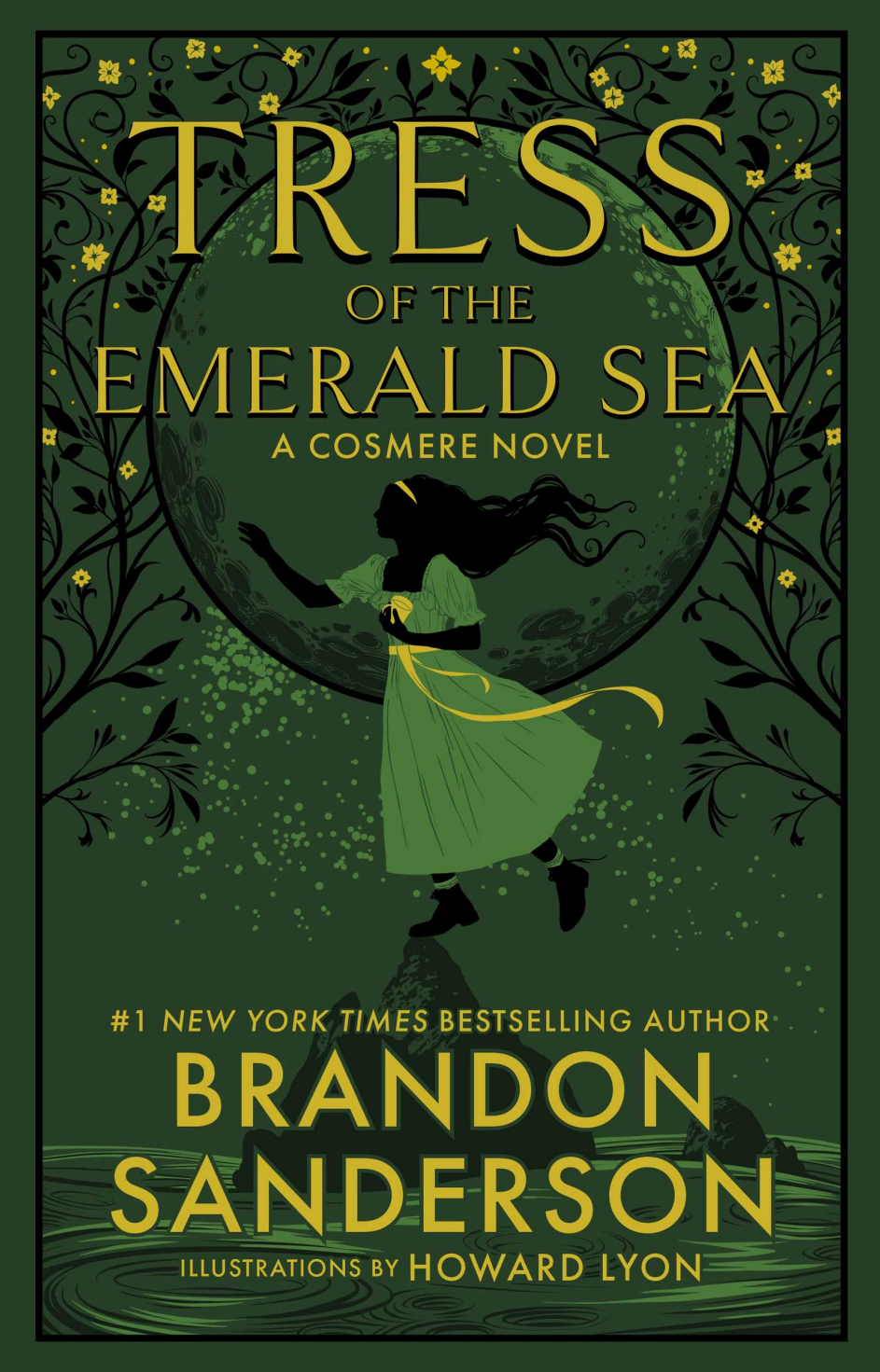
Thematic depth in his work often explores the intersection of leadership, morality, and mental health. Characters in The Stormlight Archive frequently struggle with depression, post-traumatic stress, or identity crises, reflecting a nuanced approach to heroism that acknowledges human vulnerability. The "Cosmere" framework allows for subtle cross-over elements, where characters known as "Worldhoppers" appear in different series, rewarding observant readers with a deeper layer of narrative connectivity. This interconnectedness is further explored in his "Secret Projects," such as Tress of the Emerald Sea and The Sunlit Man, which expand the boundaries of his shared universe into new genres and planetary systems, including the transition into a space age as seen in Wind and Truth.

Major Works

  • The Stormlight Archive — A projected ten-volume epic fantasy series set on the world of Roshar, beginning with The Way of Kings (2010) and continuing through Words of Radiance (2014), Oathbringer, Rhythm of War, and the upcoming Wind and Truth.
  • Mistborn — An initial trilogy consisting of Mistborn: The Final Empire, The Well of Ascension, and The Hero of Ages, followed by the "Wax and Wayne" era starting with The Alloy of Law (2011) and continuing through Shadows of Self, The Bands of Mourning (2016), and The Lost Metal.
  • The Wheel of Time — The final three volumes of Robert Jordan's legendary series, completed by Sanderson: The Gathering Storm (2009), Towers of Midnight (2010), and A Memory of Light (2013).
  • Elantris — Sanderson's 2005 debut novel, which introduced the first iteration of the Cosmere and explored a city of fallen, god-like beings.
  • Warbreaker — A standalone novel featuring a color-based magic system known as Awakening, which has significant ties to the broader Cosmere.
  • Skyward — A young adult science fiction series following a girl named Spensa who dreams of being a pilot in a world under constant alien siege, continuing through Starsight, Cytonic, and Defiant.
  • Secret Projects — A series of novels originally funded via a record-breaking Kickstarter campaign, including Tress of the Emerald Sea, The Frugal Wizard's Handbook for Surviving Medieval England, Yumi and the Nightmare Painter, and The Sunlit Man.
  • Alcatraz Versus the Evil Librarians — A middle-grade series beginning in 2007 that follows a boy who discovers his family's legacy of fighting a secret society of librarians.

§Featured Series

Skyward

Cover of Skyward by Brandon Sanderson

Skyward

Brandon Sanderson, 2018
Cover of Defiant by Brandon Sanderson

Defiant

Brandon Sanderson, 2023

§Also part of

Cytoverse

§Other Editions

Showing 2 of 33 editions
Cover of Skyward

Skyward

eng
Audible Studios20189798350414738
Amazon
Cover of Skyward

Skyward

engKindle
Knaur Taschenbuch2021B08M5QBRJZ
Amazon
§Genres
adventure1aliens1dystopian1fantasy1fiction1science fiction1space1
§Content Warnings
§Moods
adventurous1emotional1funny1hopeful1inspiring1lighthearted1mysterious1
§Tags
#diverse characters1#loveable characters1#not diverse characters1#plot driven1#strong character development1#unloveable characters1

Metadata

ISBN-139780399555770
ISBN-100399555773
ASIN0399555773

Editions and availability

Find Skyward Brandon Sanderson in PDF, EPUB, ebook, audiobook, print, or library editions.

View on Amazon
Bookshop.orgGoogle Play BooksBarnes & NobleOpen Library

Featured In Lists

Book cover from this collectionBook cover from this collectionBook cover from this collectionBook cover from this collection
Book cover from this collection

Favorite books with a coming of age story with female protagonist

80 books