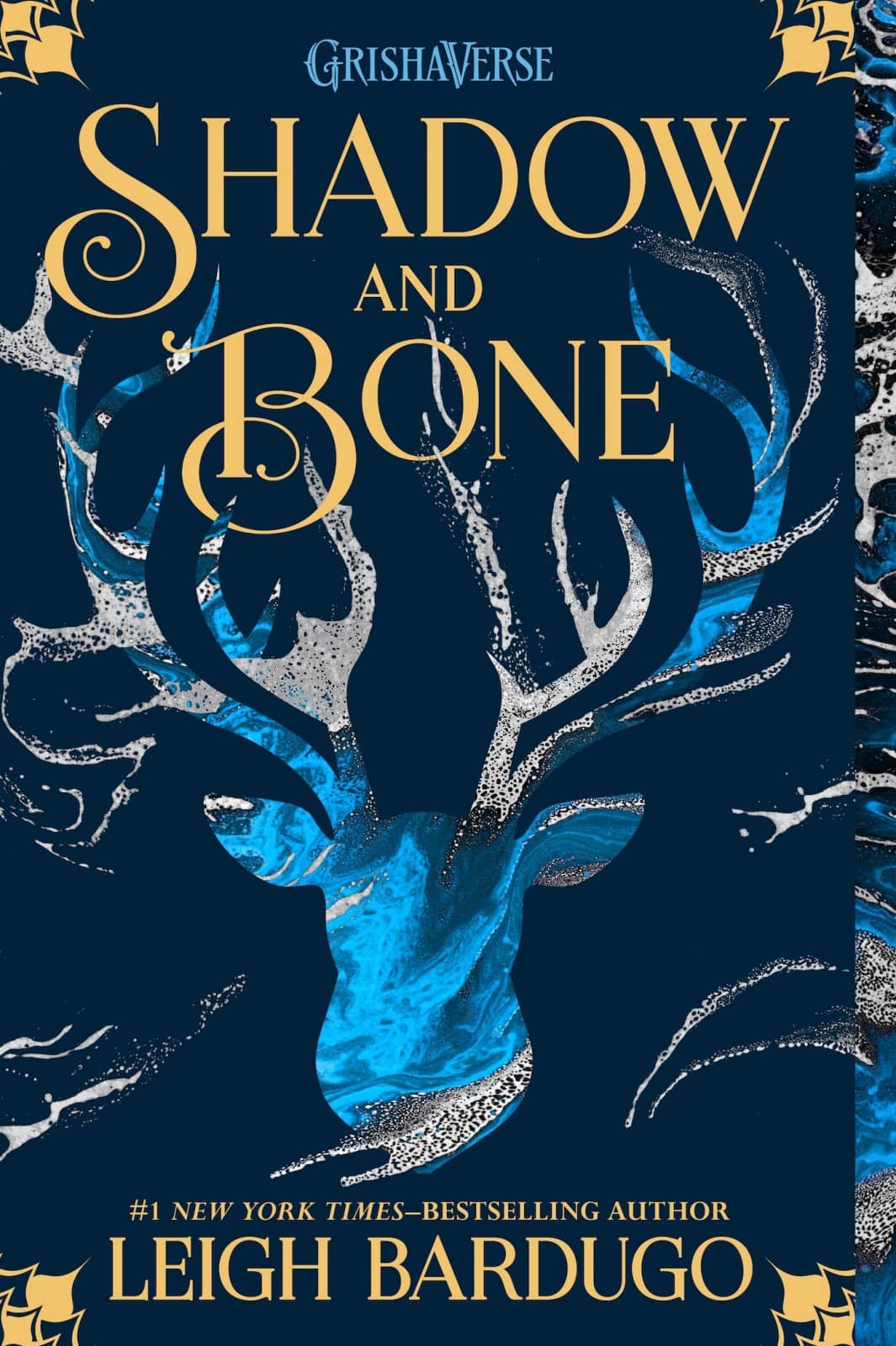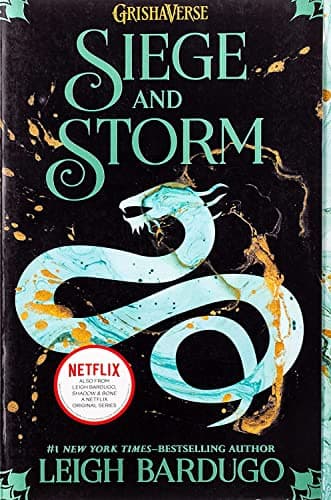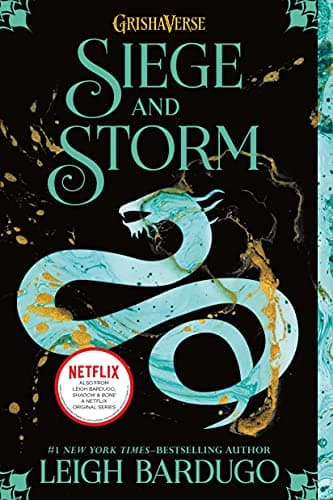
In the aftermath of the disaster at the Shadow Fold, the myth of the Sun Summoner has transitioned from a whisper of hope into a heavy political burden. Alina Starkov finds herself a fugitive in the distant lands across the True Sea, attempting to shed her identity as a saint to live a life of anonymity with Malyen Oretsev. However, the unique nature of her light-summoning ability is not merely a gift to be discarded; it is a fundamental shift in the global balance of power that ensures she can never truly be invisible.
The central conflict of this narrative shift moves away from simple survival and toward the grueling reality of leadership and the addictive nature of magical amplification. As Alina is pulled back toward the shores of Ravka, she must confront the reality that to defeat a monster, she may have to sacrifice the very human connections that ground her. The story examines the isolating effect of absolute power and the friction created when a person's duty to their country begins to erode their sense of self.
While the first installment focused on the insular world of the Little Palace, the scope of the setting widens significantly to include the True Sea and the rugged frontier of Novyi Zem. The world-building introduces the concept of legendary amplifiers—mythical creatures whose remains can augment a Grisha's power—shifting the magic system from innate talent toward a dangerous arms race. The atmosphere is defined by a sense of impending civil war and the desperation of a nation whose monarchy is failing, leaving a vacuum that both the Darkling and new political players are eager to fill.
The protagonist’s arc moves beyond the "discovery of powers" phase and into the "burden of command." Alina’s development is characterized by a growing rift between her and Mal; as she seeks out more potent amplifiers to match the Darkling’s strength, she begins to mirror the very obsession she once feared. This psychological evolution explores the toll of being viewed as a religious icon while navigating the predatory environment of the Ravkan court. Her struggle is not just against an external villain, but against the creeping coldness that comes with being the most powerful weapon in the world.
The narrative utilizes several common genre tropes but applies a layer of geopolitical realism that complicates them. While it employs the "Chosen One" motif, it subverts the trope by focusing on the logistical and moral nightmares of actually leading an army of magical elite. The "Love Triangle" is used here less as a romantic distraction and more as a thematic representation of Alina’s conflicting paths: a life of normalcy, a life of duty, or a life of absolute, corrupting authority. By grounding the magical conflict in the mechanics of naval warfare and political maneuvering, the story avoids the sophomore slump and instead raises the stakes of the series.
Add to your library to track progress and write reviews
Find Siege and Storm Leigh Bardugo in PDF, EPUB, ebook, audiobook, print, or library editions.

8 books in catalog
The expansive fictional universe known as the Grishaverse introduced fantasy readers to intricate magic systems grounded in physical laws and morally complex characters navigating high-stakes geopolitical conflict, beginning with the publication of Shadow and Bone in 2012. Leigh Bardugo established her reputation through this rich secondary world, which spans multiple bestselling series, standalone novels, and short story collections that have sold over 20 million copies worldwide and been translated into more than thirty languages. Her narrative focus consistently privileges marginalized voices, pragmatic survivors, and non-traditional magic systems that operate with the rigor of physical science.
Beyond her initial young adult fantasy accomplishments, Leigh Bardugo expanded her literary range into adult dark academia and historical fantasy with books such as Ninth House and The Familiar. Her work has been adapted into a major Netflix television series and optioned for further adaptation by Amazon Studios, while her short fiction has earned inclusion in The Best American Science Fiction and Fantasy. By combining meticulous research with sharp characterization, she creates immersive worlds where the costs of power, trauma, and institutional authority remain central to every conflict.
Born in Jerusalem, Israel, on April 6, 1975, Leigh Bardugo grew up in Southern California. She attended Yale University, where she studied English and graduated in 1997. During her college years in the 1990s, an encounter with a tarot card reader predicted that attempting to live an ordinary life would destroy her—an anecdote that foreshadowed her eventual turn toward full-time creative storytelling. Before establishing herself as an author, she worked across various creative and commercial industries, serving as a copywriter, journalist, and special effects makeup artist. This background in visual design and descriptive writing directly influenced her ability to ground fantastical elements in vivid sensory details and tactile physical textures.
Her literary career launched in 2012 with the release of Shadow and Bone, an epic fantasy novel set in the Kingdom of Ravka. Drawing heavy inspiration from the aesthetics, military structures, and social hierarchies of 19th-century Tsarist Russia, the novel introduced readers to the Grisha, individuals capable of manipulating matter at its fundamental level. The novel formed the opening installment of a trilogy that continued with Siege and Storm (2013) and concluded with Ruin and Rising (2014). She expanded the Grishaverse significantly with the heist duology comprising Six of Crows (2015) and Crooked Kingdom (2016), shifting the focus to the gritty commercial center of Ketterdam and a crew of desperate criminals undertaking an impossible heist. She later returned to Ravka with the King of Scars (2019) duology, centering on sovereign leadership and the aftermath of national warfare.
In addition to her core secondary-world fantasy series, Leigh Bardugo published The Language of Thorns (2017), an illustrated collection of dark folklore and fairy tales set within the Grishaverse. She also contributed to the broader pop-culture landscape with Wonder Woman: Warbringer (2017) as part of the DC Icons project. In 2019, she published her adult debut novel, Ninth House, a paranormal dark academia story set among the secret societies of Yale University, including Sterling Library. The book introduced protagonist Alex Stern and was followed by its sequel, Hell Bent. Her adult work continued with The Familiar, a historical fantasy novel set in Madrid during the Spanish Golden Age. Today, Leigh Bardugo resides in Los Angeles and serves as an associate fellow of Pauli Murray College at Yale University. She served as an executive producer on the Netflix television adaptation of Shadow and Bone, which premiered in 2021 under showrunner Eric Heisserer.
A defining characteristic of Leigh Bardugo's storytelling is her deliberate departure from traditional fantasy paradigms, particularly the classic 'chosen one' narrative structure. Instead of idealized heroes fulfilling ancient prophecies, her stories center on pragmatic outsiders, thieves, refugees, and survivors forced to navigate unforgiving social systems. Her magic systems reflect this grounded perspective; in the Grishaverse, magic is conceptualized as 'Small Science,' a practice governed by principles akin to molecular chemistry and physics rather than mystical intervention. This scientific framework gives supernatural abilities a tangible weight, where every expenditure of power demands a corresponding physical or psychological cost.
Thematic exploration of institutional power, trauma, and identity forms the foundation of her adult and historical fiction. In Ninth House and Hell Bent, she dissects the privilege, secrecy, and violence embedded within elite academic institutions. In The Familiar, she draws upon her Jewish culture and history to examine the lives of Conversos living under the scrutiny of the Spanish Inquisition. Through characters who survive on sharp wit and moral flexibility, she examines how marginalized individuals navigate oppressive structures that seek to exploit or erase them.
Characterization across her body of work is marked by sharp dialogue, emotional realism, and an embrace of character flaws. Her protagonists are frequently defined by a protective 'prickliness' born from past trauma, prioritizing self-preservation and loyalty to their found families over abstract heroism. By avoiding sentimental depictions of morality, she builds complex relationships where trust is earned through shared vulnerability and mutual survival, establishing a narrative tone that balances dark atmospheric tension with cynical humor.
The Shadow and Bone Trilogy