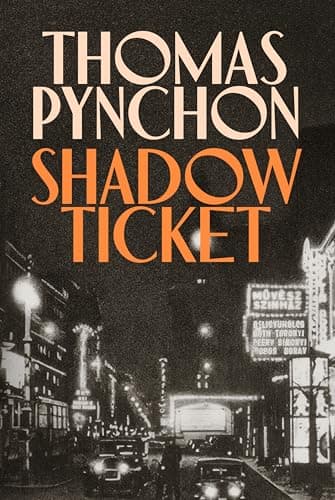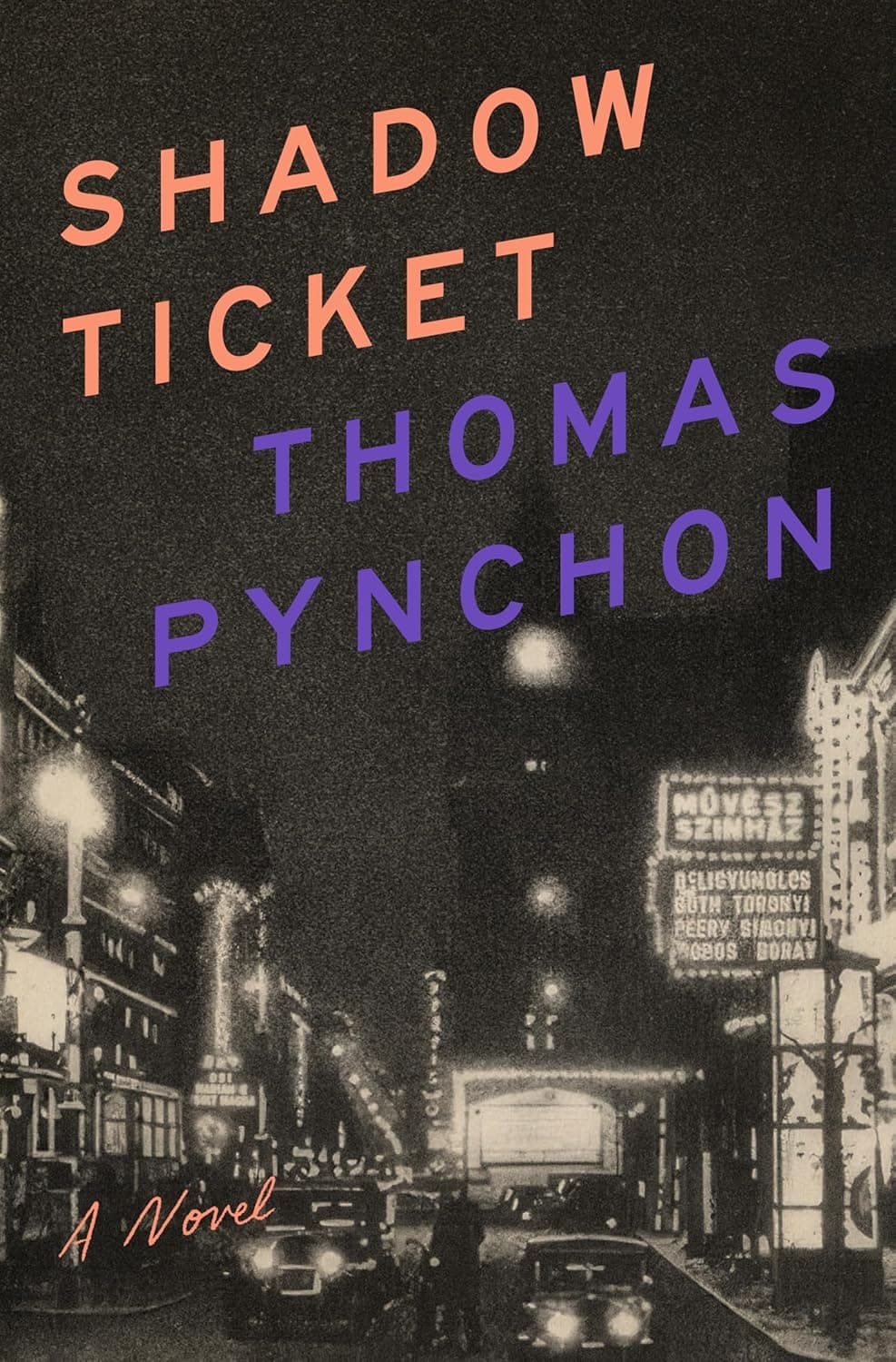
Milwaukee 1932, the Great Depression going full blast, repeal of Prohibition just around the corner, Al Capone in the federal pen, the private investigation business shifting from labor-management relations to the more domestic kind. Hicks McTaggart, a onetime strikebreaker turned private eye, thinks he’s found job security until he gets sent out on what should be a routine case, locating and bringing back the heiress of a Wisconsin cheese fortune who’s taken a mind to go wandering. Before he knows it, he’s been shanghaied onto a transoceanic liner, ending up eventually in Hungary where there’s no shoreline, a language from some other planet, and enough pastry to see any cop well into retirement—and of course no sign of the runaway heiress he’s supposed to be chasing. By the time Hicks catches up with her he will find himself also entangled with Nazis, Soviet agents, British counterspies, swing musicians, practitioners of the paranormal, outlaw motorcyclists, and the troubles that come with each of them, none of which Hicks is qualified, forget about being paid, to deal with. Surrounded by history he has no grasp on and can’t see his way around in or out of, the only bright side for Hicks is it’s the dawn of the Big Band Era and as it happens he’s a pretty good dancer. Whether this will be enough to allow him somehow to Lindy-hop his way back again to Milwaukee and the normal world, which may no longer exist, is another question.
Add to your library to track progress and write reviews
Find Shadow Ticket Thomas Pynchon in PDF, EPUB, ebook, audiobook, print, or library editions.

10 books in catalog
Dense historical landscapes, secret postal networks, V-2 rocket trajectories, and sprawling conspiracies form the foundation of postmodern fiction's most complex narratives.
Thomas Pynchon established a distinct presence in post-World War II American literature through encyclopedic novels such as Gravity's Rainbow and The Crying of Lot 49, blending mathematical concepts, historical research, and absurd humor.
Born Thomas Ruggles Pynchon Jr. on May 8, 1937, in Glen Cove, New York, he spent his childhood in nearby East Norwich and Oyster Bay against the backdrop of World War II and the early Cold War. He initially attended Cornell University to study engineering physics before serving two years in the United States Navy. Returning to Cornell, he earned a bachelor's degree in English in 1959, combining scientific and literary training in a way that shaped his rigorous approach to complex systems.
Pynchon published short fiction in the late 1950s before launching his novelistic career with V. in 1963. Throughout decades of writing, he maintained extreme personal privacy, declining public appearances and media interviews while living outside the public spotlight. His private correspondence from 1963 to 1982 with literary agent Candida Donadio offers documented glimpses into his creative discipline, personal anxieties, and the meticulous archival research required to build his multi-layered fiction.
Pynchon's prose is characterized by its paranoid atmosphere, vast structural scope, and dense interweaving of high-level mathematics, physics, history, and popular culture. Rather than focusing solely on individual psychological drama, his books explore how individuals are caught inside sprawling institutional networks, corporate monopolies, technological momentum, and state authority that operate beyond personal control.
A defining hallmark of his fiction is the juxtaposition of deep erudition with lowbrow comedy, slapstick, and musical numbers. His narratives frequently feature sprawling casts, underground countercultures, and unresolved mysteries where truth is fragmented and motives remain intentionally elusive.