Allegorical parables blending realistic historical settings with whimsical fiction define a distinct body of twentieth-century fiction, most famously realized in Baltasar and Blimunda. Written by José Saramago, these works use imaginative premises to re-examine historical events, human institutions, and political power.
Born José de Sousa Saramago (16 November 1922 – 18 June 2010), the Portuguese novelist received the 1998 Nobel Prize in Literature for parables sustained by imagination, compassion, and irony that continually enable readers to apprehend an elusory reality.
Career & Background
Born into a family of landless rural laborers in the village of Azinhaga, Portugal, Saramago experienced poverty after his family moved to Lisbon. Financial circumstances forced him to leave high school to train as a car mechanic. He worked in various civil service roles before spending twelve years at a publishing firm and later working as a journalist, eventually serving as assistant editor at Diário de Notícias. His political involvement included joining the Portuguese Communist Party in 1969. After losing his newspaper position following political events in November 1975, Saramago turned to writing fiction full-time in his fifties.
In 1998, Saramago became the first Portuguese-language writer awarded the Nobel Prize in Literature. In 2003, literary critic Harold Bloom described Saramago as the most gifted novelist alive in the world today. Saramago continued to produce major literary works during his later years while residing in Lanzarote, Spain, where he lived until his death in 2010.
Writing Style & Themes
Saramago's narrative style is characterized by long, sweeping sentences, unconventional punctuation, and seamless dialogue woven directly into dense paragraphs. His novels operate as allegories and modern parables, placing surreal or speculative premises against grounded historical backdrops to explore human behavior and social structures.
Central to his output is a subversive perspective on established historical and religious narratives, emphasizing the human factor and theopoetic themes. Works such as Journey to Portugal demonstrate his descriptive focus on regional landscapes, while his novels frequently investigate individual responsibility and authority.
Major Works
- Baltasar and Blimunda — Set in eighteenth-century Portugal during the construction of the Mafra convent, this novel brought Saramago international recognition by blending historical reality with fantastical storytelling.
- The Year of the Death of Ricardo Reis — This novel traces a heteronym of poet Fernando Pessoa returning to Lisbon in 1936, reflecting on political fascism and existential isolation.
- The History of the Siege of Lisbon — A proofreader intentionally alters a single word in a historical text, triggering a subversive exploration of how history is recorded and interpreted.
- The Gospel According to Jesus Christ — A humanized retelling of the life of Christ that offers a questioning perspective on religious dogma and divine authority.
- The Double — A history teacher discovers a minor film actor who is his exact physical duplicate, prompting an investigation into identity and individuality.
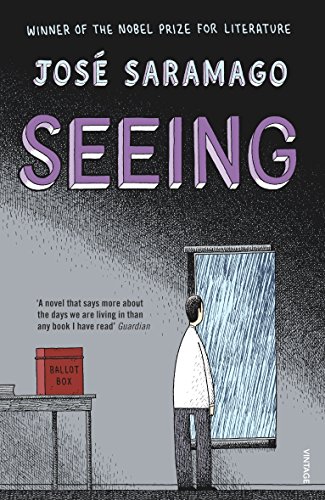
- Seeing — A political parable examining state power and civic response when a majority of citizens in a capital city turn in blank ballots during an election.
- Journey to Portugal — A travel narrative recording a journey across Portugal, offering observations on culture, history, and physical geography.
- Cain — A satirical narrative revisiting Old Testament accounts through the perspective of Cain to examine morality and divine justice.