Examining the sweeping trajectory of human evolution, social structures, and technological advancement, macro-historical non-fiction offers critical frameworks for understanding contemporary global challenges. Yuval Noah Harari brought large-scale historical analysis to a broad audience with Sapiens: A Brief History of Humankind, which explores how cognitive development, agricultural shifts, and shared cultural fictions shaped human society.
Career & Background
Born in Kiryat Atta, Israel, on February 24, 1976, Harari pursued advanced historical research at the University of Oxford, earning his doctorate in 2002. He subsequently joined the faculty at the Hebrew University of Jerusalem as a professor of history, specializing in world, medieval, and military history. His undergraduate lectures on world history served as the basis for his 2011 book Sapiens: A Brief History of Humankind. In 2019, Harari and Itzik Yahav co-founded Sapienship, a social impact company that develops projects in education and entertainment to address pressing global issues.
Writing Style & Themes
Harari combines history, evolutionary biology, and anthropology to address macro-historical questions regarding human existence. His writing analyzes how shared narratives, free will, consciousness, happiness, and suffering influence human behavior and social structures. In works such as Homo Deus: A Brief History of Tomorrow and Nexus: A Brief History of Information Networks from the Stone Age to AI, he examines the historical evolution of information networks and evaluates the existential risks associated with artificial intelligence and non-human decision-making systems.
Major Works
- Sapiens: A Brief History of Humankind — Originally published in 2011 based on university lectures, this work traces the history of humanity from the evolution of archaic human species to modern technological societies.
- Homo Deus: A Brief History of Tomorrow — Published in 2016, this book investigates the long-term future of humanity, examining how technology, data systems, and artificial intelligence may alter human ambitions and capabilities.
- Nexus: A Brief History of Information Networks from the Stone Age to AI — Published in 2024, this narrative examines information networks across history, analyzing how information flows shape societies and warning of challenges posed by AI.
- Sapiens: A Graphic History, Volume 1 - The Birth of Humankind — Created with artists David Vandermeulen and Daniel Casanave, this 2020 graphic adaptation presents human evolutionary history in a visual graphic novel format.
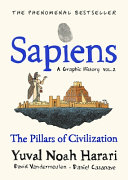
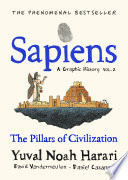
- Sapiens: A Graphic History, Volume 2: The Pillars of Civilization — This graphic volume explores the Agricultural Revolution and how early human farming and settlement patterns transformed human social organization.