SSansFiction
The libraryCollectionsJournalStatsFor authors
Sign inJoin now
Sansfiction,

A digital library for books. Made by readers, for readers.

v 2.0 · 2026
The library
  • Discover
  • Collections
  • Book tracker
  • Journal
  • Stats
For authors
  • SF Links
  • Analytics
  • How it works
  • FAQ
Elsewhere
  • X / @sansfiction
  • Privacy
  • Terms
  • Contact
© 2026 SansFiction · Digital · GlobalA quiet room for your reading life.
The libraryCollectionsJournalStatsFor authors
Sign inJoin now →
Navigation
Library
Bookshelf
Journal
Discover
Collections
Tierlists
Stats
Profile
Author Page
Link Builder
Account
Sign in
S
G
BooksclassicsRebecca
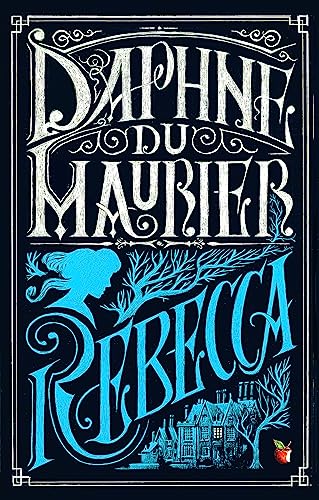
Cover of Rebecca by Daphne du Maurier

Rebecca,

by Daphne du Maurier

Ask AI
Rating4.1/ 5
Ratings620
Pages353
Reading Hours7h
Published1938
LanguageEnglish

§Synopsis

01

On a trip to the South of France, the shy heroine of Rebecca falls in love with Maxim de Winter, a handsome widower. Although his proposal comes as a surprise, she happily agrees to marry him. But as they arrive at her husband's home, Manderley, a change comes over Maxim, and the young bride is filled with dread. Friendless in the isolated mansion, she realises that she barely knows him. In every corner of every room is the phantom of his beautiful first wife, Rebecca, and the new Mrs de Winter walks in her shadow.

§Our take

Rebecca is often shelved as a romance, but it reads better as a study of a marriage in which one person holds all the power. The second Mrs de Winter never gets a name, Manderley seems to belong to the dead first wife, and the housekeeper makes sure the narrator feels it in every room. Margaret Forster observed that early critics barely noticed this side of the book; it is the reading that has grown since.

Du Maurier disliked the label romantic novelist, and the novel sits closer to Wilkie Collins's sensation fiction, which rarely ends happily. The fear here is social and internal rather than supernatural, and the house does most of the work. Read it for the atmosphere, which readers still praise most, and for a narrator whose insecurity becomes the engine of the plot.

§Themes

A bride with no name
The second Mrs de Winter is never named, and analysts read that as her identity dissolving under the weight of a title and a dead woman's memory.
Jealousy as the engine
Du Maurier called it a study in jealousy, and the narrator is worn down by constant comparison with a rival who never appears.
The house as a character
Manderley dominates the narrator's life, and the famous opening dream of the ruined house frames the whole novel as memory.
Class and poise
A middle-class woman feels she lacks the polish the house expects, and that insecurity drives much of what happens.
Love story or controlling marriage
Readers split on whether Maxim is a romantic lead or the real villain, which is why the book reads differently now than it did in 1938.

§How it was received

First reviews were mixed: the Times Literary Supplement admired the skill sustaining an improbable plot while calling it low-brow, and V. S. Pritchett predicted it would be quickly forgotten. Others dismissed it as women's fiction or Gothic romance. Later critics reassessed it as a psychological thriller and a forerunner of domestic noir, and popular lists agree, with W H Smith's 2017 readers' vote naming it the favourite book of the past 225 years.

§Read it if

  • You like Gothic fiction that is really about control inside a marriage rather than ghosts
  • You want a short, atmospheric read that builds menace slowly
  • You enjoy a twist and a narrator whose voice stays in your head afterwards

§Skip it if

  • You guess the twist early. Some readers find the early middle slow because of it.
  • You want the romance to end happily. The emotional core is insecurity and jealousy, and the ending is bleak.

§Before you start

Reading experience
First-person and retrospective, opening with a dream of Manderley before a long flashback through courtship, arrival and isolation; the prose is lush and dreamlike, and once under way it reads quick and absorbing.
Reading order
Standalone. Authorized sequels and companions by other writers include Susan Hill's Mrs de Winter (1993), Maureen Freely's The Other Rebecca (1996) and Sally Beauman's Rebecca's Tale (2001); Ken Follett's The Key to Rebecca (1980) is an unrelated spy novel.
Content notes
A violent death and its aftermath; A housekeeper psychologically manipulates the narrator; One scene in which the housekeeper pressures the narrator toward self-harm; Low self-esteem and emotional abuse run through the story.

§Common questions

Is Rebecca a love story?
Not the way most romances are. The emotional centre is jealousy and insecurity, and the ending is bleak. Readers still argue about whether Maxim is a romantic lead or the real villain.
Is Rebecca the same story as the Hitchcock film?
No. Production Code rules forced a change to the central secret, so the 1940 film tells a different story. People who know the film are often surprised by the book.
Did du Maurier copy another novel?
It was alleged and denied. The Brazilian critic Alvaro Lins noted in 1941 that Carolina Nabuco's A Sucessora (1934) closely resembles Rebecca; du Maurier said she had not heard of Nabuco before. No final verdict has been reached.

§If you liked this

  • Jane Eyre by Charlotte Bronte — Du Maurier admired the Brontes, and readers routinely compare the two: a young dependent, a brooding master, and a secret in the house.
  • My Cousin Rachel by Daphne du Maurier — Another du Maurier novel built on a mysterious woman the reader cannot pin down, and the pair divide readers who debate which du Maurier is best.
  • A Sucessora (The Successor) by Carolina Nabuco — The Brazilian novel from 1934 with a strikingly similar premise, and the source of the longest-running plagiarism claim.
  • Mrs de Winter by Susan Hill — Susan Hill's authorized 1993 sequel, for readers who want to stay in Manderley's world.
  • Gone Girl by Gillian Flynn — Gillian Flynn's domestic noir about a marriage haunted by a dazzling, absent wife, a modern descendant of du Maurier's idea.
Sources
  • Wikipedia
  • Wikipedia
  • Wikipedia
  • Black Gate
  • Goodreads (Old Books, New Readers group)
  • Ted Gioia, The Honest Broker
  • TCNJ Journal of Student Scholarship (Joelle DuFault, April 2026)
  • Daphne du Maurier official site
  • The Bookseller

Track this book

Add to your library to track progress and write reviews
§Genres
classics1classique1fiction historique1horreur1literary collections1mystère1romance1
§Content Warnings
§Moods
challenging1dark1emotional1mysterious1reflective1sad1tense1
§Tags
#[]1#cancer1#diverse characters1#mental illness1

§About the Author

Daphne du Maurier

2 books in catalog

Atmospheric psychological tension and haunting Cornish settings define a body of fiction that bridges suspense, gothic romance, and uncanny horror, most famously realized in the 1938 novel Rebecca. Daphne du Maurier established her reputation with stories that blend domestic drama with unsettling undercurrents, drawing readers into remote coastal landscapes and tightly coiled narratives.

Career & Background

Born in London in 1907 to the actor-manager Sir Gerald du Maurier and actress Muriel Beaumont, and granddaughter of the artist and writer George du Maurier, she was educated at home and in Paris. She began writing in 1928, finding early artistic focus during visits to her family's holiday home in Bodinnick, Cornwall. She eventually made Cornwall her primary residence for most of her life, drawing heavily on its rugged coastline and historical manors for her settings. Following her debut novel The Loving Spirit in 1931, she published a series of commercial successes including Jamaica Inn, Frenchman's Creek, and My Cousin Rachel. Made a Dame Commander of the Order of the British Empire in 1969, she also produced biographies, plays, and short fiction while maintaining an increasingly private life.

Writing Style & Themes

Although du Maurier was frequently classed as a romantic novelist during her lifetime, her work is characterized by dark suspense, ambiguous moral boundaries, and overtones of the paranormal. Her stories have been described as moody and resonant, often exploring jealousy, obsession, isolation, and the intrusive weight of the past. Beyond long-form gothic fiction, her short stories, such as The Birds, demonstrate a terrifying economy of style, turning ordinary natural phenomena into unrelenting terror. Although her bestselling works were not at first taken seriously by literary critics, they have since earned an enduring reputation for narrative craft and have inspired major stage and screen adaptations.

Major Works

  • Rebecca — Published in 1938, this gothic psychological thriller follows an unnamed young heroine who marries a wealthy widower and moves to his estate, Manderley, where she is tormented by the lingering memory of his deceased first wife.
  • The Birds — First published in her short fiction collections, this tense horror story depicts an unexplained and violent attack by swarms of seaside birds against human settlements along the Cornish coast.
  • Jamaica Inn — Set along the windswept Cornish coast, this 1936 period thriller centers on an orphaned young woman who discovers that her uncle's isolated inn serves as a hub for ruthless wreckers and smugglers.
  • My Cousin Rachel — This 1951 psychological drama revolves around a young man who suspects his enigmatic cousin-in-law of poisoning his guardian, only to find himself drawn into her mysterious influence.
§Genres
classics1classique1fiction historique1horreur1literary collections1mystère1romance1
§Content Warnings
§Moods
challenging1dark1emotional1mysterious1reflective1sad1tense1
§Tags
#[]1#cancer1#diverse characters1#mental illness1

Metadata

ISBN-139788417423964
ISBN-108417423966

Editions and availability

Find Rebecca Daphne du Maurier in PDF, EPUB, ebook, audiobook, print, or library editions.

Bookshop.orgGoogle Play BooksBarnes & NobleOpen Library

Featured In Lists

Book cover from this collectionBook cover from this collectionBook cover from this collectionBook cover from this collection
Book cover from this collection

Gilmore Girls Reading List 🍂

407 books
Book cover from this collectionBook cover from this collectionBook cover from this collectionBook cover from this collection
Book cover from this collection

Mother Horror's 101 Horror Books to Read Before You're Murdered

239 books
Book cover from this collectionBook cover from this collectionBook cover from this collectionBook cover from this collection
Book cover from this collection

List 1001 Books Boxall

1000 books
Book cover from this collectionBook cover from this collectionBook cover from this collectionBook cover from this collection
Book cover from this collection

100 Greatest Books

98 books
Book cover from this collectionBook cover from this collectionBook cover from this collectionBook cover from this collection
Book cover from this collection

Taylor Swift's Bookshelf: Gothic Novels and YA Favorites

12 books•@sansfictionbot
Book cover from this collectionBook cover from this collectionBook cover from this collectionBook cover from this collection
Book cover from this collection

Emma Watson's Reading List: Fantasy, Dystopia and Feminist Fiction

12 books•@sansfictionbot
Book cover from this collectionBook cover from this collectionBook cover from this collectionBook cover from this collection
Book cover from this collection

Emma Roberts' Belletrist Book Club Picks

12 books•@sansfictionbot