SSansFiction
The libraryCollectionsJournalStatsFor authors
Sign inJoin now
Sansfiction,

A digital library for books. Made by readers, for readers.

v 2.0 · 2026
The library
  • Discover
  • Collections
  • Book tracker
  • Journal
  • Stats
For authors
  • SF Links
  • Analytics
  • How it works
  • FAQ
Elsewhere
  • X / @sansfiction
  • Privacy
  • Terms
  • Contact
© 2026 SansFiction · Digital · GlobalA quiet room for your reading life.
The libraryCollectionsJournalStatsFor authors
Sign inJoin now →
Navigation
Library
Bookshelf
Journal
Discover
Collections
Tierlists
Stats
Profile
Author Page
Link Builder
Account
Sign in
S
G
BooksadultProject Hail Mary
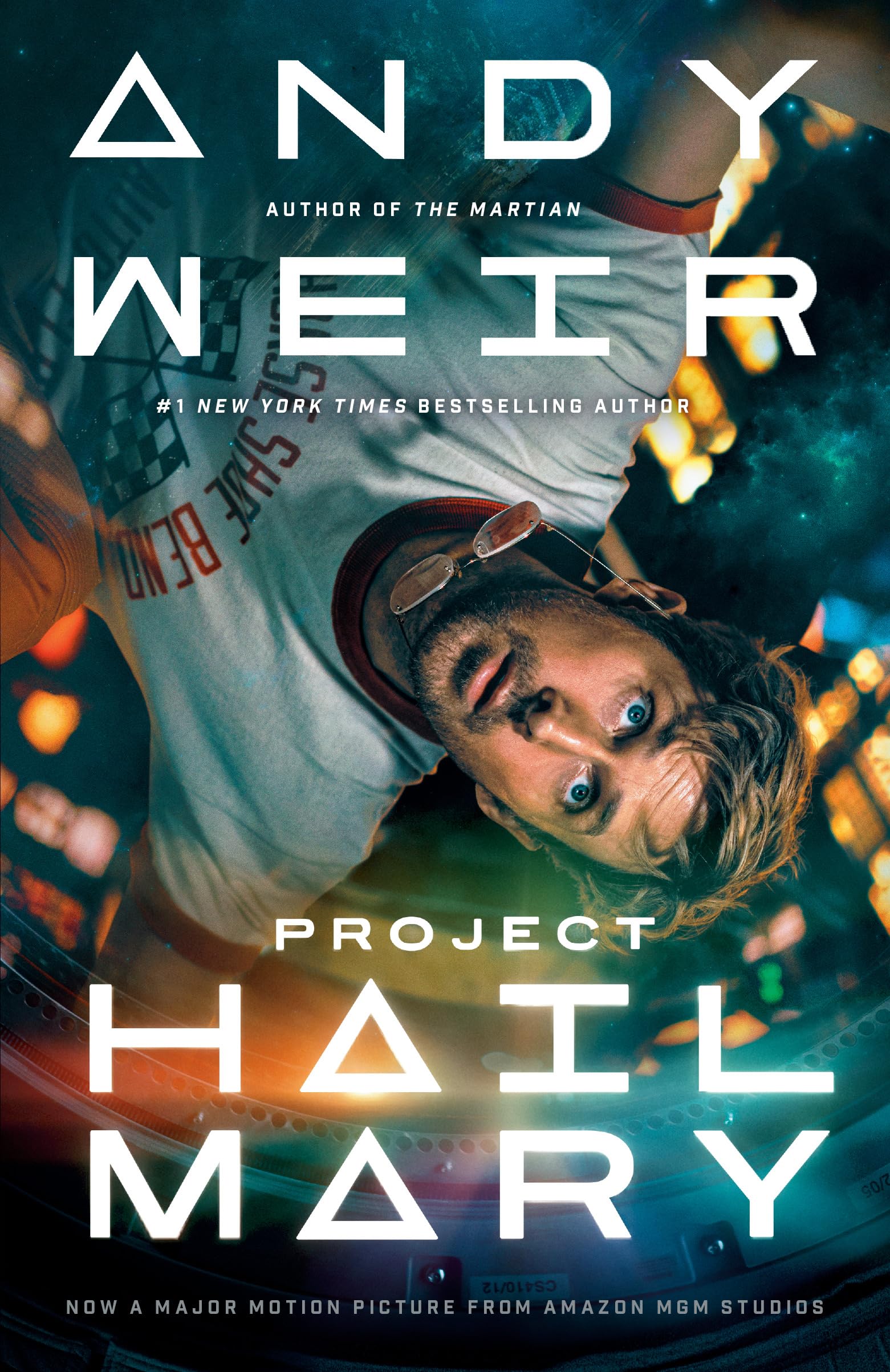
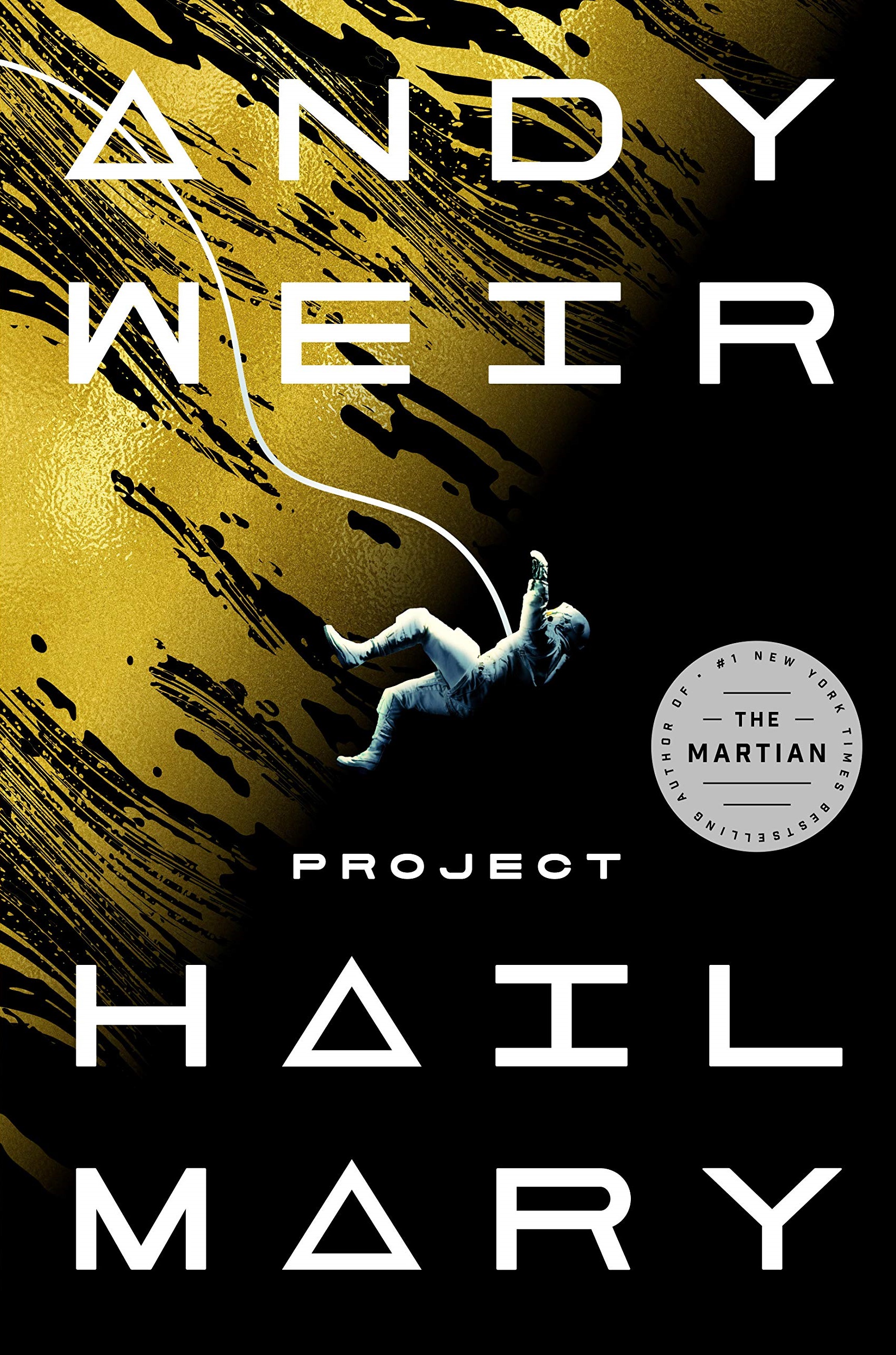
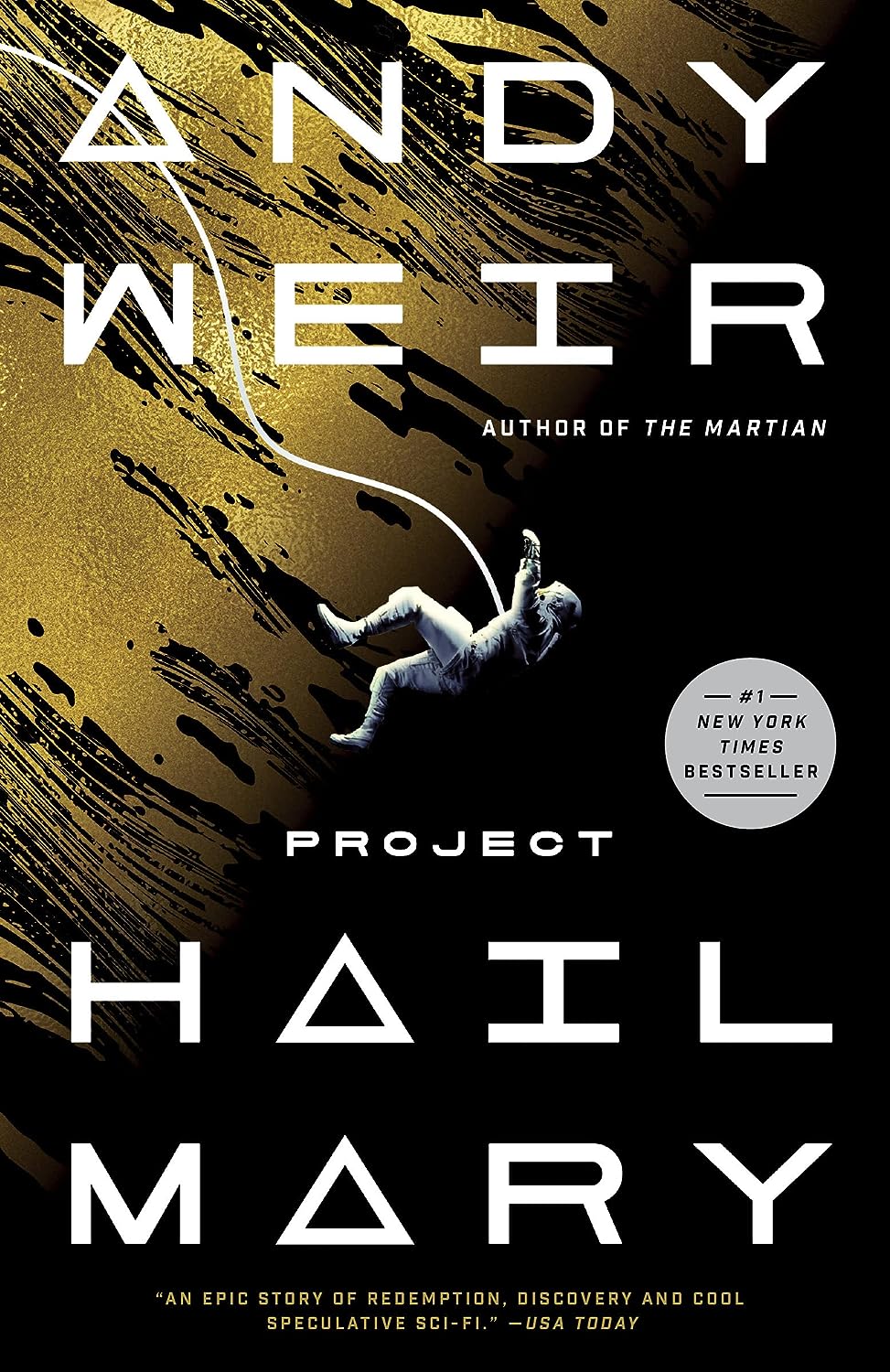
Cover of Project Hail Mary by Andy Weir

Project Hail Mary,

by Andy Weir

Ask AI
Rating4.5/ 5
Ratings4,696
Pages496
Reading Hours10h
Published2022
LanguageEnglish

§Synopsis

01

Ryland Grace wakes up in a state of profound physiological and mental distress. He is suffering from severe retrograde amnesia, unable to recall his own identity or the purpose of the mission he is clearly leading. Surrounded by high-tech life-support systems and the remains of a crew that did not survive the journey, he must rely on the scientific method to reconstruct his reality. Every observation—from the strength of gravity to the behavior of light—becomes a breadcrumb leading him toward a terrifying truth about the state of the solar system.

The core conflict rests on an extinction-level event that is not caused by war or asteroid impact, but by a microscopic, interstellar parasite. As Grace’s memory slowly returns through a series of non-linear flashbacks, the scale of his responsibility becomes clear. He is millions of miles from Earth, aboard a vessel designed as a last-ditch effort to solve a biological anomaly that is systematically draining the sun’s energy. The narrative is a race against time and cognitive decline, where the protagonist must solve complex physics and biology puzzles with limited resources and absolute isolation.

The Mechanics of Cosmic Survival

The world-building in this narrative is grounded in "hard" science fiction, where the laws of physics dictate the plot. The central scientific conceit is the "Astrophage," a single-celled organism that consumes solar radiation and moves at relativistic speeds. This organism serves as both the antagonist—threatening to trigger a new ice age on Earth—and the solution, providing the immense energy required for interstellar travel. The setting alternates between the claustrophobic, sterile environment of the spaceship Hail Mary and the high-stakes, frantic laboratories of Earth's recent past, where the world’s governments have granted one woman absolute authority to save the planet.

Main Characters

  • Ryland Grace: A former molecular biologist who left academia to teach middle school science, thrust into a mission he is initially unprepared to handle.
  • Eva Stratt: The iron-willed administrator of the UN Task Force on Astrophage, granted extraordinary legal powers to bypass bureaucracy and prioritize the mission at any cost.
  • Dr. Lokken and Dr. DuBois: Key scientists on the initial Earth-side task force who help define the rules of the mission and the limitations of the Hail Mary vessel.
  • The Eridian: A mysterious presence encountered in the Tau Ceti system that represents the first potential for non-human cooperation in solving the solar crisis.

Character Development and Dynamics

The protagonist’s arc is defined by the transition from a man who avoids high-stakes conflict to a scientist who must embrace life-or-death decision-making. Initially, Ryland Grace is depicted as someone who sought the safety of a classroom to avoid the cutthroat nature of peer-reviewed research. However, his amnesia forces a "reboot" of his personality, requiring him to find internal reserves of bravery. His dynamic with Eva Stratt in the flashbacks explores the tension between ethics and survival, while his developing interaction with a non-human entity in the present day focuses on the universal nature of mathematics and science as a bridge between species.

Evolution of Genre Tropes

The story utilizes several foundational science fiction tropes while applying a rigorous technical lens to them. It subverts the "lone survivor" trope by making the protagonist’s survival dependent on his ability to remember his past and communicate with the unknown. Rather than relying on "space opera" technology like faster-than-light travel, the book adheres to the constraints of Newtonian physics and relativity. The "First Contact" trope is also reimagined; instead of a focus on conquest or philosophy, the encounter is framed as a collaborative engineering problem, where two distinct biological entities must use the shared language of the periodic table to survive a common threat.

Track this book

Add to your library to track progress and write reviews

§Genres
adult1adventure1aliens1fantasy1fiction1mystery1science fiction1
§Content Warnings
§Moods
adventurous1emotional1funny1hopeful1informative1inspiring1lighthearted1
§Tags
#a mix driven1#alcohol1#character driven1#confinement1#diverse characters1

§About the Author

Andy Weir
Andy Weir

4 books in catalog

Rigorous orbital mechanics, botanical survival calculations, and realistic physics form the backbone of modern hard science fiction that blends dense technical accuracy with fast-paced thriller narrative structures. Andy Weir brought this meticulous approach to popular literature through his serialized online writing, demonstrating that complex mathematical problem-solving can drive high-stakes survival stories. His fiction bridges the gap between technical reference manuals and accessible mainstream thrillers, establishing a distinct subgenre where human ingenuity and adherence to physical laws serve as the primary engines of dramatic tension.
With millions of copies sold globally, his work has achieved widespread commercial success and critical recognition. His debut novel The Martian was adapted into a 2015 feature film directed by Ridley Scott that earned seven Academy Award nominations, while his interstellar survival epic Project Hail Mary became a Hugo Award finalist. From a viral short story exploring cosmic philosophy to detailed depictions of lunar societies and deep-space missions, his bibliography consistently highlights human adaptability, scientific reasoning, and collaborative problem-solving under extreme environmental pressure.

Career & Background

Born on June 16, 1972, in Davis, California, Andy Weir developed an early fascination with computer science, relativistic physics, orbital mechanics, and the history of manned spaceflight. He was hired as a software programmer for a national laboratory at age fifteen and spent the next two decades working as a software engineer for technology and software companies, including AOL, Palm, and Blizzard. Throughout his twenty-five years in the software industry, he viewed writing as a serious passion, continuously publishing short stories, webcomics, and serialized fiction on his personal website while maintaining his full-time engineering career.

His early online publishing efforts gained significant traction in 2009 with the release of "The Egg," a brief philosophical short story about the nature of the universe and human consciousness. The story became a viral internet phenomenon, ultimately being translated into more than thirty languages and adapted into numerous short films, animations, and stage productions. Despite two early unpublished novels that failed to attract literary representation, he continued writing for his personal blog audience, focusing on a highly technical serialized tale about an astronaut stranded on Mars.

That serialized narrative became The Martian. After receiving rejections from multiple traditional literary agents, he made the full text available for free on his website, calculating realistic orbital trajectories and Martian soil chemistry for each chapter. To satisfy requests from readers who wanted to read the story on e-readers, he self-published a 99-cent edition on Amazon in 2011. The e-book quickly climbed Amazon's bestseller charts, attracting the attention of major traditional publishers and Hollywood producers. A major publishing contract followed, allowing him to transition from a full-time software engineer into a full-time novelist, even as he remained at his programming job through the early stages of the book's commercial breakout.

Following the international success of The Martian, he expanded his literary output across different formats and subgenres. In 2017, he released his second novel, Artemis, a sci-fi heist story set in a lunar colony that examined frontier economics and social hierarchy. He also authored Cheshire Crossing, a graphic novel that combined classic literary characters into a crossover narrative. In 2021, he published Project Hail Mary, returning to deep-space survival and first-contact science fiction. The novel became a finalist for the 2022 Hugo Award for Best Novel, cementing his reputation for hard science fiction.

Writing Style & Themes

The defining characteristic of Andy Weir's fiction is its commitment to scientific realism, often categorized within the hard science fiction subgenre. His plots rely on accurate chemistry, classical mechanics, thermodynamics, and engineering principles rather than speculative technology or unverified physics. This approach gives rise to narrative structures centered on expert protagonists systematically solving life-threatening technical problems. Readers experience procedural problem-solving where every obstacle is analyzed through logic, mathematics, and empirical experimentation.

Thematic elements across his body of work repeatedly center on isolated individuals confronting existential threats in severe, unforgiving environments. Whether trapped on the cold surface of Mars, navigating the social and industrial hazards of a lunar settlement, or waking up with amnesia aboard a solitary starship in a distant solar system, his characters must rely entirely on their technical intellect and resourcefulness. These scenarios underscore a core philosophy throughout his bibliography: human ingenuity, when combined with scientific methodology, offers a viable path toward survival against extreme odds.

To balance the density of technical explanations and scientific exposition, his narrative style relies heavily on a distinctive first-person log format infused with dry, irreverent, and self-deprecating humor. This conversational narrative voice humanizes complex topics—such as calculating botanical yield in a Martian habitat, managing life-support chemistry, or calculating delta-v for orbital maneuvers—making intricate engineering concepts engaging and easily understandable for general audiences. His writing demonstrates that rigorous adherence to physical laws enhances dramatic tension rather than slowing narrative momentum.

Major Works

  • The Martian — First self-published online and released on Amazon in 2011, this debut novel follows astronaut Mark Watney as he uses botany, chemistry, and mechanical engineering to survive isolation on Mars. It was adapted into an Oscar-nominated 2015 film directed by Ridley Scott and starring Matt Damon.
  • Artemis — Published in 2017, this hard science fiction novel takes place in a bustling lunar colony, combining high-stakes heist dynamics with detailed explorations of frontier economics, gravity-specific engineering, and environmental life support.
  • Project Hail Mary — Released in 2021, this deep-space survival story features a solitary astronaut working to prevent an extinction-level solar crisis using scientific deduction and unexpected interstellar collaboration. The book was named a finalist for the 2022 Hugo Award for Best Novel.
  • Cheshire Crossing — Originally serialized as a webcomic and published as a graphic novel with art by Sarah Andersen, this crossover story blends classic literary heroines from Alice's Adventures in Wonderland, The Wonderful Wizard of Oz, and Peter Pan into a shared adventure.
  • Lacero — A short story written by Andy Weir set in the universe of Ernest Cline's Ready Player One, exploring the backstory of the primary antagonist faction, which was later included as an official canonical addition in published editions of the novel.
  • Digitocracy — An early standalone science fiction short story authored by Weir, exploring themes of computing, society, and automated control, illustrating his long-standing interest in technological systems and futuristic digital structures.

§Other Editions

Showing 2 of 65 editions
Cover of Project Hail Mary

Project Hail Mary

eng
Ballantine Books20219780593135211
Amazon
Cover of Project Hail Mary

Project Hail Mary

engPaperback
Ballantine Books20229780593598658
§Community Reviews1
Write a review
5.0Paul M
Apr 23, 2026
Impressive, impossible to ignore
Binge-reading at its finest
Read full review →
§Genres
adult1adventure1aliens1fantasy1fiction1mystery1science fiction1
§Content Warnings
§Moods
adventurous1emotional1funny1hopeful1informative1inspiring1lighthearted1
§Tags
#a mix driven1#alcohol1#character driven1#confinement1#diverse characters1

Metadata

ISBN-139780593135228
ISBN-100593135229
ASINB08FHBV4ZX

Editions and availability

Find Project Hail Mary Andy Weir in PDF, EPUB, ebook, audiobook, print, or library editions.

View on Amazon
Bookshop.orgGoogle Play BooksBarnes & NobleOpen Library

Featured In Lists

Book cover from this collectionBook cover from this collectionBook cover from this collectionBook cover from this collection
Book cover from this collection

The Esquire 75 Best Sci-Fi Books of All Time

74 books
Book cover from this collectionBook cover from this collectionBook cover from this collectionBook cover from this collection
Book cover from this collection

The Hardcover 2024 Year in Books

248 books
Book cover from this collectionBook cover from this collectionBook cover from this collectionBook cover from this collection
Book cover from this collection

Hugo Award Best Novel Nominees and Winners ( 1953 - present )

348 books
Book cover from this collectionBook cover from this collectionBook cover from this collectionBook cover from this collection
Book cover from this collection

The Book You Saw on TikTok

74 books
Book cover from this collectionBook cover from this collectionBook cover from this collectionBook cover from this collection
Book cover from this collection

The 70 Best Science Books You Need to Read in 2021

69 books
Book cover from this collectionBook cover from this collectionBook cover from this collectionBook cover from this collection
Book cover from this collection

2023 Year in Books

150 books
Book cover from this collectionBook cover from this collectionBook cover from this collectionBook cover from this collection
Book cover from this collection

Readers Pick Their 100 Best Books of the 21st Century

100 books
Book cover from this collectionBook cover from this collectionBook cover from this collectionBook cover from this collection
Book cover from this collection

Recommendations

26 books
Book cover from this collectionBook cover from this collectionBook cover from this collectionBook cover from this collection
Book cover from this collection

After The Odyssey: Voyages, Monsters & the Long Way Home

25 books•@sansfictionbot