SSansFiction
The libraryCollectionsJournalStatsFor authors
Sign inJoin now
Sansfiction,

A digital library for books. Made by readers, for readers.

v 2.0 · 2026
The library
  • Discover
  • Collections
  • Book tracker
  • Journal
  • Stats
For authors
  • SF Links
  • Analytics
  • How it works
  • FAQ
Elsewhere
  • X / @sansfiction
  • Privacy
  • Terms
  • Contact
© 2026 SansFiction · Digital · GlobalA quiet room for your reading life.
The libraryCollectionsJournalStatsFor authors
Sign inJoin now →
Navigation
Library
Bookshelf
Journal
Discover
Collections
Tierlists
Stats
Profile
Author Page
Link Builder
Account
Sign in
S
G
BooksclassicsPachinko
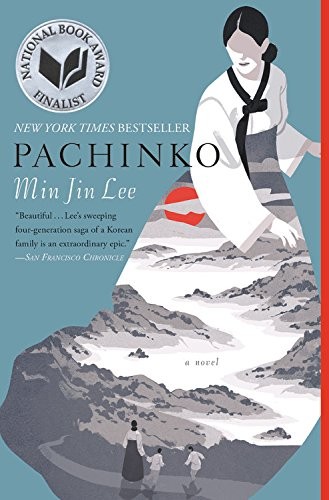
Cover of Pachinko by Min Jin Lee

Pachinko,

by Min Jin Lee

Ask AI
Rating4.2/ 5
Ratings593
Pages496
Reading Hours10h
Published2017
LanguageEnglish

§Synopsis

01

In this New York Times bestseller, four generations of a poor Korean immigrant family fight to control their destiny in 20th-century Japan–the inspiration for the television series on Apple TV+.

In the early 1900s, teenaged Sunja, the adored daughter of a crippled fisherman, falls for a wealthy stranger. When she discovers she is pregnant–and that her lover is married–she accepts an offer of marriage from a gentle, sickly minister passing through on his way to Japan. But her decision to abandon her home, and to reject her son's powerful father, sets off a dramatic saga that will echo down through the generations.

Profoundly moving, Pachinko is a story of love, sacrifice, ambition, and loyalty.

§Our take

Lee has a gift for making history feel like a family bill coming due. Pachinko begins with Sunja's practical, painful decision to leave Korea, then follows four generations as that choice keeps echoing. The plain, measured prose is the book's sharpest instrument: cruelty and upheaval land harder because Lee refuses to underline them.

The result is moving without being tidy. The Historical Novel Society finds the story absorbing but thinks its intimate scale blunts the broader message and its final chapters feel hurried and bleak. Readers tend to praise Sunja's opening, then divide over the slower later sections. The real test is whether the family's endurance feels richly varied or too uniformly noble. It is also a history book in disguise, and an effective one.

§Themes

History at family scale
Four generations carry colonial rule, war and prejudice into ordinary choices made under pressure.
The pachinko metaphor
The title points to pachinko parlors, one of the few businesses open to ethnic Koreans in Japan: tolerated, profitable and looked down on.
The cost of passing
Education, money and Japanese identities do not fully shield the characters from prejudice.
Women at the center
Lee expanded the novel around women, especially Sunja, whose choices shape the family's long arc.
Endurance without simplification
The family's toughness and pride can read as moving or one-note, depending on the reader.

§How it was received

Reviewers were mostly favorable, though not unreserved. Kirkus found no significant weakness in its old-fashioned, simple storytelling, while the Historical Novel Society found it gripping but thought its intimate scale diluted the broader message and the final chapters felt hurried and bleak. It was a finalist, not the winner, for the 2017 National Book Award for Fiction.

§Read it if

  • You want a multigenerational family saga that makes Korean life in Japan personal without turning it into a history lecture
  • You like plain, measured storytelling and a strong opening built around Sunja's urgent choices
  • You can handle a long literary novel with racism, misogyny, abuse, suicide and wartime violence

§Skip it if

  • You dislike large time jumps and later sections that feel summarized rather than lived
  • You want a tightly plotted novel. Some readers find the repeated tragedies and bleak final chapters numbing or rushed

§Before you start

Reading experience
Expect a long, chronological novel with large time jumps: the plain prose is easy to read, but heavy subject matter and later, more summarized sections can slow the ride.
Content notes
Racism and ethnic discrimination; Misogyny; Physical and emotional abuse; Suicide and suicidal ideation; Starvation and food scarcity; Death of a parent; Colonialism; Wartime violence, including World War II and the Korean War.

§Common questions

Is Pachinko part of a series?
No. It is a standalone novel. The Apple TV+ adaptation continues beyond the book, but it is not a book sequel.
Is Pachinko based on a true story?
The characters and family are fictional, but the story is grounded in zainichi history, the history of Koreans living in Japan. Lee interviewed zainichi business owners, pachinko operators and bar hostesses in Tokyo.
How is the TV series different from the novel?
The novel runs chronologically across four generations. The Apple TV+ series jumps between eras and covers only part of the book's long arc.

§If you liked this

  • The Good Earth by Pearl S. Buck — The Historical Novel Society compares Pachinko's ambitions and multigenerational sweep to this novel, making it a natural pairing for grand family stories.
  • The Forsyte Saga by John Galsworthy — John Boyne compares Pachinko's generational sweep to Galsworthy's saga, so it is the obvious companion read for fans of family epics.
Sources
  • Wikipedia
  • National Book Foundation
  • Kirkus Reviews
  • The Irish Times (John Boyne)
  • Paste Magazine (Christine An)
  • Historical Novel Society (Jackie Drohan)
  • Gulf News
  • Ploughshares
  • Chicago Review of Books
  • Apple TV press release

Track this book

Add to your library to track progress and write reviews
§Genres
classics1family saga1fiction1historical1historical fiction1literature & fiction1war1
§Content Warnings
§Moods
adventurous1challenging1dark1emotional1hopeful1informative1inspiring1
§Tags
#abortion1#diverse characters1#female author1#loveable characters1#not diverse characters1

§About the Author

Min Jin Lee

1 books in catalog

Multigenerational historical fiction and social realism detailing the Korean diaspora have reshaped contemporary literature about identity, exile, and immigration, most prominently through the saga Pachinko. Min Jin Lee writes expansive stories that examine how economic systems, cultural expectations, and political displacement impact individuals across generations. Her work spans historical fiction set in twentieth-century East Asia as well as contemporary narratives exploring class mobility and ambition among Korean Americans.

Career & Background

Born in Seoul, South Korea, in 1968, Min Jin Lee immigrated to the United States as a child and grew up in New York City. She completed her undergraduate studies at Yale University before earning a Juris Doctor degree from Georgetown University Law Center. After practicing law, Lee shifted her career to journalism and fiction writing, focusing her work on the experiences, social dynamics, and history of the Korean diaspora across different eras and continents. In 2019, she became a writer-in-residence at Amherst College in Massachusetts.

Lee's literary achievements have earned broad international recognition and prestigious honors. She served as the New York State Author Laureate for 2025–2027, receiving the Edith Wharton Citation of Merit. Her honors include the Manhae Grand Prize for Literature, the Bucheon Diaspora Literary Award, and the Samsung Happiness for Tomorrow Award for Creativity from South Korea, along with the Fitzgerald Prize for Literary Excellence in 2024. She has received fellowships from the Guggenheim Foundation, the Radcliffe Institute for Advanced Study at Harvard, and the New York Foundation for the Arts, and is an inductee of both the New York Foundation for the Arts Hall of Fame and the New York State Writers Hall of Fame.

Writing Style & Themes

Lee is known for her immersion-based research process, gathering interviews, primary material, and lived experiences to construct authentic social environments. Her research methods have included taking a millinery class at the Fashion Institute of Technology, observing Wall Street poker games, and interviewing dozens of Korean-Japanese residents. She organizes her collected research in detailed physical archives using Bankers Boxes. Drawing inspiration from novelist Willa Cather, Lee incorporates a disciplined daily writing ritual that includes reading a chapter of the Bible six days a week before writing.

Thematically, Lee's novels explore class strata, systemic discrimination, religious faith, family duty, and the search for belonging among displaced populations. Her narratives highlight how geopolitical forces and cultural pressures condition personal relationships, economic survival, and moral choices. Rather than presenting abstract social commentary, her prose grounds these themes in concrete details of domestic life, labor, and educational ambition.

Major Works

  • Free Food for Millionaires — Published in 2007, Lee's debut novel explores the life of a young Korean American woman navigating social hierarchy, ambition, and family expectations in New York City following her graduation from Princeton University.
  • Pachinko — Published in 2017, this epic historical novel follows four generations of an ethnic Korean family living in Japan throughout the twentieth century. The book was a finalist for the National Book Award, runner-up for the Dayton Literary Peace Prize, and was named one of The New York Times's 100 Best Books of the Century.
  • American Hagwon — Announced as the third installment in her Korean trilogy, this novel focuses on the central role of education and academic pressure in Korean culture and society.

§Editions

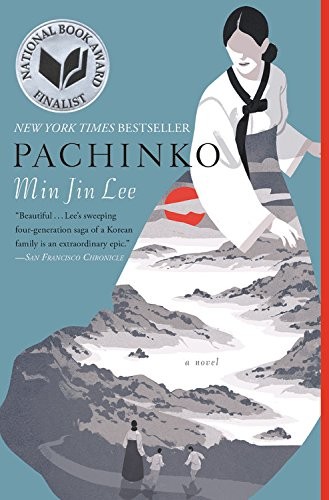
Cover of Pachinko

Pachinko

engPaperback496 pgs
Hachette UK20179781455563920
§Genres
classics1family saga1fiction1historical1historical fiction1literature & fiction1war1
§Content Warnings
§Moods
adventurous1challenging1dark1emotional1hopeful1informative1inspiring1
§Tags
#abortion1#diverse characters1#female author1#loveable characters1#not diverse characters1

Metadata

ISBN-139781455563920
ISBN-101455563927

Editions and availability

Find Pachinko Min Jin Lee in PDF, EPUB, ebook, audiobook, print, or library editions.

Bookshop.orgGoogle Play BooksBarnes & NobleOpen Library

Featured In Lists

Book cover from this collectionBook cover from this collectionBook cover from this collectionBook cover from this collection
Book cover from this collection

100 New York Times Best Books of the 21st Century

100 books
Book cover from this collectionBook cover from this collectionBook cover from this collectionBook cover from this collection
Book cover from this collection

The Hardcover 2024 Year in Books

248 books
Book cover from this collectionBook cover from this collectionBook cover from this collectionBook cover from this collection
Book cover from this collection

Readers Pick Their 100 Best Books of the 21st Century

100 books
Book cover from this collectionBook cover from this collectionBook cover from this collectionBook cover from this collection
Book cover from this collection

TrueLit’s 100 Best Books of the Quarter Century

99 books
Book cover from this collectionBook cover from this collectionBook cover from this collectionBook cover from this collection
Book cover from this collection

Dua Lipa's Service95 Book Club Reading List

11 books•@sansfictionbot