SSansFiction
The libraryCollectionsJournalStatsFor authors
Sign inJoin now
Sansfiction,

A digital library for books. Made by readers, for readers.

v 2.0 · 2026
The library
  • Discover
  • Collections
  • Book tracker
  • Journal
  • Stats
For authors
  • SF Links
  • Analytics
  • How it works
  • FAQ
Elsewhere
  • X / @sansfiction
  • Privacy
  • Terms
  • Contact
© 2026 SansFiction · Digital · GlobalA quiet room for your reading life.
The libraryCollectionsJournalStatsFor authors
Sign inJoin now →
Navigation
Library
Bookshelf
Journal
Discover
Collections
Tierlists
Stats
Profile
Author Page
Link Builder
Account
Sign in
S
G
BooksclassicsNorwegian Wood
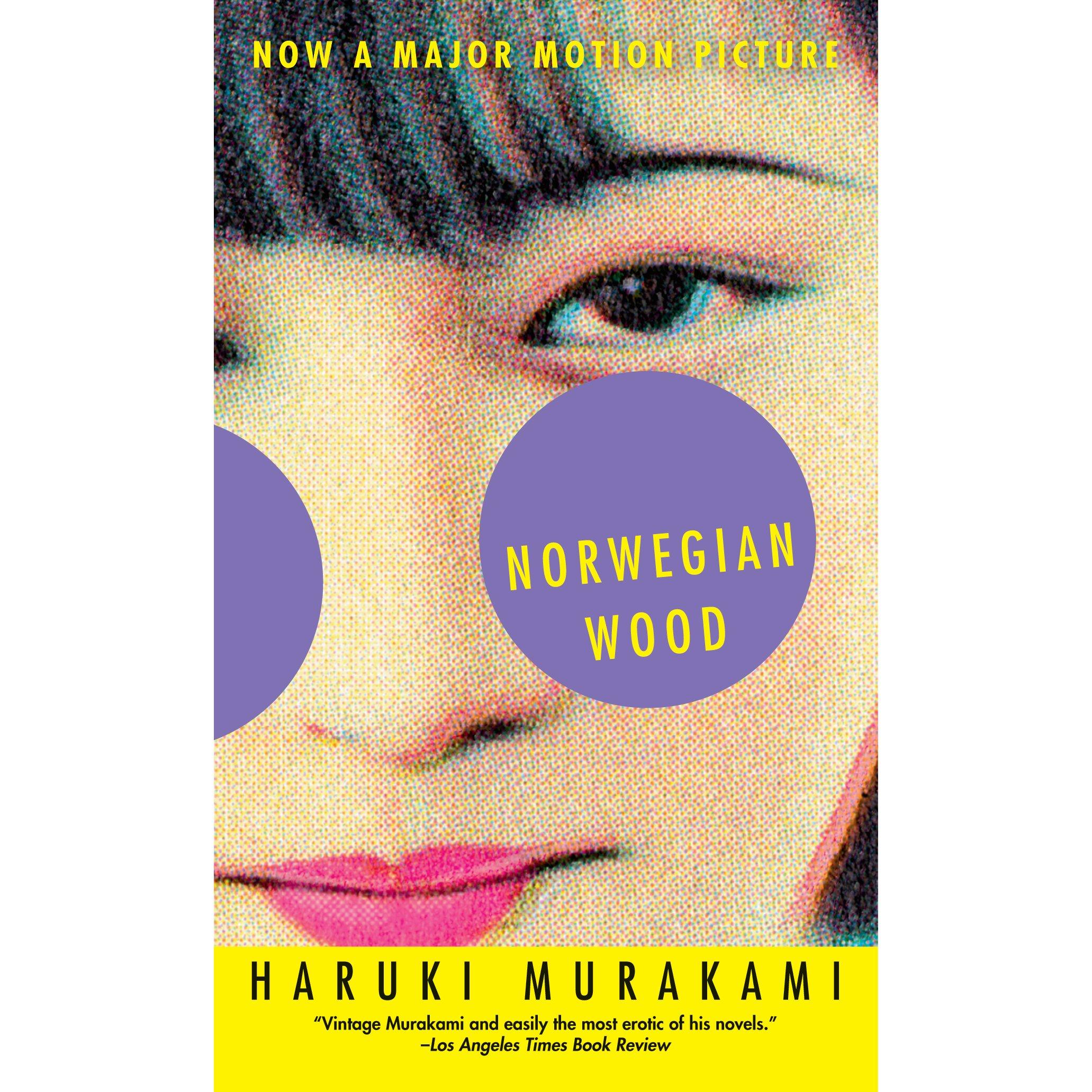
Cover of Norwegian Wood by Haruki Murakami

Norwegian Wood,

by Haruki Murakami, Jay Rubin

Ask AI
Rating3.9/ 5
Ratings1,193
Pages389
Reading Hours8h
Published2011
LanguageEnglish

§Synopsis

01

Toru, a quiet and preternaturally serious young college student in Tokyo, is devoted to Naoko, a beautiful and introspective young woman, but their mutual passion is marked by the tragic death of their best friend years before. Toru begins to adapt to campus life and the loneliness and isolation he faces there, but Naoko finds the pressures and responsibilities of life unbearable. As she retreats further into her own world, Toru finds himself reaching out to others and drawn to a fiercely independent and sexually liberated young woman.

A magnificent blending of the music, the mood, and the ethos that was the sixties with the story of one college student's romantic coming of age, Norwegian Wood brilliantly recaptures a young man's first, hopeless, and heroic love.

§Our take

This is the Murakami novel that reads like a conventional literary novel: no talking cats, no parallel worlds, just a first‑person recollection of grief, desire and the texture of late‑1960s Tokyo. Kirkus and The Complete Review both note the shift to realism, and many readers treat it as an accessible entry point to his work.

The book's reputation rests on two fault lines. Readers split sharply over the frequent explicit sex scenes — some call them honest, others gratuitous — and over whether the female characters are fully realized or idealised. Jay Rubin's 2000 translation is the only widely available English version; an earlier Japan‑only translation by Alfred Birnbaum has been discontinued. The prose is atmospheric and detailed, but the discursive conversations about books and music can feel pretentious to impatient readers.

§Themes

Memory as a lens
Toru narrates from age 37, turning his student years into a nostalgic elegy for lost friends and love.
Realism over surrealism
The novel lacks the magical touches of Murakami's other books, presenting a straightforward, melancholic portrait of 1960s Tokyo.
Two women, two lives
Naoko embodies fragile grief while Midori represents vitality, framing Toru's inner conflict more than a simple romance.
Politics as backdrop
Student protests appear but are portrayed as weak and hypocritical, keeping the focus on private emotion.

§How it was received

Critics were largely enthusiastic: The Complete Review gave an A‑, Kirkus called it one of Murakami's most appealing books though uncharacteristic, and it sold over four million copies in Japan by 2001 (a 2001 newspaper figure), making Murakami a reluctant public figure. Some older Japanese critics dismissed it as lightweight for avoiding politics, and the Complete Review's press roundup notes reservations about a thin plot and puppet‑like characters.

§Read it if

  • You want a Murakami novel without magical realism and with a clear, linear narrative.
  • You appreciate atmospheric, music‑steeped prose and a strong sense of 1960s Tokyo.
  • You're prepared for a story centered on grief, depression and explicit sexuality.

§Skip it if

  • You dislike frequent graphic sex scenes or find them exploitative.
  • You need a fast‑moving plot; the novel is discursive and can feel aimless.

§Before you start

Reading experience
A quiet, melancholic first‑person narrative that lingers on music, books and conversation, so the novel reads slower and heavier than its length suggests.
Content notes
Suicide is central to the plot; Frequent explicit sex scenes; Depictions of mental illness and grief.

§Common questions

Is Norwegian Wood a good first Murakami book?
Many readers say so: they describe it as an accessible entry point because it lacks the surreal elements of his other novels. Critics at Kirkus and the Complete Review call it atypical, though, and some readers don't consider it his best work.
Does the novel contain graphic sexual content?
Yes. The book includes frequent explicit sex scenes that some readers find honest and others consider gratuitous.
Which English translation should I read?
Read Jay Rubin's 2000 translation; the earlier Alfred Birnbaum version was Japan‑only and is out of print.

§If you liked this

  • Blind Willow, Sleeping Woman by Haruki Murakami — Contains the short story 'Firefly', which Murakami later expanded into the opening of Norwegian Wood.
Sources
  • Wikipedia
  • The Complete Review
  • Kirkus Reviews
  • Goodreads
  • Taipei Times (Bradley Winterton, 7 January 2001)
  • The Seattle Times (Mark Lindquist, 3 June 2001)
  • Wikipedia (author article)

Track this book

Add to your library to track progress and write reviews

§Genres
classics1fantasy1fiction1inmates of institutions1japanese fiction1juvenile nonfiction1love stories1
§Content Warnings
§Moods
adventurous1challenging1dark1emotional1funny1hopeful1reflective1
§Tags
#alcohol1#belletristik1#character driven1#diverse characters1

§About the Author

Haruki Murakami
Haruki Murakami

8 books in catalog

Blending ordinary everyday settings with surreal dreamscapes and magical realism, modern Japanese fiction frequently explores themes of alienation, memory, and longing. Haruki Murakami, a Japanese writer and translator born on January 12, 1949, gained widespread recognition with his realistic 1987 novel Norwegian Wood, alongside intricate surreal narratives such as The Wind-Up Bird Chronicle and Kafka on the Shore.

Career & Background

Born in Kyoto and raised in Kobe, Murakami attended Waseda University in Tokyo. Before pursuing writing full-time, he and his wife operated a small jazz club in Tokyo for seven years. In April 1978, while watching a baseball game at Jingu Stadium, Murakami experienced an epiphany that he could write a novel. He went home that evening and began writing his debut novel, Hear the Wind Sing, which won the Gunzo Prize for New Writers.

Following the massive success of Norwegian Wood, Murakami lived in Europe and the United States, spending time as a visiting scholar and writer-in-residence before returning to Japan. Over his career, he has translated numerous English-language literary works into Japanese. His writings have been translated into 50 languages and sold millions of copies worldwide, receiving international accolades including the World Fantasy Award, the Frank O'Connor International Short Story Award, the Franz Kafka Prize, the Jerusalem Prize, and the Tanizaki Prize.

Writing Style & Themes

Murakami's writing style operates in a liminal space between detailed realism, modern fable, detective mystery, and speculative fiction. His narrative approach often begins with mundane domestic routines—such as cooking, listening to jazz records, or searching for a missing cat—before quietly mutating into subterranean realms or parallel realities. His creative process relies on intuitive discovery rather than pre-planned outlines, allowing strange occurrences to unfold naturally within his storytelling.

Recurring motifs across his prose include feline companions, deep wells, mysterious phone calls, and isolated protagonists processing grief or emotional detachment. Through his non-fiction work, including Novelist as a Vocation, Murakami also shares insights into his disciplined creative habits and reflections on the craft of writing fiction.

Major Works

  • Norwegian Wood — A nostalgic, realistic novel set in 1960s Tokyo, focusing on youth, grief, and romantic intimacy through protagonist Toru Watanabe.
  • The Wind-Up Bird Chronicle — A multi-layered narrative following a man searching for his missing wife, gradually uncovering historical secrets and surreal underground worlds.
  • Kafka on the Shore — A dual story interweaving a teenage runaway named Kafka Tamura with an elderly man who can converse with cats, bound together by fate and mythic prophecy.
  • 1Q84 — A sprawling dystopian novel set in an alternate 1984 Tokyo featuring two parallel protagonists navigating secret cults, violence, and two moons in the sky.
  • Sputnik Sweetheart — A reflective story of unrequited love, longing, and sudden disappearance that explores the existential solitude between close companions.
  • After the Quake — A short story collection exploring the quiet psychological tremors experienced by individuals in the aftermath of the 1995 Kobe earthquake.
  • Novelist as a Vocation — A non-fiction essay collection offering candid insights into Murakami's creative process, personal discipline, and views on the novel form.

§Other Editions

Showing 2 of 113 editions
Cover of Norwegian Wood

Norwegian Wood

engAudible.comUnabridged Audiobook
Random House Audio20139780804166652
Amazon
Cover of Norwegian Wood

Norwegian Wood

engAudible
Random House Audio2013B00EV5NCKA
Amazon
§Genres
classics1fantasy1fiction1inmates of institutions1japanese fiction1juvenile nonfiction1love stories1
§Content Warnings
§Moods
adventurous1challenging1dark1emotional1funny1hopeful1reflective1
§Tags
#alcohol1#belletristik1#character driven1#diverse characters1

Metadata

ISBN-139780307744661
ISBN-100307744663
ASIN0307744663

Editions and availability

Find Norwegian Wood Haruki Murakami in PDF, EPUB, ebook, audiobook, print, or library editions.

View on Amazon
Bookshop.orgGoogle Play BooksBarnes & NobleOpen Library

Featured In Lists

Book cover from this collectionBook cover from this collectionBook cover from this collectionBook cover from this collection
Book cover from this collection

Alone Together: Solitude, Loneliness, and Quiet Lives

9 books