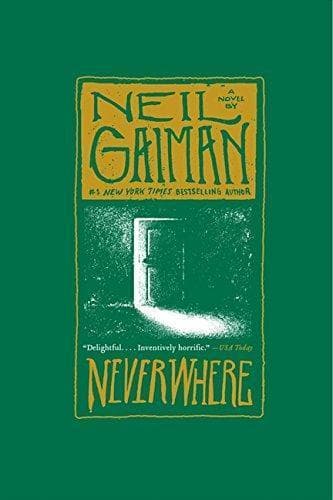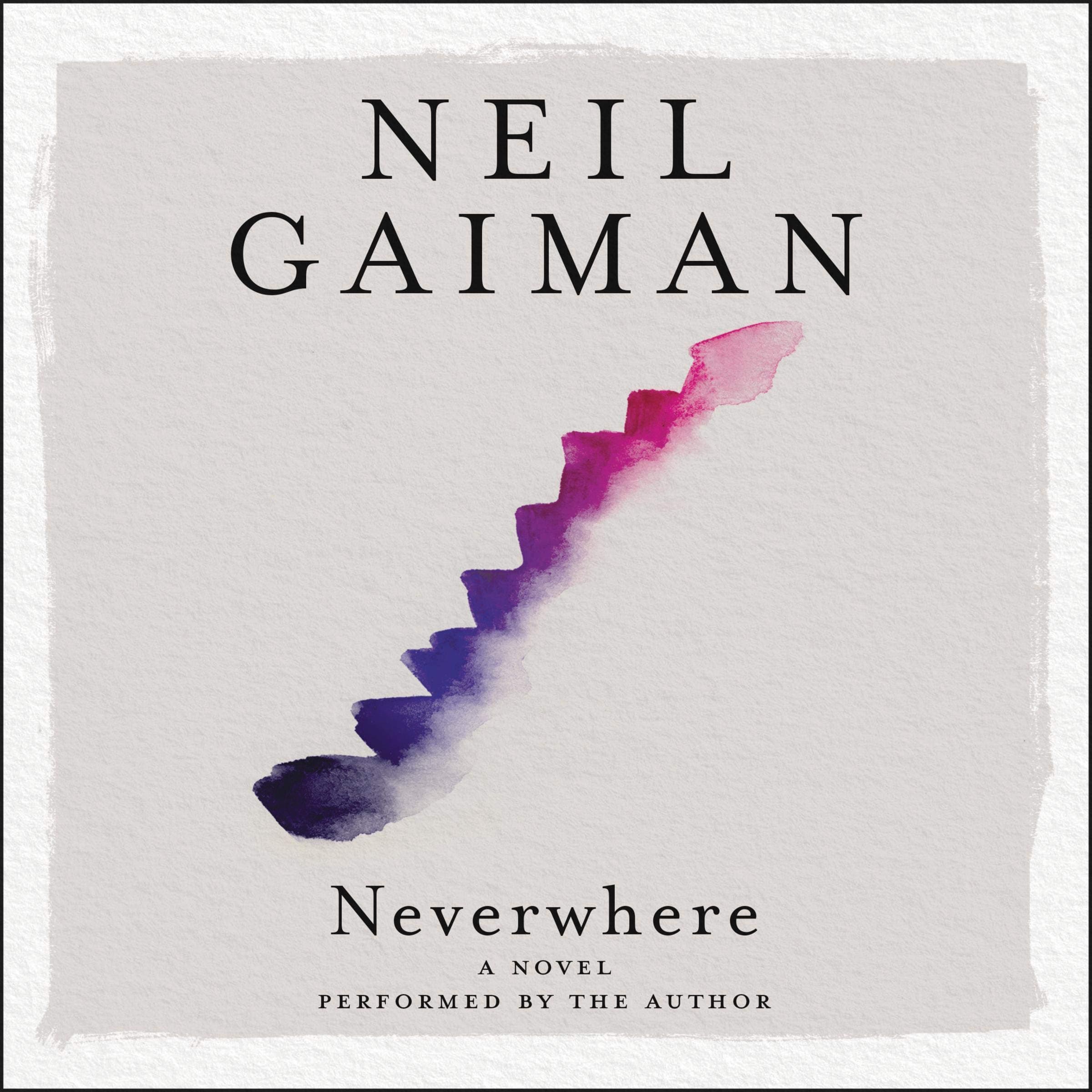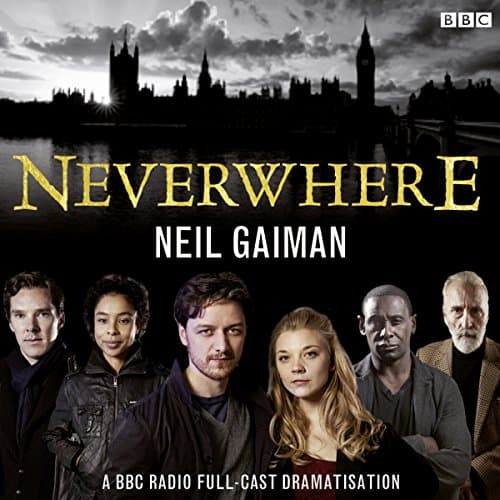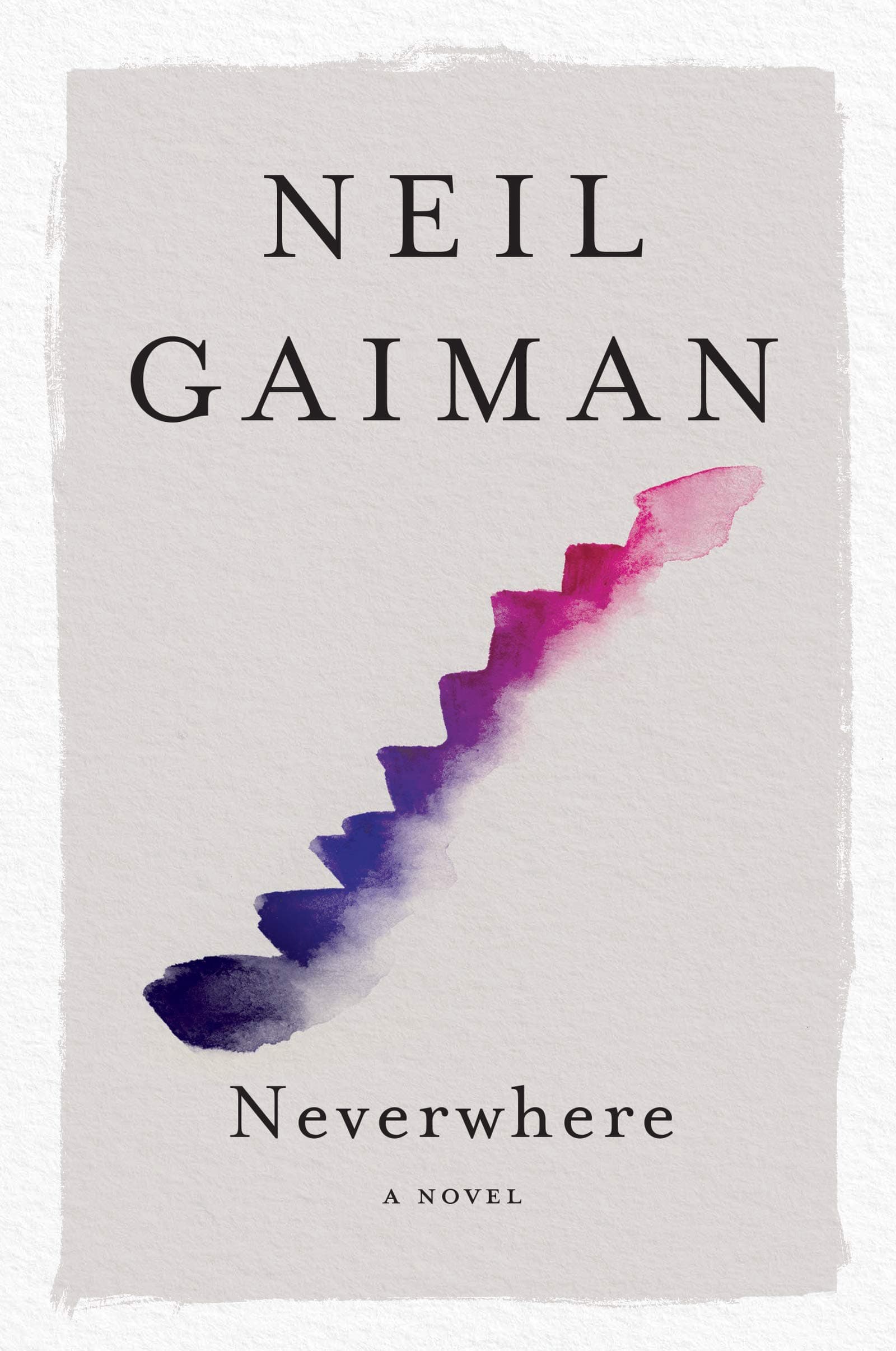
Richard Mayhew is a man defined by his adherence to the unremarkable. A transplant to London with a sensible job, a demanding fiancée, and a collection of glass trolls, his life is governed by the predictable rhythms of the mundane. However, his reality fractures the moment he chooses a single act of kindness over social convention. By stopping to help an injured, blood-streaked girl on a sidewalk—a girl whom everyone else seems unable to even perceive—Richard inadvertently severs his tether to the world he knows. He becomes invisible to his colleagues, his landlord, and his own life, effectively "falling through the cracks" of London.
To reclaim his identity, Richard must descend into London Below, a subterranean mirror-city where the discarded and the forgotten have built a society within the shadows of the Underground. This is not a whimsical escape but a brutal transition into a realm governed by archaic laws, bartered favors, and ancient dangers. Richard is no longer a businessman; he is a displaced soul navigating a landscape where the names of tube stations—like Knightsbridge and Blackfriars—take on literal, often lethal, meanings. His survival depends on understanding a world that exists in the periphery of our vision, a place where the metaphorical "invisible" people of society have found a way to become tangible and terrifying.
The world-building of London Below operates on the principle of literalism and historical residue. It is a world composed of the things London Above has lost or forgotten: Roman ruins, medieval markets, and the discarded remnants of modernity. The atmosphere is thick with dampness and the scent of the Thames, structured around "The Gap"—the dangerous space between the platform and the train. In this setting, geography is fluid and dangerous; a simple walk through a park in the "Above" might be a trek through a monster-infested wasteland in the "Below." Trade is conducted not with currency, but with services, secrets, and physical objects of sentimental or historical weight.
The narrative focuses heavily on the psychological erosion of Richard’s former self. Unlike typical fantasy heroes who embrace their new surroundings, Richard’s initial arc is defined by grief for his mundane life. His development is rooted in the "No Status Change" reality: he starts as a man who is ignored by the world and must find a way to become relevant in a society that operates on strength and cunning. His relationship with Door is one of mutual necessity; he provides a tether to a gentler morality, while she is his only hope for regaining his visible existence. Their dynamic highlights the contrast between Richard’s paralyzing fear and the high-stakes survivalism required in London Below.
While the story utilizes the "portal fantasy" trope, it subverts the typical escapist allure of the genre. Instead of a magical kingdom, the "other world" is a gritty, dangerous reflection of urban decay and social exclusion. Gaiman deconstructs the idea of the "chosen one" by making Richard an accidental participant who is essentially a victim of his own empathy. The book also plays with the "hidden world" trope by suggesting that London Below isn't just a separate place, but a necessary shadow of the city above, populated by those who have been marginalized by society until they literally vanished from the sight of the "normal" population.
Read Neverwhere for the place, not the plot. London Below is a society of the discarded, built from Roman ruins, medieval markets and the Underground itself, and Blackfriars and Knightsbridge stop being stops and become beings and places. If you know London, it's a treat. If you don't, it's a good tour.
The story is thinner than the world. The book began as a six-part BBC series, and the episodic shape shows. Richard is a passive hero by design, a man undone by one act of kindness, though some readers find him underdeveloped. The ending lands lightly. The villains, Mr Croup and Mr Vandemar, are the ones people remember: funny, sinister and a little too articulate. Even fans who want more from the plot tend to forgive it, because the storytelling moves so fast.
Add to your library to track progress and write reviews
London Below does the heavy lifting: even readers who find the plot thin tend to stay for the scenery. The Mythopoeic Society praised its invention, and several reviewers found it fast and funny. The dissent is clear enough: the hero feels underpowered, the plot episodic, and the story thinner than its world. It has stayed in print for decades and outdid the BBC series abroad.
Find Neverwhere Neil Gaiman in PDF, EPUB, ebook, audiobook, print, or library editions.

44 books in catalog
Groundbreaking dark fantasy comic books and dark, whimsical prose fiction have reshaped speculative literature, most famously through the comic book series The Sandman. English author Neil Gaiman, born Neil Richard Gaiman on 10 November 1960, created this influential series before publishing widely acclaimed fantasy novels including Stardust, American Gods, Coraline, and The Graveyard Book.
Born Neil Richard Gaiman in Portchester, Hampshire, UK, he spent much of his childhood reading in public libraries, where he discovered the works of C.S. Lewis, J.R.R. Tolkien, Edgar Allan Poe, Ursula K. LeGuin, and G.K. Chesterton. He began his professional career in journalism before transitioning into comic book writing in the late 1980s, gaining prominence with Black Orchid in 1988 and launching The Sandman series for DC Comics' Vertigo imprint in 1989. Over the subsequent decades, he expanded into writing novels, short fiction, audio theatre, screenplays, and films, eventually taking up residence in the United States near Minneapolis.
His fiction has earned widespread critical recognition, receiving Hugo, Nebula, and Bram Stoker awards. In 2008, he published The Graveyard Book, becoming the first author to win both the American Newbery Medal and the British Carnegie Medal for the same work. In 2013, his novel The Ocean at the End of the Lane was voted Book of the Year in the British National Book Awards. His extensive bibliography and media adaptations continued to draw major critical attention through 2017 and beyond.
Gaiman's literary work is noted for combining imaginative fantasy with a darkly humorous tone, fusing modern settings with classical mythology, folklore, and fairy tale motifs. His stories frequently explore themes of memory, childhood innocence, ancient gods navigating contemporary society, and the fundamental power of stories. Across all age categories, his narratives balance gothic atmosphere with warm human empathy and sharp observational wit.
London Below, The World of Neverwhere