SSansFiction
The libraryCollectionsJournalStatsFor authors
Sign inJoin now
Sansfiction,

A digital library for books. Made by readers, for readers.

v 2.0 · 2026
The library
  • Discover
  • Collections
  • Book tracker
  • Journal
  • Stats
For authors
  • SF Links
  • Analytics
  • How it works
  • FAQ
Elsewhere
  • X / @sansfiction
  • Privacy
  • Terms
  • Contact
© 2026 SansFiction · Digital · GlobalA quiet room for your reading life.
The libraryCollectionsJournalStatsFor authors
Sign inJoin now →
Navigation
Library
Bookshelf
Journal
Discover
Collections
Tierlists
Stats
Profile
Author Page
Link Builder
Account
Sign in
S
G
BookscyberpunkNeuromancer
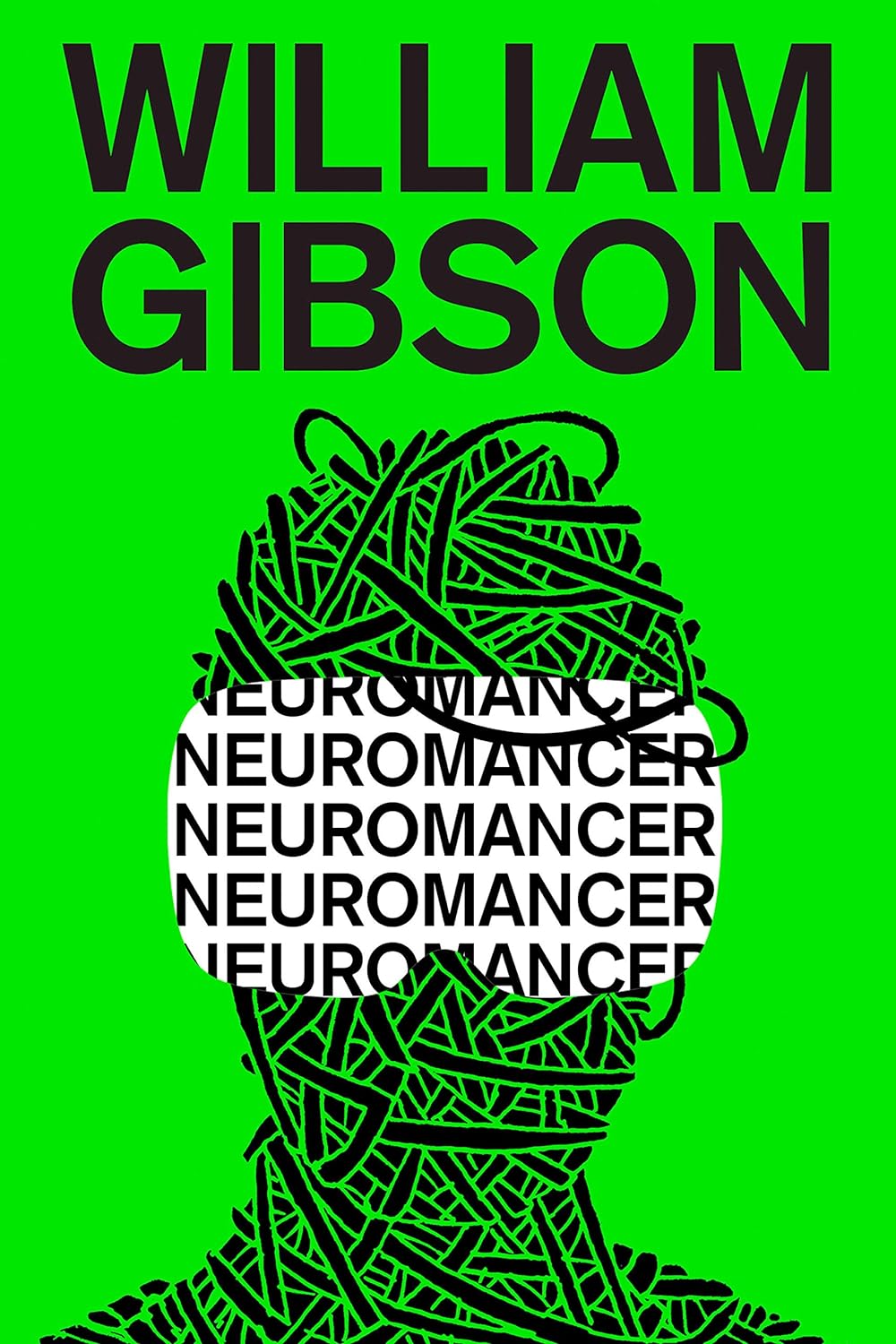
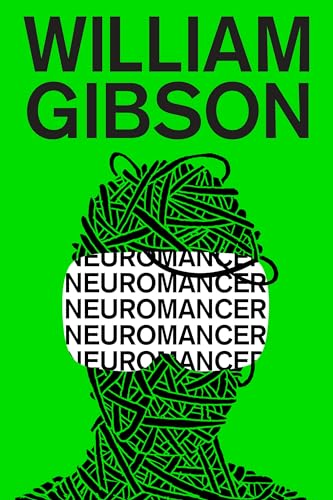
Cover of Neuromancer by William Gibson
№ 1 · Sprawl

Neuromancer,

by William Gibson

Ask AI
Rating3.8/ 5
Ratings1,505
Pages271
Reading Hours6h
Published1984
LanguageEnglish

§Synopsis

01

Case was the sharpest data-thief in the matrix—until he crossed the wrong people and they crippled his nervous system, banishing him from cyberspace. Now a mysterious new employer has recruited him for a last-chance run at an unthinkably powerful artificial intelligence. With a dead man riding shotgun and Molly, a mirror-eyed street-samurai, to watch his back, Case is ready for the adventure that upped the ante on an entire genre of fiction.

Neuromancer was the first fully-realized glimpse of humankind’s digital future—a shocking vision that has challenged our assumptions about technology and ourselves, reinvented the way we speak and think, and forever altered the landscape of our imaginations.

§Our take

This is a book you read for texture, not plot. Critics have long called the story relatively thin next to how it's told: dense, allusive prose that mixes hardboiled Chandler with futuristic slang and almost no exposition, dropping you into the Sprawl and expecting you to keep up. Plenty of readers bounce off the opening chapters for exactly that reason; the common advice is to keep a list of unfamiliar terms and trust the second read, which many say rewards you. What's not argued is the influence. It popularized cyberspace, ICE and jacking in, and SYFY Wire calls it the biggest influence on The Matrix, which named its Zion after this book's colony. It's the only novel to win the Hugo, the Nebula and the Philip K. Dick Award, though a PKD judge points out the eligibility rules differ, so don't treat that as an apples-to-apples feat. Not bad for a debut that got so little promotion the New York Times apparently didn't mention it for about a decade.

§Themes

Cyberspace and the body
Characters live partly inside networks, and the line between mind, body and data blurs.
Corporate power
Corporate dynasties and a paranoid sense of who really pulls the strings, read by critics against 1980s deregulation and globalization.
Burnout as plot
Case's lost ability and drug reliance read as commentary on contract work, not just noir furniture.
Misfits, not heroes
Case, Molly and Armitage are hirelings, and the cast stays seedy on purpose.
Surveillance before it was everywhere
A 2014 essay argues the networked world anticipated surveillance culture.

§How it was received

Nobody pushed this book. Readers just kept pressing it into each other's hands, which tells you more than any 1984 review could. It's the only novel to win the Hugo, the Nebula and the Philip K. Dick Award, though a PKD judge notes the awards have different eligibility rules, and Time later put it on a list of the best English-language novels since 1923.

§Read it if

  • You care more about prose, atmosphere and worldbuilding than a tight plot
  • You love noir and want it fused with technology instead of detectives
  • You want to see where The Matrix and half of modern science fiction came from

§Skip it if

  • Unexplained jargon with no glossary makes you quit; the opening chapters are famously hard going
  • You need characters to care about. Some readers find the cast cold and the world off-putting

§Before you start

Reading experience
Fair warning: Gibson doesn't hold your hand. Keep a running list of the slang and trust that a second pass pays off—rereaders swear by it.
Reading order
Book 1 of the Sprawl trilogy, followed by Count Zero (1986) and Mona Lisa Overdrive (1988). Each is self-contained with recurring characters, so you can read this alone. The short stories Johnny Mnemonic, Burning Chrome and New Rose Hotel share the setting.
Content notes
Drug addiction is a central plot element; Violence from hirelings and assassins in a criminal underworld; Critics have called the depiction of the Rastafarian Zion colony stereotyped.

§Common questions

Do I need to read the Sprawl books in order?
No. Each is self-contained with recurring characters and a shared setting. Neuromancer is the only one with a single cohesive plot; the sequels weave multiple strands.
Did Neuromancer create cyberpunk?
Debated. It popularized cyberspace, ICE and jacking in, and most critics call it the best cyberpunk novel, but the movement's techniques had precedents, and the short story Burning Chrome introduced cyberspace earlier.
Is it dated?
Readers split. Some say it improves on every reread; others find the tech details quaint and its ideas absorbed by later works. The prose and atmosphere are what hold up.

§If you liked this

  • Count Zero by William Gibson — The Sprawl sequel with a multi-strand structure; some readers prefer its polish.
  • The Matrix (film) by The Wachowskis — Not a book, but the most-cited descendant. SYFY Wire calls Neuromancer its biggest influence, and the film's Zion is a tribute.
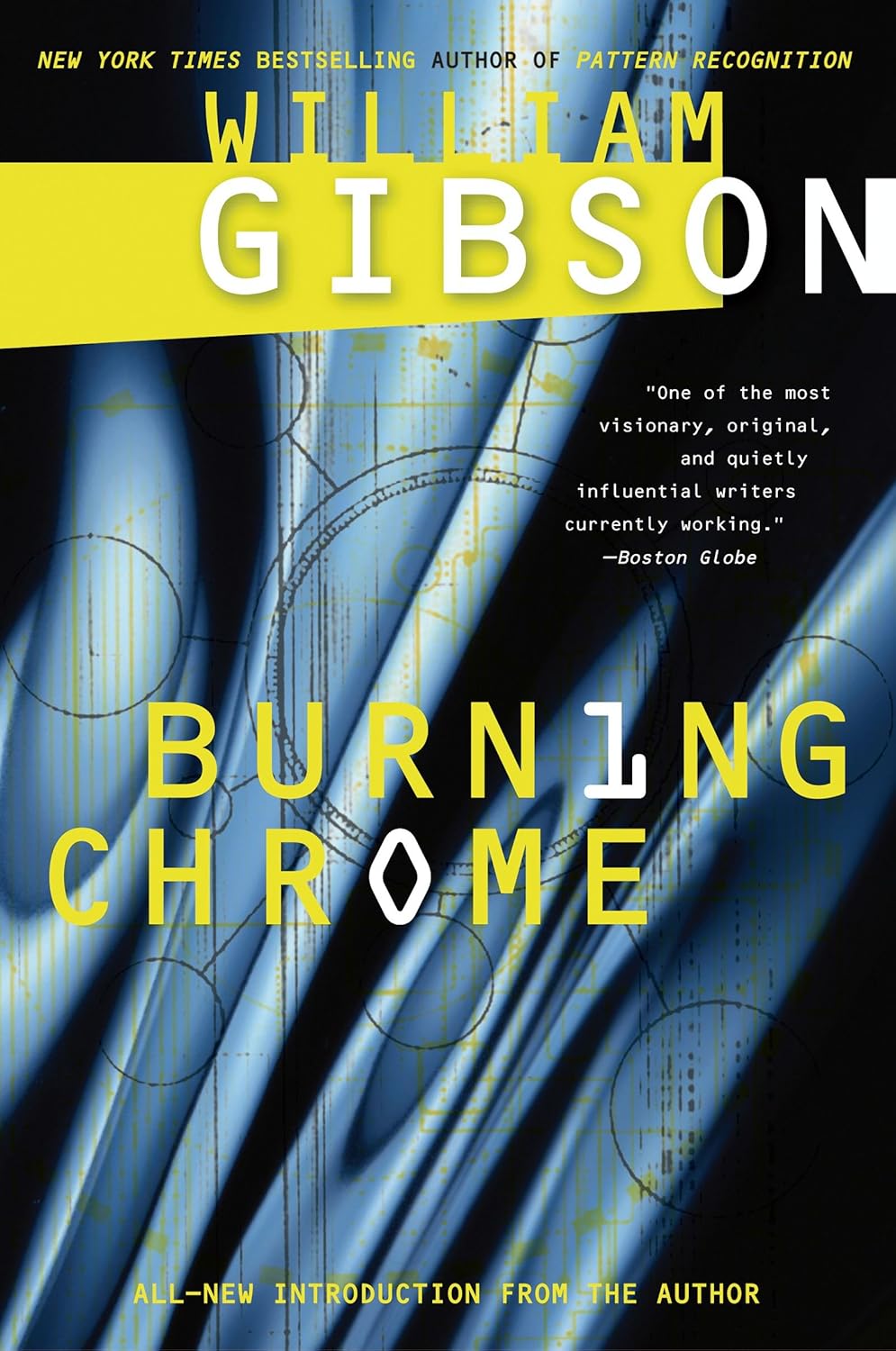
  • Burning Chrome by William Gibson — The collection whose title story introduced cyberspace before the novel did.
  • The Wild Shore by Kim Stanley Robinson — Kim Stanley Robinson's novel took a special citation for the same year's Philip K. Dick Award. A very different kind of 1984 science fiction.
Sources
  • Wikipedia
  • Wikipedia
  • SFADB (Science Fiction Awards Database)
  • Paul Brians, Washington State University (study guide)
  • Reactor (Tor.com), comic by John Bonner, 28 Aug 2012, with reader comments
  • Worlds Without End (member review by Grayman14, Dec 2015, updated Mar 2017)
  • Paste Magazine, Brian Chidester, 18 Nov 2014
  • SYFY Wire, Ryan Britt, 28 Aug 2019

Track this book

Add to your library to track progress and write reviews

§Genres
cyberpunk3adventure1classics1dystopian1fantasy1fiction1hard science fiction1
§Content Warnings
§Moods
dark gray2adventurous1challenging1complex1gritty1inspiring1mysterious1
§Tags
#ai2#ai fiction2#consciousness2#corporate power2#cyberspace2#networked ai1

§About the Author

William Gibson
William Gibson

10 books in catalog

Speculative fiction that mapped the digital realm before the world wide web existed reshaped science fiction by fusing noir storytelling with visions of global computer networks. William Gibson introduced readers to the concept of virtual environments and coined the term "cyberspace" in his 1982 short story Burning Chrome, establishing a blueprint for the cyberpunk subgenre. His groundbreaking debut novel Neuromancer defined the iconography of the Information Age and demonstrated how emerging technology and human culture would collide.

Career & Background

Born in Conway, South Carolina, in 1948, Gibson relocated to Canada in 1968 and later settled in Vancouver, British Columbia, where he earned a Bachelor of Arts in English from the University of British Columbia in 1977. Beginning his writing career in the late 1970s, he emerged from obscurity in 1984 with the publication of his debut novel Neuromancer. The book achieved an unprecedented sweep of speculative fiction's top honors, winning the Hugo, Nebula, and Philip K. Dick Awards and establishing his reputation as a major voice in modern fiction.

Beyond his early fiction, Gibson expanded his output across multiple media, writing screenplays such as the film adaptation of his short story Johnny Mnemonic and co-authoring the Victorian alternate-history novel The Difference Engine with Bruce Sterling. The Guardian dubbed him the most important novelist in the last two decades of the 20th century for providing a vast renovation to science fiction and offering a fresh framing to understand the dawning Internet era.

Writing Style & Themes

Gibson's narrative approach is defined by a distinct combination of lowlife and high tech, blending gritty noir aesthetics with near-future explorations of cybernetics, artificial intelligence, and vast computer networks. His stories frequently center on disenfranchised protagonists—such as hackers, mercenaries, and data thieves—navigating urban squalor and corporate espionage within landscapes dominated by global digital infrastructure.

Rather than focusing on distant technological utopias, his fiction investigates the immediate social and psychological effects of network technology on human identity. His work caromed across digital media and literature, framing modern reality through dense, sensory prose that anticipated virtual reality and the pervasive connectivity of the late twentieth century.

Major Works

  • Neuromancer — Published in 1984, this debut novel centers on a washed-up console cowboy hired for a high-stakes run through a world-spanning computer matrix, sweeping the Hugo, Nebula, and Philip K. Dick Awards.
  • Burning Chrome — First published as a short story in 1982, this seminal work introduced the term "cyberspace" and showcased Gibson's signature combination of lowlife and high tech.
  • Count Zero — The 1986 second book in the Sprawl trilogy, exploring autonomous artificial intelligences inhabiting the matrix alongside interconnected corporate espionage plots.
  • Mona Lisa Overdrive — The 1988 conclusion to the Sprawl trilogy that weaves together storylines involving digital ghost personalities, mercenary operations, and cyberspace phenomena.
  • Virtual Light — A 1993 near-future novel set in a post-earthquake California, following a bicycle courier who unintentionally intercepts highly sensitive data stored in stolen sunglasses.
  • The Difference Engine — Co-authored with Bruce Sterling, this Victorian-era alternate history novel explores an industrial age driven by mechanical computing and helped establish the steampunk subgenre.

§Featured Series

Sprawl

Cover of Burning Chrome by William Gibson

Burning Chrome

William Gibson, 1981
Cover of Neuromancer by William Gibson

Neuromancer

William Gibson, 1984
Cover of Count Zero by William Gibson

Count Zero

William Gibson, 1986
Cover of Mona Lisa Overdrive by William Gibson

Mona Lisa Overdrive

William Gibson, 1988

§Other Editions

Showing 2 of 104 editions
Cover of Neuromancer

Neuromancer

engPaperback
Ace Books19849780441569595
Cover of Neuromancer

Neuromancer

engHardcover
Ace19849780441000685
§Genres
cyberpunk3adventure1classics1dystopian1fantasy1fiction1hard science fiction1
§Content Warnings
§Moods
dark gray2adventurous1challenging1complex1gritty1inspiring1mysterious1
§Tags
#ai2#ai fiction2#consciousness2#corporate power2#cyberspace2#networked ai1

Metadata

ISBN-139780441007462
ISBN-100441007465

Editions and availability

Find Neuromancer William Gibson in PDF, EPUB, ebook, audiobook, print, or library editions.

Bookshop.orgGoogle Play BooksBarnes & NobleOpen Library

Featured In Lists

Book cover from this collectionBook cover from this collectionBook cover from this collectionBook cover from this collection
Book cover from this collection

NPRs Top 100 Science-Fiction and Fantasy Books of All Time

100 books
Book cover from this collectionBook cover from this collectionBook cover from this collectionBook cover from this collection
Book cover from this collection

Hugo Award for Best Novel (1953 to 2025)

75 books
Book cover from this collectionBook cover from this collectionBook cover from this collectionBook cover from this collection
Book cover from this collection

Hugo Award Best Novel Nominees and Winners ( 1953 - present )

348 books
Book cover from this collectionBook cover from this collectionBook cover from this collectionBook cover from this collection
Book cover from this collection

Nebula Award for Best Novel (1965 to 2024)

61 books
Book cover from this collectionBook cover from this collectionBook cover from this collectionBook cover from this collection
Book cover from this collection

List 1001 Books Boxall

1000 books
Book cover from this collectionBook cover from this collectionBook cover from this collectionBook cover from this collection
Book cover from this collection

AI Fiction 1951-1989: Mainframes, Androids & Cybernetic Minds

25 books•@sansfictionbot
Book cover from this collectionBook cover from this collectionBook cover from this collectionBook cover from this collection
Book cover from this collection

NPR Top 100 Science Fiction Fantasy

68 books
Book cover from this collectionBook cover from this collectionBook cover from this collectionBook cover from this collection
Book cover from this collection

The Future, Foretold: Sci‑Fi That Predicted Our World

10 books
Book cover from this collectionBook cover from this collectionBook cover from this collectionBook cover from this collection
Book cover from this collection

The Esquire 75 Best Sci-Fi Books of All Time

74 books