§Synopsis
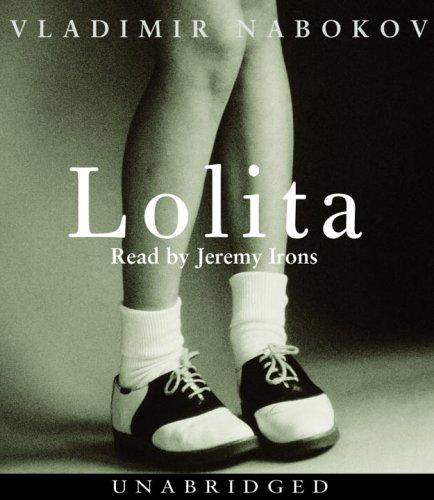
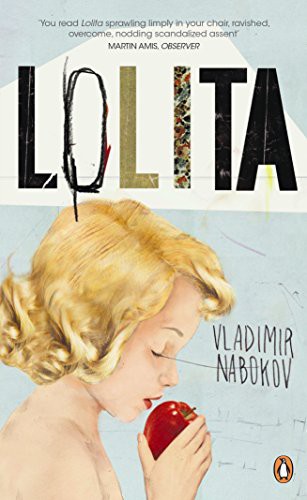
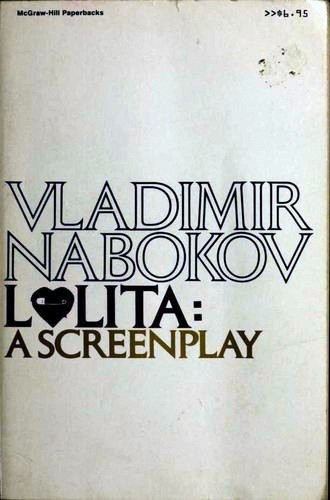
01The most famous and controversial novel from one of the greatest writers of the twentieth century tells the story of Humbert Humbert’s obsessive, devouring, and doomed passion for the nymphet Dolores Haze.
“The conjunction of a sense of humor with a sense of horror [results in] satire of a very special kind.”—The New Yorker
One of The Atlantic’s Great American Novels of the Past 100 Years
Awe and exhilaration—along with heartbreak and mordant wit—abound in Lolita, which tells the story of the aging Humbert Humbert's obsession for the nymphet Dolores Haze. Lolita is also the story of a hypercivilized European colliding with the cheerful barbarism of postwar America.
Most of all, it is a meditation on love—love as outrage and hallucination, madness and transformation.
§Our take
Lolita is famous for the wrong reason: the title has escaped the novel and become a label for a precocious girl, when the girl in the book is Dolores and the voice belongs to her abuser. Humbert's wit, erudition and self-justifying memoir make him dangerous; the reader's job is to notice where Dolores's suffering breaks through his polished prose.
That tension explains the book's afterlife. Critics now treat the unreliable narration as the central problem, while feminist readers ask whose story has been erased. Nabokov denied that the novel carries a moral, which leaves aesthetic pleasure and ethical discomfort in productive suspension. Reread it: the first pass chases the plot, while later passes expose the planted cracks.
§Themes
- Charm as camouflage
- Humbert's wit and erudition make his abuse easier to read, while his slips expose the suffering beneath it.
- The unreliable memoir
- The story lives inside one self-justifying narrator, so gaps, evasions and emotional slips become the reader's clues.
- A stolen childhood
- At twelve, Dolores cannot consent, yet Humbert frames his desire as love and devotion.
- The missing voice
- Feminist critics argue the narration reduces Dolores to Humbert's fantasy, while other readers find her suffering in details he cannot fully conceal.
- Love as distortion
- Humbert calls his obsession love, but the cracks in his account reveal coercion, isolation and a child's suffering.
§How it was received
The novel began as a small Paris printing in 1955, then Graham Greene's praise made it an international scandal. US reviews in 1958 split hard: Elizabeth Janeway found comic satire, while Kingsley Amis considered it weak as art and morally bad. Over time, the critical center shifted from charges of obscenity to Humbert's voice and the missing perspective of Dolores.
§Read it if
- You enjoy prose that rewards close reading and are willing to distrust a polished narrator
- You want a book-group experience with real disagreement rather than a settled moral lesson
- You can reread for the clues in the cracks, where Dolores's suffering keeps interrupting Humbert's version
§Skip it if
- You want the victim's perspective at the center. Lolita gives it chiefly through the abuser's memoir.
- Ornate allusion and moral discomfort are likely to send you away. Some readers never get past either.
§Before you start
- Reading experience
- The difficulty is stylistic and moral rather than structural: the ornate, allusive first-person prose can stop a first read cold, while a second pass exposes the planted clues beneath Humbert's polish.
- Reading order
- Standalone novel. Not part of a series.
- Content notes
- Sexual abuse and non-consensual sex involving a child; Dolores is 12 when the story begins; Abduction and coercive control, including isolation on a long road trip; Distressing depictions of a child's suffering, filtered through the self-justifying abuser's voice; The prose is lyrical and ironic rather than conventionally graphic, but the subject remains disturbing.
§Common questions
- When was Lolita first published?
- In 1955, in a small English-language edition from Olympia Press in Paris. The US Putnam edition arrived in 1958.
- What does an unreliable narrator mean here?
- Most critics agree that Humbert is unreliable, but disagree about how. Some read part of the later story as fantasy; Brian Boyd rejects that case.
- Is Lolita a love story?
- Humbert tells it as one, and some critics, Lionel Trilling among them, have read it as a love story of a kind. Others hear only an abuser pleading his case. The novel itself keeps exposing what his romantic language hides.
§If you liked this
- My Dark Vanessa by Kate Elizabeth Russell — Kate Elizabeth Russell tells the story from the victim's perspective only, without the abuser's voice, after rereading Lolita for Dolores.
- Reading Lolita in Tehran by Azar Nafisi — Azar Nafisi's memoir-in-books treats the novel as a metaphor for oppression and contrasts its Dolores with the popular idea of Lolita.
- Consent by Vanessa Springora — Vanessa Springora's French memoir invokes Lolita while writing about abuse from the victim's side.
Sources
- Wikipedia
- Cornell University Library exhibit
- Library of America
- Literary Hub
- International Vladimir Nabokov Society (bibliography entry for Brian Boyd, 1995)
- The Common Reader (Henry Oliver, Substack)
- Jezebel
- UPenn call for papers (70 years of Lolita)
- Trigger Warning Database
- Parramatta Libraries (book group discussion paper)
Track this book
Add to your library to track progress and write reviews