SSansFiction
The libraryCollectionsJournalStatsFor authors
Sign inJoin now
Sansfiction,

A digital library for books. Made by readers, for readers.

v 2.0 · 2026
The library
  • Discover
  • Collections
  • Book tracker
  • Journal
  • Stats
For authors
  • SF Links
  • Analytics
  • How it works
  • FAQ
Elsewhere
  • X / @sansfiction
  • Privacy
  • Terms
  • Contact
© 2026 SansFiction · Digital · GlobalA quiet room for your reading life.
The libraryCollectionsJournalStatsFor authors
Sign inJoin now →
Navigation
Library
Bookshelf
Journal
Discover
Collections
Tierlists
Stats
Profile
Author Page
Link Builder
Account
Sign in
S
G
BooksdarkLolita
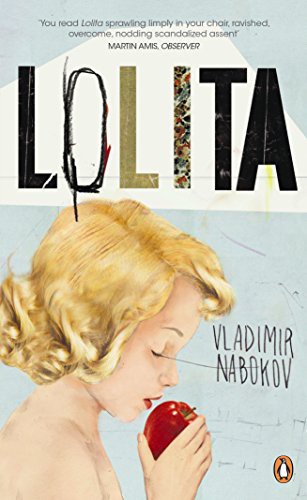
Cover of Lolita by Vladimir Nabokov

Lolita,

by Vladimir Nabokov, Martin Amis

Ask AI
Rating3.9/ 5
Ratings1,108
Pages—
Reading Hours—
Published1983
LanguageEnglish

§Synopsis

01

The most famous and controversial novel from one of the greatest writers of the twentieth century tells the story of Humbert Humbert’s obsessive, devouring, and doomed passion for the nymphet Dolores Haze.

“The conjunction of a sense of humor with a sense of horror [results in] satire of a very special kind.”—The New Yorker

One of The Atlantic’s Great American Novels of the Past 100 Years

Awe and exhilaration—along with heartbreak and mordant wit—abound in Lolita, which tells the story of the aging Humbert Humbert's obsession for the nymphet Dolores Haze. Lolita is also the story of a hypercivilized European colliding with the cheerful barbarism of postwar America.

Most of all, it is a meditation on love—love as outrage and hallucination, madness and transformation.

§Our take

Lolita is famous for the wrong reason: the title has escaped the novel and become a label for a precocious girl, when the girl in the book is Dolores and the voice belongs to her abuser. Humbert's wit, erudition and self-justifying memoir make him dangerous; the reader's job is to notice where Dolores's suffering breaks through his polished prose.

That tension explains the book's afterlife. Critics now treat the unreliable narration as the central problem, while feminist readers ask whose story has been erased. Nabokov denied that the novel carries a moral, which leaves aesthetic pleasure and ethical discomfort in productive suspension. Reread it: the first pass chases the plot, while later passes expose the planted cracks.

§Themes

Charm as camouflage
Humbert's wit and erudition make his abuse easier to read, while his slips expose the suffering beneath it.
The unreliable memoir
The story lives inside one self-justifying narrator, so gaps, evasions and emotional slips become the reader's clues.
A stolen childhood
At twelve, Dolores cannot consent, yet Humbert frames his desire as love and devotion.
The missing voice
Feminist critics argue the narration reduces Dolores to Humbert's fantasy, while other readers find her suffering in details he cannot fully conceal.
Love as distortion
Humbert calls his obsession love, but the cracks in his account reveal coercion, isolation and a child's suffering.

§How it was received

The novel began as a small Paris printing in 1955, then Graham Greene's praise made it an international scandal. US reviews in 1958 split hard: Elizabeth Janeway found comic satire, while Kingsley Amis considered it weak as art and morally bad. Over time, the critical center shifted from charges of obscenity to Humbert's voice and the missing perspective of Dolores.

§Read it if

  • You enjoy prose that rewards close reading and are willing to distrust a polished narrator
  • You want a book-group experience with real disagreement rather than a settled moral lesson
  • You can reread for the clues in the cracks, where Dolores's suffering keeps interrupting Humbert's version

§Skip it if

  • You want the victim's perspective at the center. Lolita gives it chiefly through the abuser's memoir.
  • Ornate allusion and moral discomfort are likely to send you away. Some readers never get past either.

§Before you start

Reading experience
The difficulty is stylistic and moral rather than structural: the ornate, allusive first-person prose can stop a first read cold, while a second pass exposes the planted clues beneath Humbert's polish.
Reading order
Standalone novel. Not part of a series.
Content notes
Sexual abuse and non-consensual sex involving a child; Dolores is 12 when the story begins; Abduction and coercive control, including isolation on a long road trip; Distressing depictions of a child's suffering, filtered through the self-justifying abuser's voice; The prose is lyrical and ironic rather than conventionally graphic, but the subject remains disturbing.

§Common questions

When was Lolita first published?
In 1955, in a small English-language edition from Olympia Press in Paris. The US Putnam edition arrived in 1958.
What does an unreliable narrator mean here?
Most critics agree that Humbert is unreliable, but disagree about how. Some read part of the later story as fantasy; Brian Boyd rejects that case.
Is Lolita a love story?
Humbert tells it as one, and some critics, Lionel Trilling among them, have read it as a love story of a kind. Others hear only an abuser pleading his case. The novel itself keeps exposing what his romantic language hides.

§If you liked this

  • My Dark Vanessa by Kate Elizabeth Russell — Kate Elizabeth Russell tells the story from the victim's perspective only, without the abuser's voice, after rereading Lolita for Dolores.
  • Reading Lolita in Tehran by Azar Nafisi — Azar Nafisi's memoir-in-books treats the novel as a metaphor for oppression and contrasts its Dolores with the popular idea of Lolita.
  • Consent by Vanessa Springora — Vanessa Springora's French memoir invokes Lolita while writing about abuse from the victim's side.
Sources
  • Wikipedia
  • Cornell University Library exhibit
  • Library of America
  • Literary Hub
  • International Vladimir Nabokov Society (bibliography entry for Brian Boyd, 1995)
  • The Common Reader (Henry Oliver, Substack)
  • Jezebel
  • UPenn call for papers (70 years of Lolita)
  • Trigger Warning Database
  • Parramatta Libraries (book group discussion paper)

Track this book

Add to your library to track progress and write reviews
§Genres
dark2american1classics1crime1fiction1general1illumination of books and manuscripts1
§Content Warnings
§Moods
challenging1controversial1hopeless1nostalgic1reflective1romantic1
§Tags
#diverse characters1#literature1#not diverse characters1#novels1#romance1

§About the Author

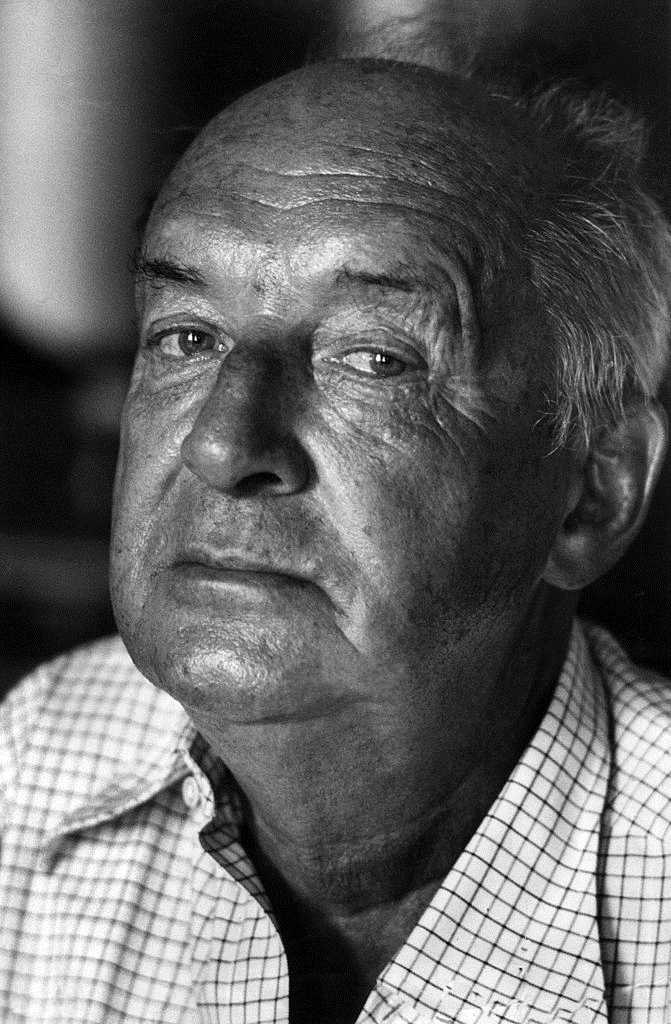
Vladimir Nabokov
Vladimir Nabokov

5 books in catalog

Multilingual prose fiction, intricate wordplay, and complex narrative structures characterize a prominent body of twentieth-century literature that includes the famous novel Lolita. Vladimir Vladimirovich Nabokov, who also published under the pen name Vladimir Sirin, was a Russian and American novelist, poet, translator, and entomologist whose writing bridged Russian émigré culture and mid-century American fiction.

Career & Background

Born in Imperial Russia in 1899 to an aristocratic family in St. Petersburg, Nabokov grew up trilingual in Russian, English, and French. Following the Russian Revolution, he lived in Germany and France between 1922 and 1940. While living in Berlin, where he met his wife, Véra Nabokov, he wrote his first nine novels in Russian before emigrating to the United States in 1940. He became a U.S. citizen in 1945 and taught Russian and European literature at Cornell University from 1948 to 1958 while continuing scientific research in lepidopterology.

Writing Style & Themes

Nabokov's prose is defined by complex structural games, wordplay, unreliable narrators, and meticulous aesthetic detail. Recurring themes across his Russian and English works include exile, memory, artifice, obsession, and the fluidity of time.

Major Works

  • Lolita — Published in 1955, this famous novel follows Humbert Humbert's obsession with young Dolores Haze and achieved widespread international acclaim.
  • Pale Fire — Published in 1962, this experimental narrative consists of a 999-line poem written by John Shade accompanied by a detailed, eccentric commentary by Charles Kinbote.
  • Pnin — Published in 1957, this comedic novel depicts the misadventures of an eccentric Russian emigré professor navigating academic life in the United States.
  • Ada, or Ardor: A Family Chronicle — Published in 1969, this expansive novel chronicles the lifelong relationship between Van Veen and Ada on an alternate-world version of Earth.
  • Drugie berega — Published in 1954, this Russian-language memoir offers an autobiographical account of Nabokov's early life in pre-revolutionary Imperial Russia.

§Other Editions

Showing 2 of 169 editions
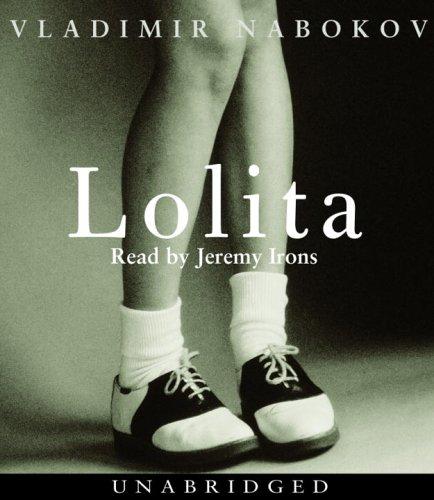
Cover of Lolita

Lolita

engAudio CDUnabridged
Random House Audio19559780739322062
Amazon
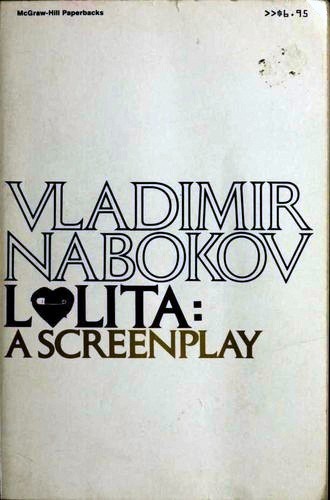
Cover of Lolita: A Screenplay

Lolita: A Screenplay

engPaperbackFirst Paperback Edition
McGraw-Hill Book Company19609780070457683
§Genres
dark2american1classics1crime1fiction1general1illumination of books and manuscripts1
§Content Warnings
§Moods
challenging1controversial1hopeless1nostalgic1reflective1romantic1
§Tags
#diverse characters1#literature1#not diverse characters1#novels1#romance1

Metadata

ISBN-139780822206835
ISBN-100822206838
ASINB002V8MJ9Y

Editions and availability

Find Lolita Vladimir Nabokov in PDF, EPUB, ebook, audiobook, print, or library editions.

View on Amazon
Bookshop.orgGoogle Play BooksBarnes & NobleOpen Library

Featured In Lists

Book cover from this collectionBook cover from this collectionBook cover from this collectionBook cover from this collection
Book cover from this collection

100 Must Read Classics

99 books
Book cover from this collectionBook cover from this collectionBook cover from this collectionBook cover from this collection
Book cover from this collection

Modern Library 100 Best Novels

100 books
Book cover from this collectionBook cover from this collectionBook cover from this collectionBook cover from this collection
Book cover from this collection

List 1001 Books Boxall

1000 books
Book cover from this collectionBook cover from this collectionBook cover from this collectionBook cover from this collection
Book cover from this collection

100 Greatest Books

98 books
Book cover from this collectionBook cover from this collectionBook cover from this collectionBook cover from this collection
Book cover from this collection

4lit

96 books
Book cover from this collectionBook cover from this collectionBook cover from this collectionBook cover from this collection
Book cover from this collection

200-ish Books to Read Before You Die

36 books
Book cover from this collectionBook cover from this collectionBook cover from this collectionBook cover from this collection
Book cover from this collection

Banned, Burned, Beloved: Books They Tried to Silence

10 books