§Synopsis
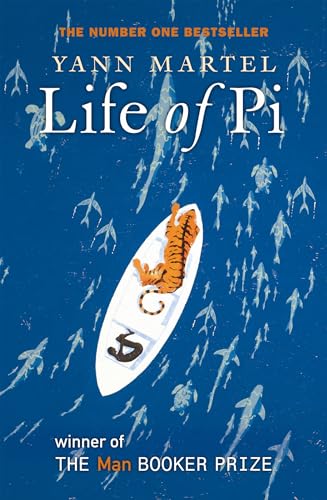
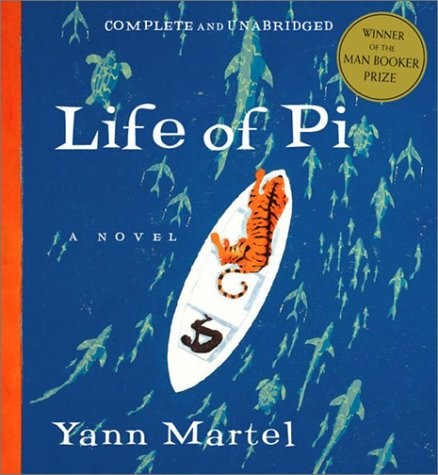
01After the tragic sinking of a cargo ship, one solitary lifeboat remains bobbing on the wild, blue Pacific. The only survivors from the wreck are a sixteen-year-old boy named Pi, a hyena, a zebra (with a broken leg), a female orang-utan… and a 450-pound Royal Bengal tiger. The scene is set for one of the most extraordinary works of fiction in recent years.
§Our take
The sea section is the book's engine, and Kirkus called it suspenseful and whimsical, but the religious framing divides opinion: Kirkus found it preachy, while Martel calls it the heart of the book. Martel summarises the novel in three lines: life is a story, you choose your story, a story with God is the better one. The ending forces that choice. The first part, set in a Pondicherry zoo, starts slowly for some; Common Sense Media flags the graphic animal killings as very gory. Martel researched Hinduism, Christianity, and Islam alongside zoology and castaway accounts, and the book nearly didn't publish — at least five London houses passed before Knopf Canada took it, releasing it on 11 September 2001. Ang Lee's film won four Oscars, but the novel's power sits in its deliberate lopsidedness: a long middle, a short interrogation at the end, and an author's note that frames the story as largely invented.
§Themes
- Storytelling as survival
- Martel's three-point thesis — life is a story, you choose it, a story with God is better — turns the adventure into an argument about belief.
- Faith across three traditions
- Pi practises Hinduism, Christianity, and Islam simultaneously; Martel says the mystics share a language of devotion while dogma creates conflict.
- Survival overrides morality
- A devout vegetarian kills and eats to live; the book asks whether zoo animals may be freer than wild ones.
- Truth depends on the telling
- An author's note frames the tale as largely fictional, and the ending reframes what came before, inviting readers to choose which story to believe.
§How it was received
Kirkus praised the 227 days at sea as suspenseful and whimsical but found the religious sections preachy and repetitive. Common Sense Media called it a fascinating survival tale full of animal facts and gory detail, warning it's unsuitable for many younger readers. It won the 2002 Man Booker Prize after being rejected by at least five London publishers, and Ang Lee's 2012 film adaptation won four Academy Awards.
§Read it if
- You want a survival story that doubles as a philosophy seminar about narrative and belief
- You don't mind a slow, zoo-set first act before the lifeboat action begins
- You like endings that refuse to settle and leave the choice to you
§Skip it if
- Graphic animal violence and descriptions of cannibalism will ruin the reading experience for you
- You lose patience with explicit religious discourse that characters and narrator treat as central
§Before you start
- Reading experience
- Quiet, slow-building first part in a zoo, then a long, detailed survival middle, and a short interview ending; kid reviewers say it starts slowly.
- Content notes
- Graphic animal violence and death; Graphic human violence; References to animal sexual behavior; Alcohol use by crew members; Religious themes across Hinduism, Christianity, and Islam.
§Common questions
- Is Life of Pi based on a true story?
- No. The author's note frames it as fiction, and Martel has said the idea came from a review of a Brazilian novella, not from real events.
- How violent is the book?
- Very. Animals kill and eat each other, the narrator kills and eats animals, and the story includes human murder and cannibalism. Common Sense Media calls it very gory and rates it 16+.
- What's the deal with the ending?
- Without spoiling it: the short final section reframes what came before and asks the reader to choose which story to believe. Martel says the truth rests on the narrator's word.
§If you liked this
- The Metamorphosis by Franz Kafka — Martel cited Kafka's startling premise as a model for unsettling readers' assumptions, which shaped his own approach.
Track this book
Add to your library to track progress and write reviews