Yann Martel
Blending survival adventure, philosophical inquiry, and magical realism, contemporary fiction exploring faith and storytelling captured global attention with the publication of Life of Pi. Canadian author Yann Martel became widely known when this survival tale won the 2002 Man Booker Prize, selling millions of copies worldwide and spawning an Academy Award-winning film adaptation.
Career & Background
Born on June 25, 1963, in Salamanca, Spain, to peripatetic French Canadian parents, Martel spent his childhood living in Spain, Costa Rica, France, Mexico, and the United States due to his father's career as a diplomat and poet. He finished his secondary education at Trinity College School in Port Hope, Ontario, and pursued university studies in philosophy. Although French is his first language, he writes his literary work in English. After releasing his debut short story collection The Facts Behind the Helsinki Roccamatios in 1993 and his first novel Self in 1996, Martel traveled through India visiting sacred sites, an odyssey that informed his novel Life of Pi. In addition to his fiction, he published 101 Letters to a Prime Minister (also released as What Is Stephen Harper Reading?), compiling recommendations sent to encourage reading. Martel was named a Companion of the Order of Canada in 2021 and resides in Saskatoon, Saskatchewan, with writer Alice Kuipers and their four children.
Writing Style & Themes
Martel's writing frequently interrogates the nature of truth, faith, memory, and narrative structure. His works often feature allegorical framing, complex human-animal relationships, and elements of literary fantasy to address profound existential questions. Whether examining historical trauma or reimagining ancient epic poetry, his narrative approach balances rigorous intellectual debate with imaginative storytelling. His work has earned multiple recognitions, including the Hugh MacLennan Prize for Fiction, the Asian/Pacific American Award for Literature, and the Coventry Inspiration Book Award.
Major Works
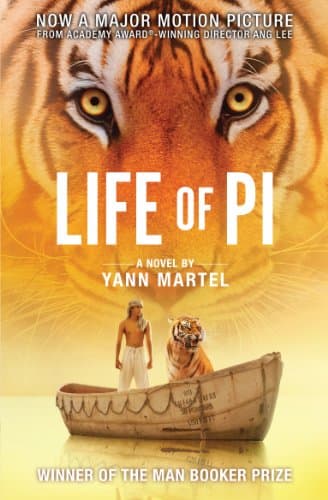
- Life of Pi — Published in 2001, this international bestselling novel details the voyage of an Indian teenager adrift on a lifeboat in the Pacific Ocean with a Bengal tiger. It won the 2002 Man Booker Prize, sold over 12 million copies in more than 50 territories, and was adapted into an Oscar-winning film directed by Ang Lee.
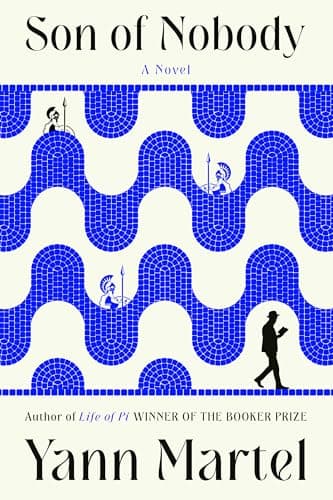
- Son of Nobody — Released in March 2026, this novel draws inspiration from Homer's Iliad and the Trojan War to explore foundational mythic themes.
- Self — Published in 1996, Martel's debut novel explores identity, gender, and personal transformation.
- Beatrice and Virgil — Published in 2010, this allegorical novel uses a dialogue involving a taxidermied donkey and monkey to examine the Holocaust and representation.
- The High Mountains of Portugal — Published in 2016, this novel connects three distinct stories spanning a century in Portugal, centering on themes of grief, faith, and devotion.
- The Facts Behind the Helsinki Roccamatios — Published in 1993, this debut story collection highlights Martel's early narrative experimentation and focus on human resilience.
Life of Pi