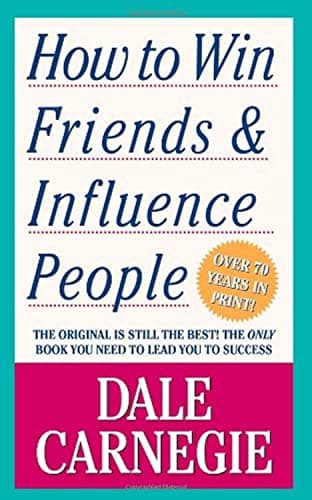
Simple and timeless tools for success and happiness For more than eighty years, millions of people from Warren Buffett to Oprah Winfrey have benefited from the remarkable wisdom of Dale Carnegie. Intended as a basic sales primer, How to Win Friends and Influence People quickly exploded into an overnight success—selling more than fifteen million copies worldwide and becoming one of the most influential books of all time. With an enduring grasp of human nature, Dale Carnegie’s How to Win Friends and Influence People shows you how to be more persuasive and effective, a better leader and manager, and happier at home and at work. This special new edition of the beloved classic includes an exclusive foreword by Terry O’Reilly.
Add to your library to track progress and write reviews
Find How to Win Friends and Influence People Dale Carnegie in PDF, EPUB, ebook, audiobook, print, or library editions.

2 books in catalog
American author and lecturer Dale Harbison Carnegie developed famous instructional courses in self-improvement, salesmanship, interpersonal skills, and public speaking, codifying techniques that helped millions of adults build self-confidence and converse effectively. His 1936 book How to Win Friends and Influence People provided concrete strategies for interpersonal communication that remain widely read across corporate and personal development settings.
Born into poverty on a farm in Maryville, Missouri, on November 24, 1888, Carnegie grew up in rural Missouri before his family moved to Belton. He attended the State Normal School in Warrensburg, Missouri—now the University of Central Missouri—where he commuted from home because he could not afford room and board. After working as a traveling salesman, he moved to New York City and began teaching public speaking classes at a local YMCA. Originally named Dale Carnagey, he changed the spelling of his surname to Carnegie around 1922 while expanding his educational programs into corporate training, salesmanship, and leadership instruction.
Carnegie believed that historical biographies offered valuable insights into human achievement, leading him to research and publish Lincoln the Unknown in 1932. As his public speaking courses gained popularity, he founded the Dale Carnegie Institute to export his training methodologies globally. Throughout his career until his death on November 1, 1955, in Forest Hills, Queens, New York, Carnegie authored multiple foundational books on self-improvement and stress management, including How to Stop Worrying and Start Living in 1948.
Carnegie's instructional style emphasized practical, real-world application over theoretical psychology, relying on clear anecdotes, direct advice, and repeatable behavioral principles. His writings focus on active listening, genuine appreciation of others, stress reduction, and structured verbal delivery, providing readers with systematic methods to overcome social anxiety and project authority.
A core theme across his bibliography is the belief that persuasion and leadership stem from empathetic understanding rather than aggressive confrontation. Carnegie urged speakers and professionals to view situations from the perspective of their listener, framing arguments around mutual benefit and personal encouragement to foster meaningful professional and personal relationships.