
§Author· 2 books
Dale Carnegie
Also known as Dale Carnagey, Dale Harbison Carnegie
American author and lecturer Dale Harbison Carnegie developed famous instructional courses in self-improvement, salesmanship, interpersonal skills, and public speaking, codifying techniques that helped millions of adults build self-confidence and converse effectively. His 1936 book How to Win Friends and Influence People provided concrete strategies for interpersonal communication that remain widely read across corporate and personal development settings.
Career & Background
Born into poverty on a farm in Maryville, Missouri, on November 24, 1888, Carnegie grew up in rural Missouri before his family moved to Belton. He attended the State Normal School in Warrensburg, Missouri—now the University of Central Missouri—where he commuted from home because he could not afford room and board. After working as a traveling salesman, he moved to New York City and began teaching public speaking classes at a local YMCA. Originally named Dale Carnagey, he changed the spelling of his surname to Carnegie around 1922 while expanding his educational programs into corporate training, salesmanship, and leadership instruction.
Carnegie believed that historical biographies offered valuable insights into human achievement, leading him to research and publish Lincoln the Unknown in 1932. As his public speaking courses gained popularity, he founded the Dale Carnegie Institute to export his training methodologies globally. Throughout his career until his death on November 1, 1955, in Forest Hills, Queens, New York, Carnegie authored multiple foundational books on self-improvement and stress management, including How to Stop Worrying and Start Living in 1948.
Writing Style & Themes
Carnegie's instructional style emphasized practical, real-world application over theoretical psychology, relying on clear anecdotes, direct advice, and repeatable behavioral principles. His writings focus on active listening, genuine appreciation of others, stress reduction, and structured verbal delivery, providing readers with systematic methods to overcome social anxiety and project authority.
A core theme across his bibliography is the belief that persuasion and leadership stem from empathetic understanding rather than aggressive confrontation. Carnegie urged speakers and professionals to view situations from the perspective of their listener, framing arguments around mutual benefit and personal encouragement to foster meaningful professional and personal relationships.
Major Works
- How to Win Friends and Influence People — Published in 1936, this classic guide outlines fundamental principles for effective communication, relationship building, and leadership, helping readers improve their personal and professional interactions.
- The Art of Public Speaking — Co-authored as an early comprehensive manual, this work offers foundational techniques for voice control, audience engagement, speech preparation, and overcoming stage fright.
- How to Stop Worrying and Start Living — Released in 1948, this practical self-help volume delivers strategies for eliminating chronic anxiety, managing workplace stress, and cultivating a positive mindset.
- Lincoln the Unknown — Published in 1932, this biography examines the life and character of Abraham Lincoln, highlighting the personal traits and communication habits that contributed to his historical leadership.
§All Books
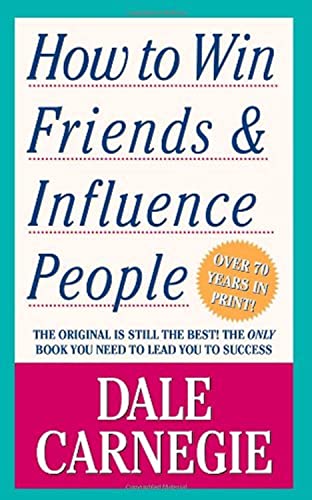
How to Win Friends and Influence People
Dale Carnegie, 1913
850 ratings

The Art of Public Speaking
Dale Carnegie, 1915
7 ratings
§ About Dale Carnegie's books
- Books on SansFiction
- 2
- Published
- 1913–1915
- Average rating
- 3.9 / 5 across 857 ratings
- Genres
- Business Communication, General, Interpersonal Relations, Philosophy
Start here: How to Win Friends and Influence People (1913)
Simple and timeless tools for success and happiness For more than eighty years, millions of people from Warren Buffett to Oprah Winfrey have benefited from the remarkable wisdom of Dale Carnegie.
Common questions about Dale Carnegie
- Who is Dale Carnegie?
- Born into poverty on a farm in Maryville, Missouri, on November 24, 1888, Carnegie grew up in rural Missouri before his family moved to Belton. He attended the State Normal School in Warrensburg, Missouri—now the University of Central Missouri—where he commuted from home because he could not afford room and board.
- What is Dale Carnegie best known for?
- Dale Carnegie is best known for How to Win Friends and Influence People, published in 1913 with 850 ratings and a 3.9 average. It is the most-rated of Dale Carnegie's books on SansFiction.
- How many books has Dale Carnegie written?
- SansFiction lists 2 books by Dale Carnegie, published between 1913 and 1915. The most popular are How to Win Friends and Influence People and The Art of Public Speaking.
- Which Dale Carnegie book should I read first?
- How to Win Friends and Influence People is the usual place to start: it is Dale Carnegie's most-rated book here, with a 3.9 average.
- What genres does Dale Carnegie write?
- Dale Carnegie's books on SansFiction are tagged Business Communication, General, Interpersonal Relations and Philosophy.
Explore: Business Communication · General · Interpersonal Relations · Philosophy