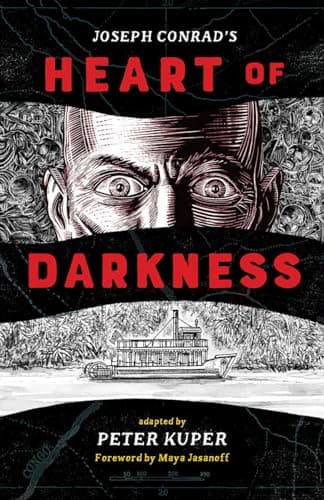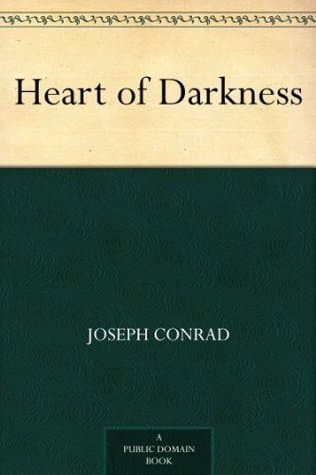
Heart of Darkness (1899) is a novella by Polish-English novelist Joseph Conrad, about a voyage up the Congo River into the Congo Free State, in the heart of Africa, by the story's narrator Charles Marlow. Marlow tells his story to friends aboard a boat anchored on the River Thames. Joseph Conrad is one of the greatest English writers, and Heart of Darkness is considered his best. His readers are brought to face our psychological selves to answer, ‘Who is the true savage?’. Originally published in 1902, Heart of Darkness remains one of this century’s most enduring works of fiction. Written several years after Joseph Conrad’s grueling sojourn in the Belgian Congo, the novel is a complex meditation on colonialism, evil, and the thin line between civilization and barbarity.
Add to your library to track progress and write reviews
Find Heart of Darkness Joseph Conrad in PDF, EPUB, ebook, audiobook, print, or library editions.

5 books in catalog
Stories and novels set at sea or in distant colonial outposts provided a canvas for examining moral endurance, political isolation, and the complex demands of duty and honor. Joseph Conrad drew deeply from his own maritime career to forge fiction that scrutinized European imperialism and psychological conflict under extreme pressure, most famously in his work Heart of Darkness.
Born Józef Teodor Konrad Korzeniowski in 1857 in Berdychiv, the future writer was raised in a Polish noble family. After spending his youth in Poland and France, he went to sea as a young man and spent years working aboard merchant vessels, eventually rising from apprentice to captain. During his maritime service, he learned English in his twenties, speaking it with a pronounced foreign accent throughout his life. He became a naturalized British subject in 1886. Conrad officially adopted his pen name in April 1895 upon publishing his first novel, Almayer's Folly, transitioning from a life at sea to full-time literary work in England.
Conrad's fiction often explores the psychological trials of individuals confronted by isolation, severe physical hardships, and moral dilemmas. Drawing on his maritime voyages and travels to places such as the Congo Free State, his narrative technique frequently employs complex framing devices, shifting timelines, and nuanced moral ambiguity rather than straightforward adventure storytelling. His prose brought a non-English sensibility into English literature, probing the darker consequences of imperialism and testing human character against strict codes of duty, personal honor, and internal weakness.