
§Author· 5 books
Joseph Conrad
Also known as Józef Teodor Konrad Korzeniowski, Józef Teodor Conrad Korzeniowski
Stories and novels set at sea or in distant colonial outposts provided a canvas for examining moral endurance, political isolation, and the complex demands of duty and honor. Joseph Conrad drew deeply from his own maritime career to forge fiction that scrutinized European imperialism and psychological conflict under extreme pressure, most famously in his work Heart of Darkness.
Career & Background
Born Józef Teodor Konrad Korzeniowski in 1857 in Berdychiv, the future writer was raised in a Polish noble family. After spending his youth in Poland and France, he went to sea as a young man and spent years working aboard merchant vessels, eventually rising from apprentice to captain. During his maritime service, he learned English in his twenties, speaking it with a pronounced foreign accent throughout his life. He became a naturalized British subject in 1886. Conrad officially adopted his pen name in April 1895 upon publishing his first novel, Almayer's Folly, transitioning from a life at sea to full-time literary work in England.
Writing Style & Themes
Conrad's fiction often explores the psychological trials of individuals confronted by isolation, severe physical hardships, and moral dilemmas. Drawing on his maritime voyages and travels to places such as the Congo Free State, his narrative technique frequently employs complex framing devices, shifting timelines, and nuanced moral ambiguity rather than straightforward adventure storytelling. His prose brought a non-English sensibility into English literature, probing the darker consequences of imperialism and testing human character against strict codes of duty, personal honor, and internal weakness.
Major Works
- Heart of Darkness — A novella reflecting Conrad's own journey up the Congo River, probing European imperialism and the moral decay of an ivory trader deep within the African interior.
- Lord Jim — A novel exploring guilt, redemption, and personal honor following a young British ship's officer who abandons a distressed vessel in a moment of panic.
- Nostromo — A political narrative set in the fictional South American republic of Costaguana, analyzing greed, political revolution, and foreign economic interests.
- The Secret Agent — A dark political satire set in London that examines espionage, terrorism, and political extremism through the lives of an agent provocateur and his family.
- The Shadow-Line — A short novel based on Conrad's first command as a sea captain, depicting a young officer navigating a fever-stricken ship through treacherous waters.
§All Books
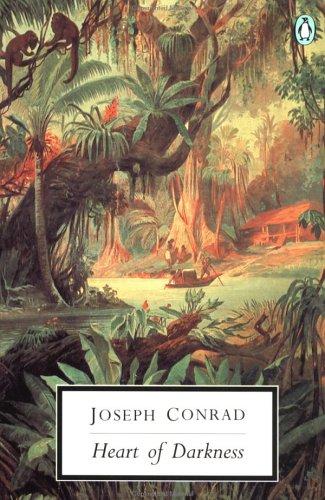
Heart of Darkness
Joseph Conrad, 1899
849 ratings

Lord Jim
Joseph Conrad, 1899
36 ratings

The Secret Agent
Joseph Conrad, 1895
34 ratings

Nostromo
Joseph Conrad, 1900
13 ratings

The Shadow-Line
Joseph Conrad, 1916
5 ratings
§ About Joseph Conrad's books
- Books on SansFiction
- 5
- Published
- 1895–1916
- Average rating
- 3.3 / 5 across 937 ratings
- Genres
- Literature, General, Adventure, Classics
Start here: Heart of Darkness (1899)
Heart of Darkness (1899) is a novella by Polish-English novelist Joseph Conrad, about a voyage up the Congo River into the Congo Free State, in the heart of Africa, by the story's narrator Charles Marlow. Marlow tells his story to friends aboard a boat anchored on the River Thames.
Common questions about Joseph Conrad
- Who is Joseph Conrad?
- Born Józef Teodor Konrad Korzeniowski in 1857 in Berdychiv, the future writer was raised in a Polish noble family. After spending his youth in Poland and France, he went to sea as a young man and spent years working aboard merchant vessels, eventually rising from apprentice to captain. During his maritime service, he learned English in his twenties, speaking it with a pronounced foreign accent throughout his life.
- What is Joseph Conrad best known for?
- Joseph Conrad is best known for Heart of Darkness, published in 1899 with 849 ratings and a 3.3 average. It is the most-rated of Joseph Conrad's books on SansFiction.
- How many books has Joseph Conrad written?
- SansFiction lists 5 books by Joseph Conrad, published between 1895 and 1916. The most popular are Heart of Darkness, Lord Jim, The Secret Agent, Nostromo and The Shadow-Line.
- Which Joseph Conrad book should I read first?
- Heart of Darkness is the usual place to start: it is Joseph Conrad's most-rated book here, with a 3.3 average.
- What genres does Joseph Conrad write?
- Joseph Conrad's books on SansFiction are tagged Literature, General, Adventure and Classics.
Explore: Literature · General · Adventure · Classics