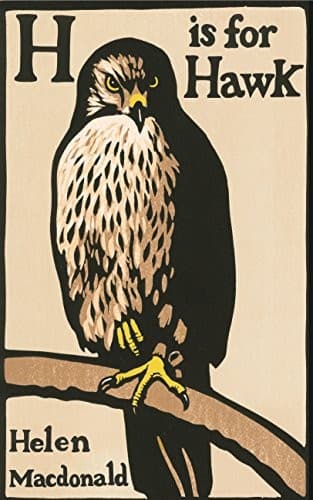
When Helen Macdonald's father died suddenly on a London street, she was devastated. An experienced falconer, Helen had never before been tempted to train one of the most vicious predators, the goshawk, but in her grief, she saw that the goshawk's fierce and feral temperament mirrored her own. Resolving to purchase and raise the deadly creature as a means to cope with her loss, she adopted Mabel, and turned to the guidance of The Once and Future King author T.H. White's chronicle The Goshawk to begin her challenging endeavor. Projecting herself "in the hawk's wild mind to tame her" tested the limits of Macdonald's humanity and changed her life.

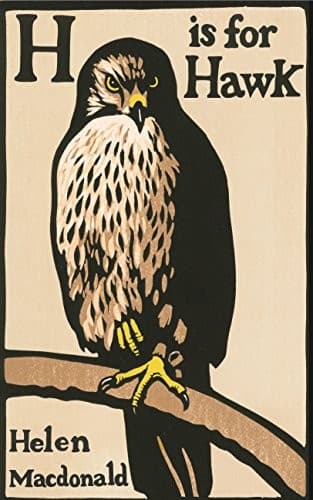
When Helen Macdonald's father died suddenly on a London street, she was devastated. An experienced falconer, Helen had never before been tempted to train one of the most vicious predators, the goshawk, but in her grief, she saw that the goshawk's fierce and feral temperament mirrored her own. Resolving to purchase and raise the deadly creature as a means to cope with her loss, she adopted Mabel, and turned to the guidance of The Once and Future King author T.H. White's chronicle The Goshawk to begin her challenging endeavor. Projecting herself "in the hawk's wild mind to tame her" tested the limits of Macdonald's humanity and changed her life.
Add to your library to track progress and write reviews
Find H is for Hawk Helen Macdonald in PDF, EPUB, ebook, audiobook, print, or library editions.
1 books in catalog
Blending natural history, personal memoir, and acute observations of the wild world, contemporary English nature writing often explores how human emotion intersects with animal lives. Helen Macdonald became prominent in this field with the memoir H is for Hawk, which chronicles the process of training a goshawk named Mabel while coming to terms with sudden grief following her father's death.
Born in Surrey in 1970 to photojournalist Alisdair Macdonald and a local newspaper journalist mother, Macdonald developed a keen interest in bird watching as a child while living in Tekels Park. Macdonald studied English at New Hall, Cambridge, graduating in 1992, and subsequently worked in raptor research and conservation management across Wales and the Gulf States as a professional falconer.
Macdonald later held a Research Fellowship at Jesus College, Cambridge, and became an affiliated research scholar in the Department of History and Philosophy of Science at the University of Cambridge. In addition to academic positions and publishing poetry collections such as Shaler's Fish, Macdonald has written and presented radio and television broadcasts for the BBC and contributed regularly to publications such as The New York Times Magazine.
Macdonald's work frequently examines the complex intersections between natural history, human grief, personal isolation, and broader ecological crises. By combining first-hand falconry expertise with historical scholarship and poetic prose, Macdonald reflects on how close observation of non-human creatures can illuminate mortal loss, emotional recovery, and humanity's evolving relationship with the environment.
1 books in catalog
Blending natural history, personal memoir, and acute observations of the wild world, contemporary English nature writing often explores how human emotion intersects with animal lives. Helen Macdonald became prominent in this field with the memoir H is for Hawk, which chronicles the process of training a goshawk named Mabel while coming to terms with sudden grief following her father's death.
Born in Surrey in 1970 to photojournalist Alisdair Macdonald and a local newspaper journalist mother, Macdonald developed a keen interest in bird watching as a child while living in Tekels Park. Macdonald studied English at New Hall, Cambridge, graduating in 1992, and subsequently worked in raptor research and conservation management across Wales and the Gulf States as a professional falconer.
Macdonald later held a Research Fellowship at Jesus College, Cambridge, and became an affiliated research scholar in the Department of History and Philosophy of Science at the University of Cambridge. In addition to academic positions and publishing poetry collections such as Shaler's Fish, Macdonald has written and presented radio and television broadcasts for the BBC and contributed regularly to publications such as The New York Times Magazine.
Macdonald's work frequently examines the complex intersections between natural history, human grief, personal isolation, and broader ecological crises. By combining first-hand falconry expertise with historical scholarship and poetic prose, Macdonald reflects on how close observation of non-human creatures can illuminate mortal loss, emotional recovery, and humanity's evolving relationship with the environment.