
§Author· 1 book
Helen Macdonald
Blending natural history, personal memoir, and acute observations of the wild world, contemporary English nature writing often explores how human emotion intersects with animal lives. Helen Macdonald became prominent in this field with the memoir H is for Hawk, which chronicles the process of training a goshawk named Mabel while coming to terms with sudden grief following her father's death.
Career & Background
Born in Surrey in 1970 to photojournalist Alisdair Macdonald and a local newspaper journalist mother, Macdonald developed a keen interest in bird watching as a child while living in Tekels Park. Macdonald studied English at New Hall, Cambridge, graduating in 1992, and subsequently worked in raptor research and conservation management across Wales and the Gulf States as a professional falconer.
Macdonald later held a Research Fellowship at Jesus College, Cambridge, and became an affiliated research scholar in the Department of History and Philosophy of Science at the University of Cambridge. In addition to academic positions and publishing poetry collections such as Shaler's Fish, Macdonald has written and presented radio and television broadcasts for the BBC and contributed regularly to publications such as The New York Times Magazine.
Writing Style & Themes
Macdonald's work frequently examines the complex intersections between natural history, human grief, personal isolation, and broader ecological crises. By combining first-hand falconry expertise with historical scholarship and poetic prose, Macdonald reflects on how close observation of non-human creatures can illuminate mortal loss, emotional recovery, and humanity's evolving relationship with the environment.
Major Works
- H is for Hawk — Published in 2014, this award-winning memoir details Macdonald's experience training a goshawk named Mabel while navigating grief after her father's death. It won the 2014 Samuel Johnson Prize, the Costa Book Award, and the 2016 Prix du Meilleur Livre Étranger.
- Falcon — A cultural and natural history that explores the long relationship between humans and falcons across literature, art, and conservation history.
- Vesper Flights — A 2020 essay collection gathering pieces on bird migration, natural phenomena, climate emergency, and human experiences of isolation and memory.
- Shaler's Fish — A poetry collection showcasing Macdonald's early literary engagement with natural landscapes and lyric form.
§All Books
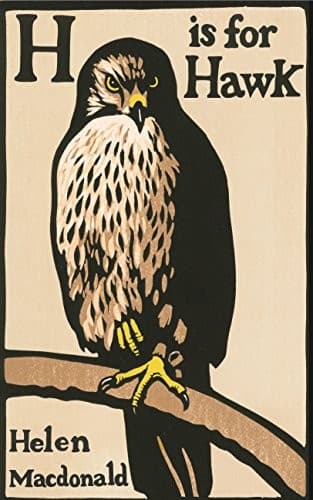
H is for Hawk
Helen Macdonald, 2008
127 ratings