SSansFiction
The libraryCollectionsJournalStatsFor authors
Sign inJoin now
Sansfiction,

A digital library for books. Made by readers, for readers.

v 2.0 · 2026
The library
  • Discover
  • Collections
  • Book tracker
  • Journal
  • Stats
For authors
  • SF Links
  • Analytics
  • How it works
  • FAQ
Elsewhere
  • X / @sansfiction
  • Privacy
  • Terms
  • Contact
© 2026 SansFiction · Digital · GlobalA quiet room for your reading life.
The libraryCollectionsJournalStatsFor authors
Sign inJoin now →
Navigation
Library
Bookshelf
Journal
Discover
Collections
Tierlists
Stats
Profile
Author Page
Link Builder
Account
Sign in
S
G
BookschildrenGreat Expectations: A Kaplan Vocabulary-Building Classic for Young Readers
Cover of Great Expectations: A Kaplan Vocabulary-Building Classic for Young Readers by Charles Dickens
Graffex

Great Expectations: A Kaplan Vocabulary-Building Classic for Young Readers,

by Charles Dickens, David Trotter, Charlotte Mitchell

Ask AI
Rating3.5/ 5
Ratings657
Pages512
Reading Hours11h
Published2006
LanguageEnglish

§Synopsis

01

In Great Expectations, Charles Dickens chronicles the life of Pip, an ordinary country boy led astray by the trappings of London society as well as his desire to improve himself and become a gentleman. Along the way, Pip meets the disappointed Miss Havisham and her beautiful but unattainable ward, Estella, with whom he falls deeply in love. Beloved by generations of readers, Great Expectations was originally published in serial form from December 1860 to August 1861.

§Our take

Great Expectations is Dickens at his most controlled: a first-person story told by an older Pip looking back on the boy who wanted too badly to become a gentleman. The comedy is sharp, especially early on, but the novel's real subject is shame: what Pip learns to feel about the people who raised him, and what he later learns to feel about himself. Critics have long admired its tight three-stage structure, and it is shorter and more focused than Dickens's big panoramic novels, which makes it a common first Dickens.

The ending is its own argument. Dickens rewrote his original, bleaker conclusion after advice from Edward Bulwer-Lytton, and readers and scholars still debate which version the book deserves. Read it for Pip's voice, for Miss Havisham and Joe Gargery, and for a story that makes the reader judge ambition and gentility by what they cost.

§Themes

Class and gentility
The book questions what makes a gentleman, showing money and education as insufficient through characters like Pumblechook and Mrs Pocket.
Money and its source
Pip's new fortune raises the question of whether where money comes from matters more than what it buys.
Moral pilgrimage
Guilt and conscience slowly turn Pip's ambition into self-knowledge, with imagery of mist, chains and Satis House marking the way.
Doubling
Orlick is read as Pip's dark double, and Bentley Drummle as a double of that double, giving secondary villains thematic weight beyond plot mechanics.

§How it was received

Early reviewers were mixed, with The Times counting it among Dickens's happiest works while Margaret Oliphant in Blackwood's gave a harsh 1862 review. Twentieth‑century critics split on tone, some admiring its optimism and others stressing its pessimism. Today it ranks fourth on the BBC's 100 greatest British novels.

§Read it if

  • You want a shorter, tightly built Dickens with a sharp first-person voice and memorable characters
  • You are drawn to stories about class, ambition, guilt and what gentility really costs
  • You enjoy a long-running argument over which of two endings a novel deserves

§Skip it if

  • Dense Victorian prose and unexplained period detail are likely to stall you early.
  • You want fast, modern pacing; some minor characters also verge on caricature.

§Before you start

Reading experience
The Victorian prose is the main hurdle for new readers, and some lean on chapter summaries early on; the three-stage structure keeps the story moving once Pip reaches London.
Content notes
Little on‑page violence; a past attack on Mrs Joe is learned of afterwards; Characters smoke and drink in period‑appropriate ways; Portrays emotional cruelty toward a child and darker events including prison ships, drowning, fire, and attempted murder.

§Common questions

Is Great Expectations part of a series?
No. It's a standalone novel, though it has inspired many retellings and sequels from other authors.
Why are there two endings?
Dickens wrote the original bleak ending, then revised it after feedback from Bulwer‑Lytton, and the final sentence was later hedged in the 1868 edition.
Is it difficult for new readers?
Yes, the Victorian prose and historical background can feel demanding; many readers use chapter summaries to keep up.

§If you liked this

  • Jack Maggs by Peter Carey — A 1997 novel that retells the story from the convict's side, perfect if you're curious about Magwitch and the empire angle.
  • Mister Pip by Lloyd Jones — A modern novel in which Great Expectations is read aloud in a remote village school, showing the book's reach as a story‑within‑a‑story.
  • Havisham by Ronald Frame — Gives the novel's most famous recluse a backstory, for readers drawn to her.
  • Estella: Her Expectations by Sue Roe — A 1982 novel that revisits the story from Estella's point of view, answering the original's treatment of women.
Sources
  • Wikipedia
  • LitCharts
  • Common Sense Media
  • Project Gutenberg
  • The Victorian Web (Brown University course, 1996)
  • Crossref-it.info (study guide)
  • Penguin Books UK

Track this book

Add to your library to track progress and write reviews
§Genres
children1classics1comics1fiction1general1history1literature1
§Moods
adventurous1challenging1emotional1funny1informative1mysterious1reflective1
§Tags
#diverse characters1#loveable characters1#not diverse characters1#strong character development1

§About the Author

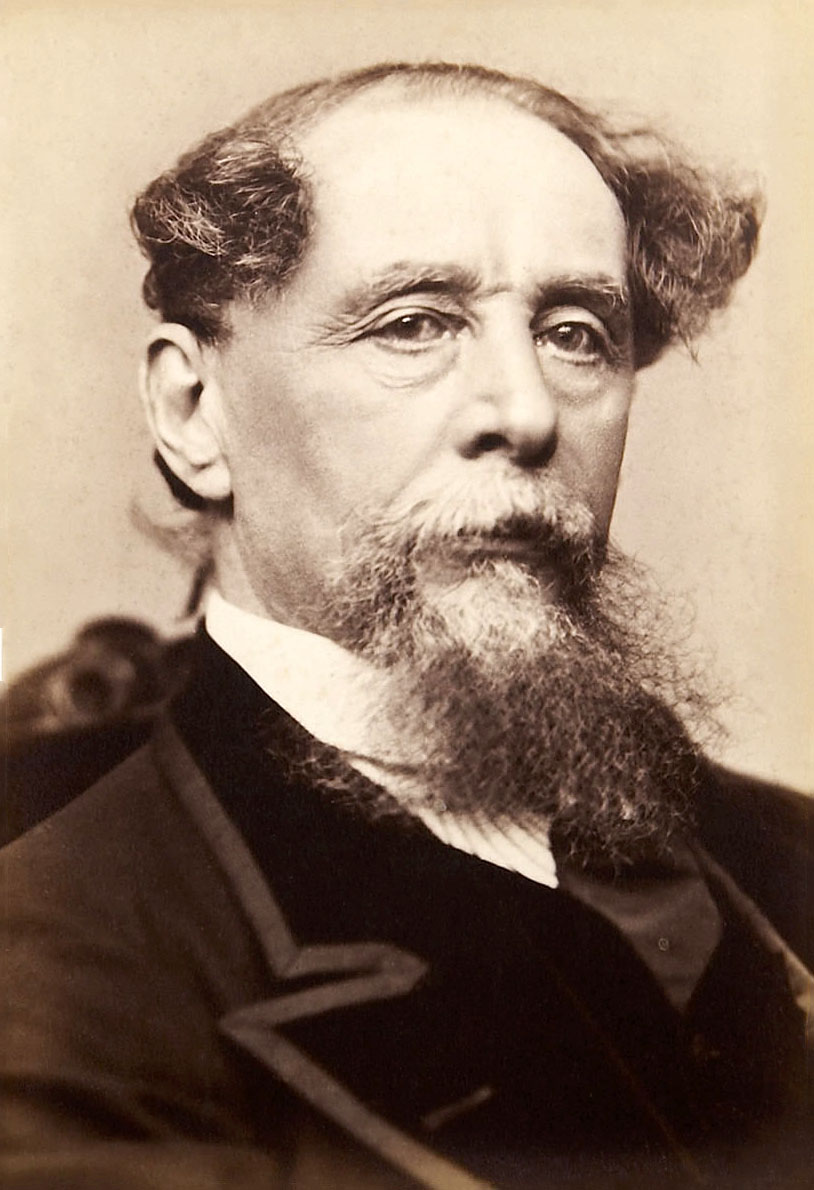
Charles Dickens
Charles Dickens

13 books in catalog

Victorian narrative fiction gained its most widespread public engagement through serialized novels depicting urban industrial life, institutional neglect, and personal redemption, exemplified by A Christmas Carol. Charles Dickens emerged during the nineteenth century as a central figure in English literature, publishing fourteen major novels along with extensive journalistic reports, essays, and seasonal short stories that have remained continuously in print since their initial publication.

His fiction transformed popular entertainment into a platform for social critique, combining vivid characterization with detailed observations of contemporary London society.

Career & Background

Born in Portsmouth on February 7, 1812, to John and Elizabeth Dickens, Charles John Huffam Dickens experienced financial instability early in life. In 1824, his father was imprisoned for debt in London's Marshalsea Prison, forcing the twelve-year-old Dickens to work at Warren's Blacking Factory. This traumatic period of hardship shaped his perspective on poverty and institutional injustice, directly influencing novels such as David Copperfield, in which his father served as the model for Mr. Micawber.

Dickens began his professional writing career as a journalist and court reporter before achieving major literary success with serialized fiction like The Pickwick Papers in 1837 and Oliver Twist in 1838. In addition to writing novels, he worked extensively as an editor and commentator, using periodicals to publish topical articles on political and social conditions across Victorian Britain until his death on June 9, 1870.

Writing Style & Themes

Dickens's narrative technique relies on acute social realism, satirical commentary, and memorable characterizations to critique contemporary institutions. A central theme running throughout his work is social reform, specifically targeting debtor prisons, child labor, legal corruption, and the indifference of privileged classes. Through works such as Bleak House and Hard Times, he combined outraged social commentary with sprawling, interconnected plots that reflected the complexities of Victorian life.

Major Works

  • A Christmas Carol — Published in 1843, this novella addresses greed, isolation, and moral redemption through a seasonal ghost story that critiques economic heartlessness.
  • Oliver Twist — Published in 1838, this novel highlights orphanhood, criminal underworlds, and the harsh realities of the workhouse system in Victorian London.
  • David Copperfield — Published in 1850, this semi-autobiographical novel draws on Dickens's early personal hardships and his father's imprisonment for debt.
  • Bleak House — Published in 1853, this novel satirizes the English legal system through the protracted Court of Chancery lawsuit of Jarndyce and Jarndyce.
  • Great Expectations — Published in 1861, this coming-of-age story examines ambition, class mobility, and personal integrity through the life of the orphan Pip.
  • A Tale of Two Cities — A historical novel set in London and Paris during the French Revolution, depicting political upheaval, sacrifice, and resurrection.
  • Hard Times — A novel set in an industrial town that critiques utilitarian philosophy, mechanized labor, and rigid educational systems.
  • Little Dorrit — A novel exploring the crippling effects of debt and institutional dysfunction, centered around the Marshalsea debtor's prison.
  • Nicholas Nickleby — A story following a young man's struggle to support his family while exposing cruel conditions in private boarding schools.
  • Our Mutual Friend — Dickens's last completed novel, examining the corrupting influence of wealth and social ambition along the River Thames.
  • Martin Chuzzlewit — A satire examining selfishness and hypocrisy, featuring observations inspired by Dickens's travels to North America.

§Featured Series

Graffex

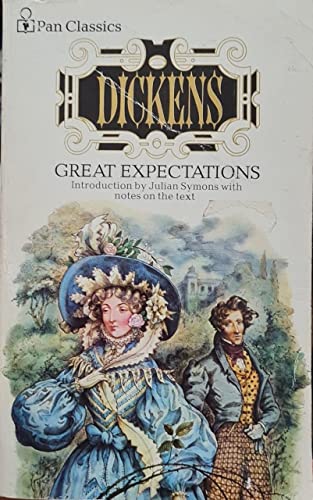
Cover of Great Expectations by Charles Dickens

Great Expectations

Charles Dickens, 1860

§Other Editions

Showing 2 of 202 editions
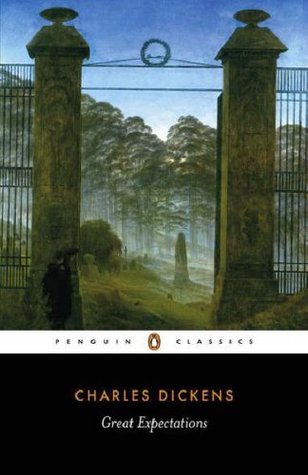
Cover of Great Expectations

Great Expectations

engPaperback
Penguin Books20029780141439563
Amazon
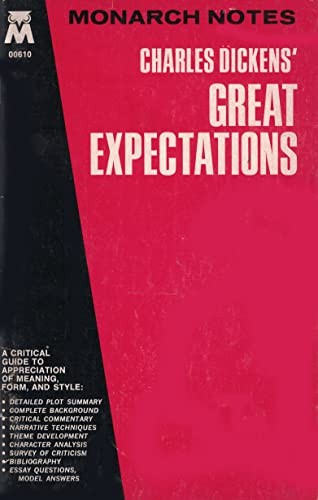
Cover of Charles Dicken's Great Expectations

Charles Dicken's Great Expectations

engPaperback
Monarch Notes19649780671006105
§Genres
children1classics1comics1fiction1general1history1literature1
§Moods
adventurous1challenging1emotional1funny1informative1mysterious1reflective1
§Tags
#diverse characters1#loveable characters1#not diverse characters1#strong character development1

Metadata

ISBN-139780743283410
ISBN-100743283414
ASIN0141439564

Editions and availability

Find Great Expectations: A Kaplan Vocabulary-Building Classic for Young Readers Charles Dickens in PDF, EPUB, ebook, audiobook, print, or library editions.

View on Amazon
Bookshop.orgGoogle Play BooksBarnes & NobleOpen Library

Featured In Lists

Book cover from this collectionBook cover from this collectionBook cover from this collectionBook cover from this collection
Book cover from this collection

100 Must Read Classics

99 books
Book cover from this collectionBook cover from this collectionBook cover from this collectionBook cover from this collection
Book cover from this collection

Gilmore Girls Reading List 🍂

407 books
Book cover from this collectionBook cover from this collectionBook cover from this collectionBook cover from this collection
Book cover from this collection

100 Greatest Books

98 books
Book cover from this collectionBook cover from this collectionBook cover from this collectionBook cover from this collection
Book cover from this collection

200-ish Books to Read Before You Die

36 books