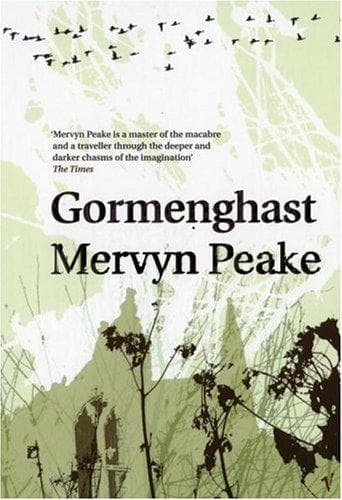
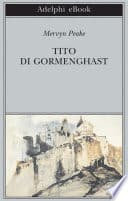
"Titus Groan is seven, Lord and heir to the crumbling castle Gormenghast. A gothic labyrinth of roofs and turrets, cloisters and corridors, stairwells and dungeons, it is also the cobwebbed kingdom of Byzantine government and age-old rituals, a world primed to implode beneath the weight of centuries of intrigue, treachery, and death. Steerpike, who began his climb across the roofs when Titus was born, is now ascending the spiral stairacse to the heart of the castle, and in his wake lie imprisonment, manipulation, and murder"--P. [4] of cover.
"Titus Groan is seven, Lord and heir to the crumbling castle Gormenghast. A gothic labyrinth of roofs and turrets, cloisters and corridors, stairwells and dungeons, it is also the cobwebbed kingdom of Byzantine government and age-old rituals, a world primed to implode beneath the weight of centuries of intrigue, treachery, and death. Steerpike, who began his climb across the roofs when Titus was born, is now ascending the spiral stairacse to the heart of the castle, and in his wake lie imprisonment, manipulation, and murder"--P. [4] of cover.
Add to your library to track progress and write reviews
Add to your library to track progress and write reviews
Find Gormenghast Mervyn Peake in PDF, EPUB, ebook, audiobook, print, or library editions.
Find Gormenghast Mervyn Peake in PDF, EPUB, ebook, audiobook, print, or library editions.
2 books in catalog
The immersive, labyrinthine setting of Gormenghast Castle remains one of the most singular creations in twentieth-century speculative literature, defining a gothic fantasy landscape driven by vivid characterization and baroque atmosphere. Mervyn Peake established this intricate world through his renowned series of novels, offering a surreal contrast to the high-fantasy mythologies of his contemporaries.
Born on July 9, 1911, in Kuling, Kiang-Hsi Province, China, Mervyn Laurence Peake was the son of English Congregationalist missionary parents. He spent his early childhood in Tientsin before his family returned to England in 1923, settling in Wallington, Surrey. Peake pursued artistic training at the Croydon School of Art and the Royal Academy of Arts, later exhibiting his paintings and drawings while teaching at the Westminster School of Art. His visual arts background directly shaped his literary production, allowing him to render scenes with dense painterly detail. During and after World War II, he published poetry, prose, and illustrated editions, though his work on the Gormenghast cycle became his primary literary undertaking. Severe illness curtailed his later creative output, leading to his death on November 17, 1968.
Peake's writing is characterized by intense visual description, grotesque character studies, and a meticulous attention to spatial environment. Rather than drawing upon ancient folklore or linguistic philology, his narrative sensibilities drew heavy inspiration from nineteenth-century authors such as Charles Dickens and Robert Louis Stevenson. His prose possesses a poetic density that blends surrealism, dark humor, and gothic melancholy. Themes of architectural decay, rigid social ritual, institutional inertia, and personal alienation recur throughout his narrative landscapes, where sprawling stone structures mirror the psychological state of their inhabitants.
2 books in catalog
The immersive, labyrinthine setting of Gormenghast Castle remains one of the most singular creations in twentieth-century speculative literature, defining a gothic fantasy landscape driven by vivid characterization and baroque atmosphere. Mervyn Peake established this intricate world through his renowned series of novels, offering a surreal contrast to the high-fantasy mythologies of his contemporaries.
Born on July 9, 1911, in Kuling, Kiang-Hsi Province, China, Mervyn Laurence Peake was the son of English Congregationalist missionary parents. He spent his early childhood in Tientsin before his family returned to England in 1923, settling in Wallington, Surrey. Peake pursued artistic training at the Croydon School of Art and the Royal Academy of Arts, later exhibiting his paintings and drawings while teaching at the Westminster School of Art. His visual arts background directly shaped his literary production, allowing him to render scenes with dense painterly detail. During and after World War II, he published poetry, prose, and illustrated editions, though his work on the Gormenghast cycle became his primary literary undertaking. Severe illness curtailed his later creative output, leading to his death on November 17, 1968.
Peake's writing is characterized by intense visual description, grotesque character studies, and a meticulous attention to spatial environment. Rather than drawing upon ancient folklore or linguistic philology, his narrative sensibilities drew heavy inspiration from nineteenth-century authors such as Charles Dickens and Robert Louis Stevenson. His prose possesses a poetic density that blends surrealism, dark humor, and gothic melancholy. Themes of architectural decay, rigid social ritual, institutional inertia, and personal alienation recur throughout his narrative landscapes, where sprawling stone structures mirror the psychological state of their inhabitants.
Gormenghast
Gormenghast