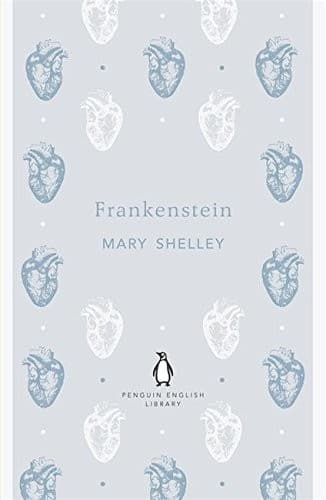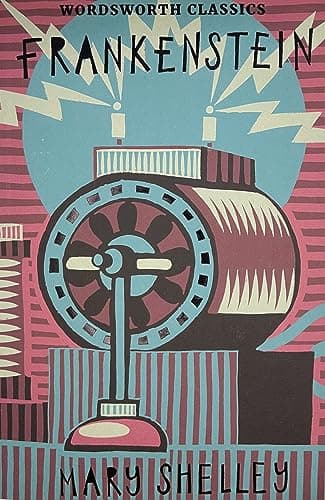
"Mary Shelley (then Godwin) and Percy Bysshe Shelley were visiting their friend Lord Byron in Geneva one rainy summer. With the weather against them, they decided to spend their time writing ghost stories for each other. Frankenstein is Mary Shelley’s submission to their contest, later published anonymously in 1818.
Victor Frankenstein, a strange but brilliant scientist, discovers a method of imparting life to inanimate matter. The Monster is thus born: a hideous, 8-foot-tall creature of muscle, speed, and intellect. Frankenstein’s rejection of his appalling creation sends it into a spiral of despair, and Frankenstein’s life is never the same."-- Provided by Amazon
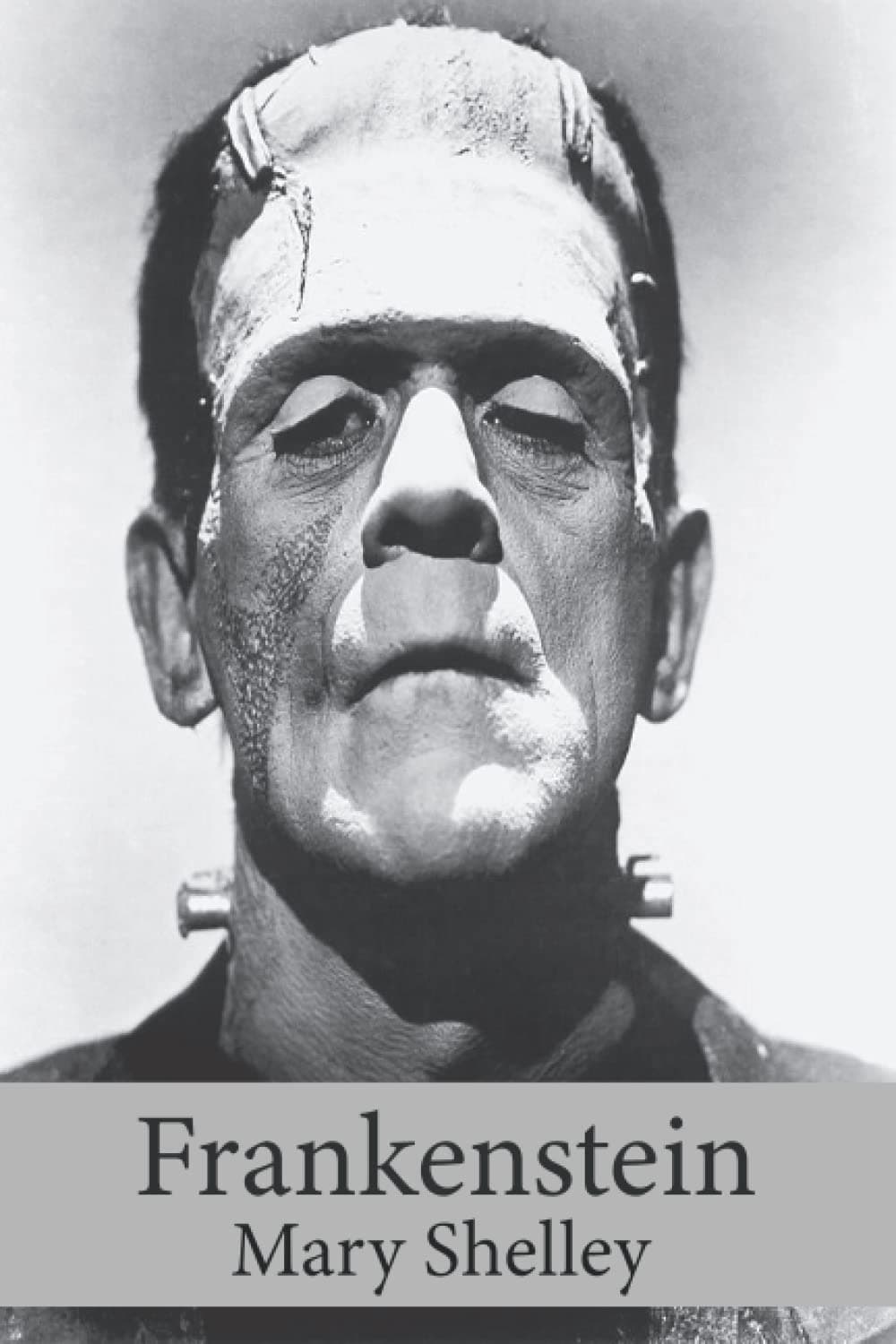
If you only know the movie, the creature will surprise you. Shelley's is hideous, but he's also articulate and well read, and the book lets him talk instead of letting Victor describe him. Once he speaks, you have to weigh his word against his maker's, and "what does a creator owe what he makes" stops being a scare and becomes an argument. The silent stage monster dates from an 1823 play, Presumption, and the bolt-necked figure and lab electricity come from the 1931 film; the novel never says how life is given. Study guides split on what the story condemns: GradeSaver reads a case against a creator who dodges responsibility, other critics a broader warning about ambition itself. Expect a slow, talky Arctic opening and ornate prose.
Early reviews split. Walter Scott admired the poetic imagination but doubted how the creature learns language, and John Wilson Croker in the Quarterly Review dismissed it outright. Some early readers assumed Percy Shelley wrote it because of his preface. Popular success outran the critics when the 1823 stage hit Presumption brought a second printing with Shelley's name on the title page, and the book's critical standing rose from the mid-twentieth century.
Add to your library to track progress and write reviews
Find Frankenstein, or, The modern Prometheus Mary Shelley in PDF, EPUB, ebook, audiobook, print, or library editions.

2 books in catalog
The 1818 publication of Frankenstein established a foundational narrative of creation, moral responsibility, and technological hubris that combined Gothic fiction with early science fiction. Written by Mary Shelley when she was eighteen years old, the novel examines the tragic consequences of scientist Victor Frankenstein animating a sentient creature from human body parts.
Born in London on August 30, 1797, Mary Wollstonecraft Godwin was raised by her father, political philosopher William Godwin, following the death of her mother, feminist advocate Mary Wollstonecraft, shortly after childbirth. Growing up in an unconventional household filled with intellectual figures and extensive library collections, she cultivated a commitment to literature and social theory from an early age. In 1814, she eloped with the Romantic poet and philosopher Percy Bysshe Shelley, whom she later married. Over her life, she worked across multiple genres as a novelist, short story writer, dramatist, essayist, biographer, and travel writer. Following her husband's death, she devoted significant effort to editing, promoting, and publishing his collected works alongside her own creative output.
Shelley blended Gothic narrative techniques with modern scientific knowledge and philosophical inquiry, focusing on themes of social isolation, parental responsibility, and the ethical limits of intellectual ambition. Her prose frequently investigates the human condition through complex narrative frames, contrasting radical political philosophy with emotional vulnerability. In addition to horror and speculative fiction, her broader bibliography includes historiographical novels, biographical sketches, and travel books that reflect her lifelong interest in Romanticism and social reform.