§Synopsis
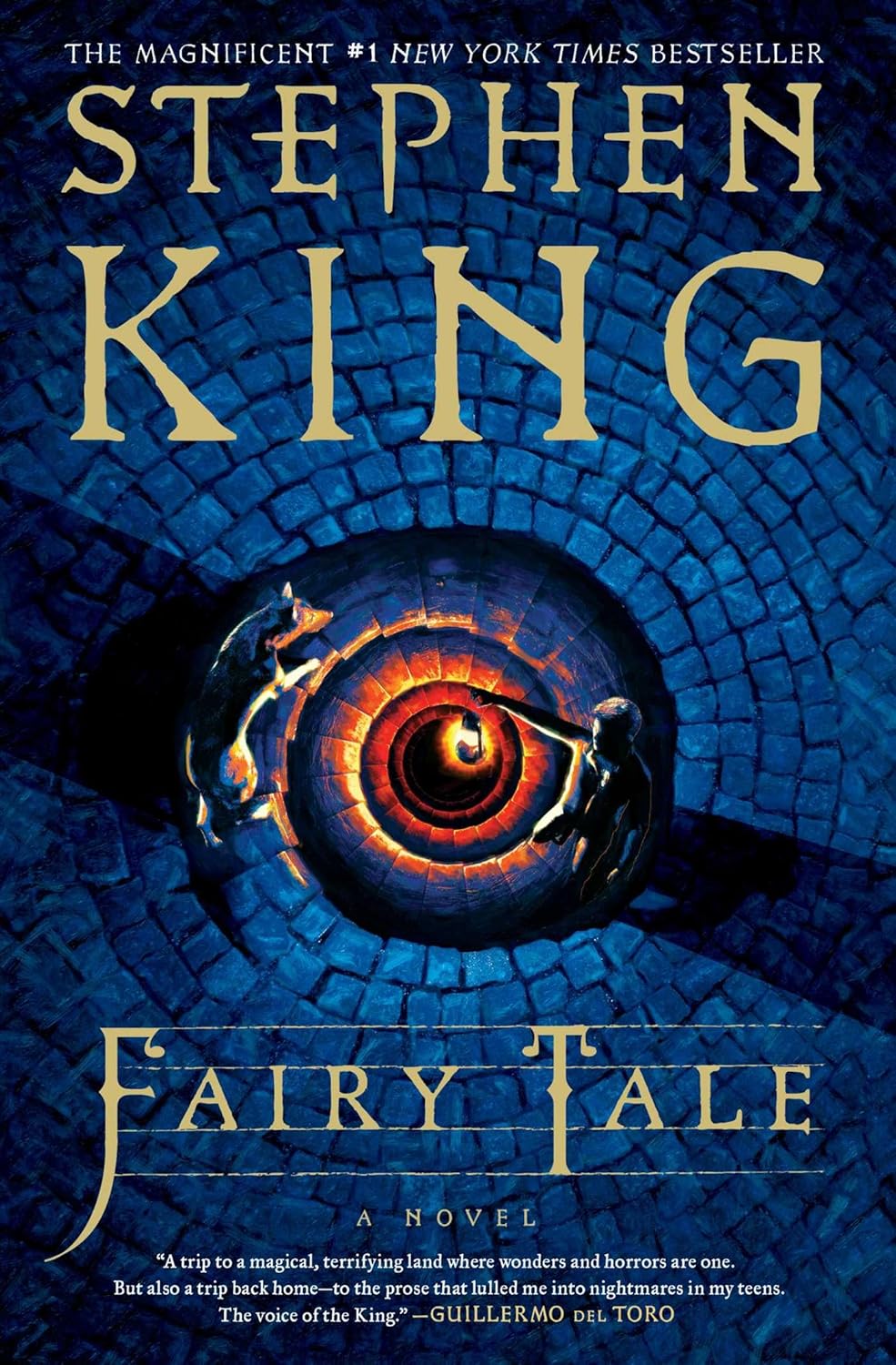
01Charlie Reade is a young man governed by a silent, childhood pact. After a hit-and-run accident claimed his mother and sent his father into a spiral of alcoholism, Charlie made a desperate bargain with a higher power: he promised to be a "good kid" if his father found sobriety. This internal moral accounting defines his adolescence, leading him to become a standout athlete and student who harbors a secret sense of debt. When he hears the frantic baying of a dog from a reclusive neighbor’s yard, his ingrained need to settle his cosmic tab compels him to climb the hill toward the "Psycho House" of Howard Bowditch.
What begins as a grounded story of neighborhood loyalty and the bond between a boy and an aging German Shepherd named Radar soon shifts into the realm of the fantastic. Charlie discovers that the eccentric Mr. Bowditch has spent decades guarding a secret located inside a locked backyard shed. Beneath the floorboards lies a portal to Empis, a parallel world currently suffering under a literal and figurative grey veil. Driven by the hope of saving the dog he has grown to love, Charlie enters this decaying realm, only to find himself entangled in a prophecy he is ill-prepared to fulfill.
The Architecture of a Decaying Realm
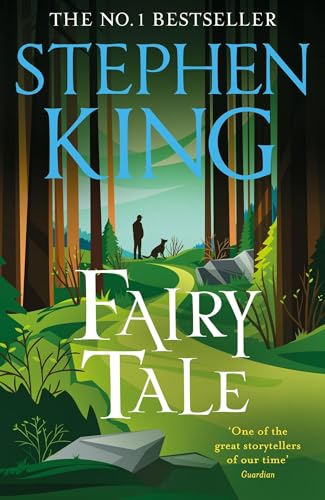
The world-building in this narrative functions through "dream logic" underpinned by a gritty, physical reality. Empis is not a shimmering fantasy landscape; it is a world in a state of advanced entropy. The atmosphere is defined by a "grey sickness"—a curse that has physically disfigured the population and sapped the vibrancy from the environment. King establishes specific rules for this space: the passage of time operates differently than on Earth, and the celestial alignment features two moons, one of which appears to be "bleeding." This setting subverts the typical escapist tropes of portal fantasy by presenting a world that is haunting and claustrophobic, where the remnants of a once-grand civilization—overturned gargoyle heads, smashed statues, and glass towers—serve as monuments to a lost age.
The Duality of the "Good Kid"
Charlie Reade’s character development is anchored in the concept of the "dark well." While he is positioned as a hero, his internal monologue reveals a teenager grappling with resentment and a capacity for violence. His relationship with Howard Bowditch serves as a mirror; both are men with secrets and heavy consciences. The bond with Radar acts as the story's emotional engine, providing the moral justification for Charlie to risk his life. Rather than a purely altruistic hero, Charlie is a protagonist motivated by a specific kind of guilt, struggling to reconcile his "good kid" persona with the darker impulses he believes reside within him. This internal conflict sets the stage for a coming-of-age arc that focuses on the weight of responsibility rather than the thrill of adventure.
Subverting the Chosen One Archetype
The narrative utilizes the "Chosen One" trope but frames it through the lens of a classic folk tale. Charlie is identified by the denizens of Empis as a promised prince, yet the book questions the fairness and validity of such destinies. By leaning into motifs from Rumpelstiltskin, Jack and the Beanstalk, and The Goose Girl, the story explores the "old grammar" of fairy tales—stories that were originally dark, punitive, and morally complex. The trope of physical beauty equaling goodness is presented as a cultural standard within the world of Empis, which Charlie must navigate while questioning the morality of a world that judges its citizens by their scars. The stakes are presented not just as a battle for a throne, but as a struggle to maintain one's humanity when cast into a narrative that demands heroics.
§Our take
King’s dog-first quest is his own kind of fairy tale: part neighborhood fable, part portal adventure, and warmer in feeling than the usual King nightmare. Charlie’s loyalty to Radar and Howard Bowditch gives the opening a plain emotional force, while the shift into grey, decaying Empis can feel like a different book with different rules. Some readers love the change; others miss the grounded story once the chosen-one machinery takes over.
The craft is uneven, not broken. Diggit Magazine found the book warm and engaging but familiar, and the Michigan Daily’s criticism lands: disfigurement is used too readily as a shorthand for menace. Kirkus nevertheless saw classic King in a fable shape, and the first-person retrospect helps sell both the boy’s earnestness and the story’s strangeness.
§Themes
- The debt of being good
- Charlie’s silent bargain turns “good kid” into a private ledger of guilt and obligation.
- Loyalty crosses worlds
- Radar’s cry pulls Charlie toward Bowditch, Empis and a choice bigger than himself.
- Fairy tales with sharp teeth
- Promised princes, bargains and moral tests bring back the old pressure of folk stories.
- Beauty as moral judgment
- Empis treats physical beauty as evidence of goodness, leaving Charlie to question a morality that reads scars as danger.
- A realm losing its color
- The grey sickness drains color and vitality from Empis, while altered time and two moons mark it as a realm unlike home.
§How it was received
Kirkus gave it a starred review, calling it classic King in a fable shape: an everyday opening that turns into a strange underworld adventure, read partly as a response to pandemic-era anxiety. The New York Times reviewer found a solid episodic adventure with strong action and memorable encounters, while the Guardian reviewer found it thoroughly frightening. Reception was broadly positive but not uniform: Locus was enthusiastic about the sprawling, dog-driven quest, while Diggit Magazine found it warm and engaging but familiar and uneven.
§Read it if
- You want a portal fantasy driven by loyalty to an aging dog rather than a grand prophecy
- You like fairy-tale darkness with a hopeful streak and a hero forced to question inherited rules
- You don’t mind a long book in short chapters and can handle gladiator-style violence and body horror
§Skip it if
- You need the book to stay in one register. Fans divide over the jump from grounded opening to chosen-one adventure.
- You want full-throttle horror. This is warmer and fable-like, though it still has scary creatures and body horror.
§Before you start
- Reading experience
- Short, episodic chapters make the long book easy to enter, though the middle sags and the shift from grounded neighborhood story to chosen-one fantasy can feel abrupt.
- Reading order
- Standalone novel. No prior King reading is required; it shares a portal-story kinship with The Talisman and the Dark Tower books, but it is not a sequel or part of the Dark Tower sequence.
- Content notes
- A parent’s death, alcoholism and relapse risk; Animal peril and the decline of an aging dog; Imprisonment and gladiator-style violence in the secondary world; Scary creatures and body-horror elements; Physical disfigurement and scarring, used as a marker of menace.
§Common questions
- Is Fairy Tale based on old fairy tales?
- Yes, in spirit. King draws on motifs from Rumpelstiltskin, Jack and the Beanstalk and The Goose Girl, treating fairy tales as dark, punitive stories rather than harmless escapism.
- Is Fairy Tale part of a series?
- No. It’s a standalone novel with no required reading order.
- Is there a film or TV adaptation?
- Screen adaptations have been announced, but none has been released and the current status is unconfirmed.
§If you liked this
- The Lion, the Witch and the Wardrobe by C.S. Lewis — The closest comparison for the doorway: an ordinary world gives way to a fantasy realm governed by unfamiliar rules.
- The Talisman by Stephen King and Peter Straub — An earlier King-and-Straub portal story in which a boy crosses into a parallel world on a quest, making it the closest work already on the shelf.
- The Gunslinger by Stephen King — The first Dark Tower book, for readers who prefer King’s otherworlds on a larger, more elaborate scale.
- Lisey's Story by Stephen King — Another King novel built around passage into an otherworld, but with a more adult and psychological cast than this fable.
Track this book
Add to your library to track progress and write reviews