The expansive far-future space opera setting known as the Culture series redefined space opera by depicting a post-scarcity, technologically advanced galactic society. Scottish author Iain M. Banks introduced this celebrated interstellar universe in 1987, establishing a major body of speculative fiction alongside his mainstream literary novels written simply as Iain Banks. His double-track career produced 29 published books between 1984 and 2013, securing a prominent place in contemporary British literature.
Career & Background
Born Iain Menzies Banks on 16 February 1954 in Dunfermline, Fife, Scotland, he spent his early childhood in North Queensferry before moving to Gourock. He studied English literature, philosophy, and psychology at Stirling University, graduating in 1975. Banks achieved immediate public attention in 1984 with his debut novel The Wasp Factory. He subsequently adopted the middle initial M. (representing Menzies, his adopted middle name) when publishing science fiction, while continuing to write mainstream fiction as Iain Banks. Over a career spanning from 1984 until his death on 9 June 2013, he published 29 books across both genres. In 2008, The Times named Banks in their list of the 50 greatest British writers since 1945. His works have been adapted for theatre, radio, and television.
Writing Style & Themes
Banks was recognized for his narrative versatility, combining dark humor, moral complexity, and political depth across both mainstream fiction and science fiction. In his speculative works, particularly the Culture series, he explored the social and ethical dimensions of a utopian, post-scarcity society overseen by artificial superintelligences. His stories often examined power dynamics, personal identity, and existential conflict, blending high-concept space opera traditions with nuanced psychological characterization.
Major Works
- Consider Phlebas — Published in 1987 as the author's debut science fiction novel, Consider Phlebas introduced readers to the Culture universe through the perspective of a shapeshifting mercenary fighting in a galactic war.
- The Player of Games — Published in 1988 as part of the Culture series, The Player of Games follows a master game strategist recruited to travel to a totalitarian alien empire where societal hierarchy is determined by an intricate game.
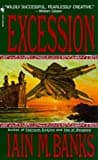
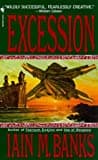
- Excession — This acclaimed Culture novel focuses on the autonomous, ultra-intelligent Minds that govern the Culture as they confront the emergence of a mysterious alien artifact.
- The Algebraist — A standalone science fiction novel published in 2004, The Algebraist presents a detailed space opera setting outside the Culture universe.